
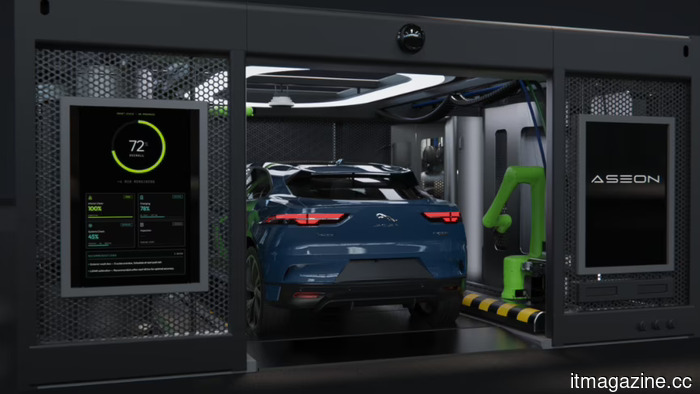
Aseon Labs secures ten million dollars to develop pods the size of parking spaces designed for charging and cleaning robotaxis.
Aseon Labs has secured $10 million to develop automated pods the size of parking spaces designed to charge, clean, and inspect robotaxis, thereby reducing deadhead miles. The Redwood City startup focuses on providing automated service for robotaxi fleets and received funding in a seed round led by Crane Venture Partners, according to TechCrunch. Additional investors include Y Combinator, Garrett Camp's venture firm Expa, Robin Hood Ventures, and Founders Capital, along with angel investors like Immad Akhund, co-founder of Mercury; Rajat Suri, co-founder of Zimride; and professionals from Anthropic, Nuro, Turo, and Revolut.
The company aims to tackle one of the major expenses in the robotaxi sector: deadhead miles. When a robotaxi requires charging, cleaning, or inspections, it often travels empty to a centralized depot located 10 to 15 miles away, incurring costs and time without carrying fare-paying passengers. An MIT study revealed that Waymo’s California fleet covers approximately 44 percent of its miles without riders.
Aseon Labs plans to address this issue by deploying parking-space-sized automated pods throughout urban areas. Utilizing robotic arms and computer vision, these pods can charge vehicles, wash exteriors, clean interiors, retrieve lost items, and inspect sensors autonomously, without the need for human workers. As they are categorized as temporary structures, the pods can be installed rapidly in parking lots, gas stations, and charging hubs, and moved if a location underperforms.
Co-founders George Kalligeros and Dan Keene have prior experience in building similar infrastructure. They established Pushme in 2016 to create battery-swapping networks for micromobility fleets in Europe, which was acquired by Tier Mobility in January 2020. Following that, Kalligeros led Tier’s hardware division. Prior to Pushme, Kalligeros was a mechanical design engineer at Bentley Motors and Tesla.
“To achieve economic parity with ride-hailing, robotaxis must operate consistently throughout the day’s demand cycle,” Kalligeros explained to TechCrunch. The seed funding will be used to develop five prototypes, expand the current six-person team to about twelve, and secure real estate for the initial pod network.
The pods utilize vision-language-action models to identify issues they should not attempt to address independently. For example, if a camera detects melted chocolate on a backseat, the robotic arm will refrain from intervening and instead send the vehicle to a central depot for human handling. Initial versions will have personnel on-site, but the design allows for autonomous operation, powered by either a propane generator or existing electrical connections via partnerships with EV charging companies.
The development is timely as robotaxi operations are rapidly advancing. Waymo has introduced its more affordable Ojai robotaxi, now providing over 500,000 paid rides per week in ten U.S. cities, with a goal of reaching one million weekly rides by the end of 2026. Tesla has also commenced robotaxi operations in Austin, while Amazon’s Zoox is expanding in San Francisco and Las Vegas. Additionally, Goldman Sachs projects that the global robotaxi market will climb to $415 billion by 2035, increasing from approximately 7,000 vehicles today to six million.
However, scaling requires infrastructure that is not yet in place. According to Aseon Labs, autonomous fleets keep around one-third of their vehicles offline for servicing at any given moment. The company estimates that its pods could lower reset costs by 50 percent and decrease downtime by 65 percent while boosting annual per-vehicle revenue by over $50,000.
Aseon Labs has yet to finalize contracts with any robotaxi operators. “Pretty much everyone wants to try it,” Kalligeros stated, though he refrained from naming specific companies. The startup is still in the pre-product stage, aiming to create five prototypes as its next goal. The transition from prototype to a dependable urban network is considerable, thus the actual economic viability will depend on deployment in real-world settings rather than projections.
Other articles
 Your Windows 10 computer has received an additional year of security updates; here's how to obtain them at no cost.
Millions of Windows 10 PCs that aren't able to run Windows 11 have received some relief, as Microsoft has extended its free security update program until October 2027.
Your Windows 10 computer has received an additional year of security updates; here's how to obtain them at no cost.
Millions of Windows 10 PCs that aren't able to run Windows 11 have received some relief, as Microsoft has extended its free security update program until October 2027.
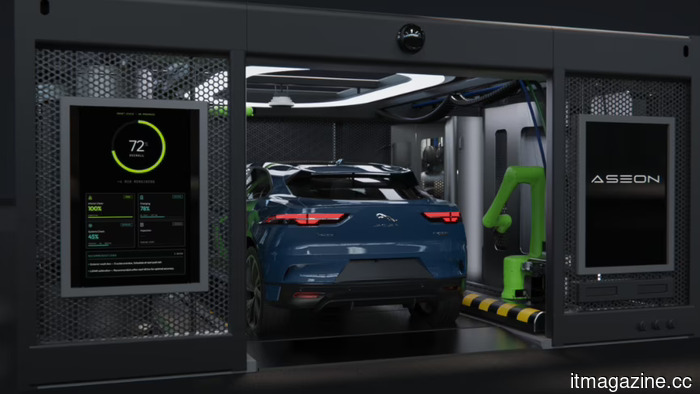 Aseon Labs secures ten million dollars to develop pods the size of parking spaces designed to recharge and clean robotaxis.
Aseon Labs, supported by Y Combinator, secured $10 million to develop automated pods designed to charge, clean, and inspect robotaxis, thereby reducing the unnecessary miles that are draining fleet resources.
Aseon Labs secures ten million dollars to develop pods the size of parking spaces designed to recharge and clean robotaxis.
Aseon Labs, supported by Y Combinator, secured $10 million to develop automated pods designed to charge, clean, and inspect robotaxis, thereby reducing the unnecessary miles that are draining fleet resources.
 Starlink, owned by Elon Musk, might soon provide mobile services as a carrier in the United States.
SpaceX might be gearing up for its most ambitious Starlink expansion to date. Rather than merely assisting mobile carriers, it could soon transition into being one itself, which could disrupt the entire wireless sector.
Starlink, owned by Elon Musk, might soon provide mobile services as a carrier in the United States.
SpaceX might be gearing up for its most ambitious Starlink expansion to date. Rather than merely assisting mobile carriers, it could soon transition into being one itself, which could disrupt the entire wireless sector.
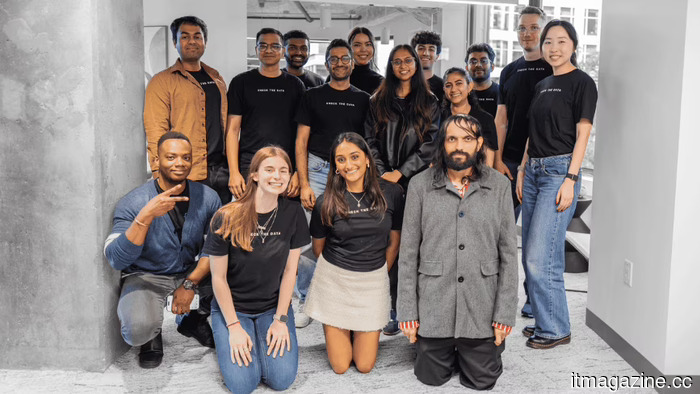 Patronus AI secures $50 million to conduct stress tests on AI agents.
Patronus AI has secured $50 million to develop simulated digital environments that assess AI agents under stress before they are deployed. Investors describe the demand as insatiable.
Patronus AI secures $50 million to conduct stress tests on AI agents.
Patronus AI has secured $50 million to develop simulated digital environments that assess AI agents under stress before they are deployed. Investors describe the demand as insatiable.
 OpenAI presents ChatGPT advertisements at Cannes amid a drop in CPM.
OpenAI made its first appearance at the Cannes Lions with a large number of advertisers, yet its ad pricing fell from $60 to $25 CPM within a matter of weeks. Is it possible for ChatGPT to achieve $100 billion in advertising revenue by 2030?
OpenAI presents ChatGPT advertisements at Cannes amid a drop in CPM.
OpenAI made its first appearance at the Cannes Lions with a large number of advertisers, yet its ad pricing fell from $60 to $25 CPM within a matter of weeks. Is it possible for ChatGPT to achieve $100 billion in advertising revenue by 2030?
 Apple M7 chips: it’s bypassing the premium M6.
Apple's M7 chips will drive its top Macs starting in 2027, bypassing the advanced M6 in order to accelerate on-device AI development during a memory shortage.
Apple M7 chips: it’s bypassing the premium M6.
Apple's M7 chips will drive its top Macs starting in 2027, bypassing the advanced M6 in order to accelerate on-device AI development during a memory shortage.
Aseon Labs secures ten million dollars to develop pods the size of parking spaces designed for charging and cleaning robotaxis.
Aseon Labs, supported by Y Combinator, secured $10 million to develop automated pods designed for charging, cleaning, and inspecting robotaxis, reducing the deadhead miles that drain fleet resources.