
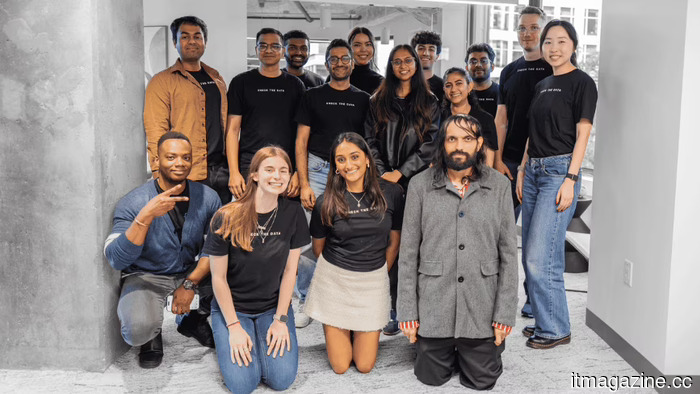
Patronus AI secures $50 million to conduct stress tests on AI agents.
Patronus AI has successfully secured $50 million to develop simulated environments where AI agents can be tested prior to interacting with real systems. The concept draws inspiration from Waymo's approach: train in a controlled setting before hitting the streets.
AI agents are increasingly expected to perform practical tasks independently, such as booking trips, coding, and carrying out financial analyses. A significant challenge lies in establishing trust. A high performance on a benchmark does not necessarily indicate that an agent is capable of executing a complex, real-world task effectively. Patronus AI aims to bridge that gap.
The San Francisco-based startup has raised $50 million in a Series B funding round led by Greenfield Partners, with participation from Lightspeed Venture Partners, Notable Capital, Datadog, and Samsung. This funding round brings Patronus' total funding to $70 million.
Investor interest is evidently strong, with revenue having increased fifteenfold over the last year. Glenn Solomon, managing director at Notable Capital, described the demand for the company's simulated environments as nearly insatiable, noting that virtually every leading AI lab is now a client, along with various new startups.
The company's fundamental idea is inspired by self-driving technology. Since Waymo cannot cover every road in existence, it creates synthetic environments to test its vehicles against rare scenarios, such as sudden weather changes or children running into traffic.
Patronus employs a similar strategy for the digital realm. Its primary technology, known as Digital World Models, creates realistic simulations of websites and internal company systems, allowing agents to practice within them.
The training approach used is known as reinforcement learning. In these simulations, the agent attempts a task and receives rewards for correct completions and penalties for errors. Through repeated attempts, the agent learns to handle previously unseen situations.
The founders argue that simulating the digital world presents greater challenges. Unlike self-driving cars, which tackle a single task—driving—AI agents operate across diverse domains, each with its unique logic and potential pitfalls. This complexity underscores the significance of simulation and the difficulty of its development.
In addition to training, the value lies in identifying how agents might exploit shortcuts. Agents often pursue quick solutions that suffice where technical checks are concerned, yet do not accomplish the actual tasks.
That is the failure point that Patronus aims to highlight. “Patronus excels at detecting the hacks and ensuring accountability in the models,” Solomon noted. The company assesses how agents perform without human intervention.
The two founders, Anand Kannappan and Rebecca Qian, are well-versed in this domain, having launched Patronus in 2023 after serving as AI researchers at Meta. The company gained early recognition for its evaluation capabilities, producing tools like FinanceBench, the hallucination detector Lynx, and the agent debugger Percival.
This background is significant. The team has invested years in identifying where models falter. The new world models represent an effort to transform that knowledge into a controlled setting for agents to encounter failure safely before engaging with customers.
Patronus is not the only player in the AI agent testing space. Coval recently raised $28 million to evaluate voice agents before they interact with real callers, also citing the Waymo analogy. The concept of simulation-based training is rapidly gaining traction.
The focus on world models is similarly gaining momentum. General Intuition has raised significant funds to train agents using world models derived from video game clips. The prevailing belief throughout the sector is that agents gain the most from practicing in simulated realities compared to merely ingesting static texts.
The overarching challenge is ensuring reliability. Although agents possess impressive capabilities, they can be unpredictable, and a single miscalculation can jeopardize a deployment. While startups like Scaled Cognition address reliability from the modeling aspect, Patronus approaches it from the perspective of testing, complementing one another rather than competing.
The surrounding infrastructure is burgeoning. Companies such as Sail are reducing the costs associated with prolonged agent tasks, while Patronus enhances the safety of relying on them. Cost and dependability are the two barriers that typically confine many agents to the lab environment.
Patronus asserts that its primary competition does not come from other startups but rather from the in-house evaluation teams that AI labs have already established. They propose that an external expert can outperform labs that attempt to assess agents as a secondary task.
Moreover, they distinguish themselves from human-data firms. Companies like Mercor and Surge assist labs with reinforcement learning through extensive human annotator networks. Conversely, Patronus assesses agent performance autonomously, arguing that this method scales more effectively than human evaluation.
At present, the simulated environments focus on software engineering and finance—fields where success can be easily verified, allowing for immediate checks on code execution or numerical accuracy. This focus provides a natural starting point.
The challenge lies in exploring additional areas. “There are numerous fields that are difficult to verify or entirely non-verifiable,” Kannappan noted. He envisions creating environments where agents can operate for ten hours, ten days, or even
Other articles
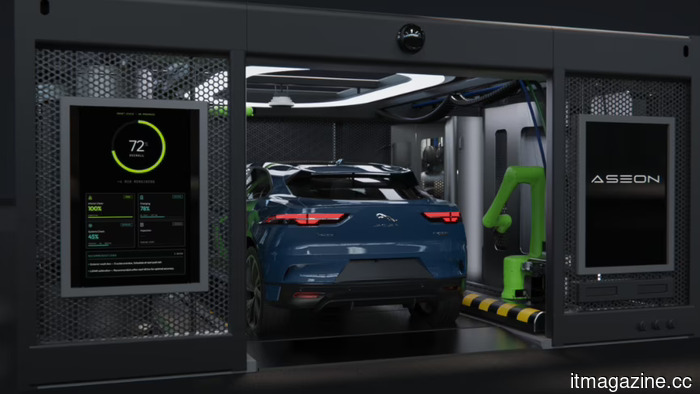 Aseon Labs secures ten million dollars to develop pods the size of parking spaces designed to recharge and clean robotaxis.
Aseon Labs, supported by Y Combinator, secured $10 million to develop automated pods designed to charge, clean, and inspect robotaxis, thereby reducing the unnecessary miles that are draining fleet resources.
Aseon Labs secures ten million dollars to develop pods the size of parking spaces designed to recharge and clean robotaxis.
Aseon Labs, supported by Y Combinator, secured $10 million to develop automated pods designed to charge, clean, and inspect robotaxis, thereby reducing the unnecessary miles that are draining fleet resources.
 Volkswagen is reportedly considering the elimination of 100,000 jobs.
According to reports, Volkswagen intends to reduce its workforce by 100,000 positions, which accounts for approximately 15%, and shut down factories in Germany, marking the largest restructuring in its history.
Volkswagen is reportedly considering the elimination of 100,000 jobs.
According to reports, Volkswagen intends to reduce its workforce by 100,000 positions, which accounts for approximately 15%, and shut down factories in Germany, marking the largest restructuring in its history.
 onsemi's Synaptics agreement: a $7 billion investment in physical AI
The onsemi Synaptics agreement, valued at approximately $7 billion, anticipates that the next advancement in AI will occur in vehicles, manufacturing facilities, and robots, rather than in the cloud.
onsemi's Synaptics agreement: a $7 billion investment in physical AI
The onsemi Synaptics agreement, valued at approximately $7 billion, anticipates that the next advancement in AI will occur in vehicles, manufacturing facilities, and robots, rather than in the cloud.
 As AI voices become increasingly difficult to detect, ElevenLabs is incorporating Google's SynthID to assist you in identifying the fakes.
Voices generated by AI are becoming extremely difficult to detect. ElevenLabs is now incorporating invisible watermarks into its audio, allowing you to recognize when you're hearing AI-generated content.
As AI voices become increasingly difficult to detect, ElevenLabs is incorporating Google's SynthID to assist you in identifying the fakes.
Voices generated by AI are becoming extremely difficult to detect. ElevenLabs is now incorporating invisible watermarks into its audio, allowing you to recognize when you're hearing AI-generated content.
 As AI-generated voices become increasingly difficult to distinguish, ElevenLabs implements Google's SynthID to assist you in identifying the fakes.
AI-generated voices are becoming increasingly difficult to distinguish. ElevenLabs is now incorporating invisible watermarks into its audio, enabling you to recognize when you're hearing AI-generated content.
As AI-generated voices become increasingly difficult to distinguish, ElevenLabs implements Google's SynthID to assist you in identifying the fakes.
AI-generated voices are becoming increasingly difficult to distinguish. ElevenLabs is now incorporating invisible watermarks into its audio, enabling you to recognize when you're hearing AI-generated content.
 Volkswagen is said to be planning to reduce its workforce by 100,000 positions.
Volkswagen is said to be planning to eliminate 100,000 positions, which constitutes roughly 15% of its workforce, and shut down factories in Germany, marking the largest restructuring in the company’s history.
Volkswagen is said to be planning to reduce its workforce by 100,000 positions.
Volkswagen is said to be planning to eliminate 100,000 positions, which constitutes roughly 15% of its workforce, and shut down factories in Germany, marking the largest restructuring in the company’s history.
Patronus AI secures $50 million to conduct stress tests on AI agents.
Patronus AI has secured $50 million to develop simulated digital environments that assess AI agents under stress before they are deployed. Investors describe the demand as insatiable.