
Volkswagen is reportedly considering the elimination of 100,000 jobs.
Volkswagen is said to be planning to eliminate 100,000 jobs, which represents approximately 15% of its workforce, and to shut down factories in Germany. This would mark the most significant restructuring in the company's history, and unions are pledging to resist these changes.
The automotive sector in Europe is contracting, with Volkswagen, the largest player, at the forefront of this retreat. Reports indicate that the company aims to reduce around 100,000 positions at its German facilities, making up about 15% of its global workforce. If this plan is executed, it would constitute the most profound restructuring in the firm’s 89-year existence.
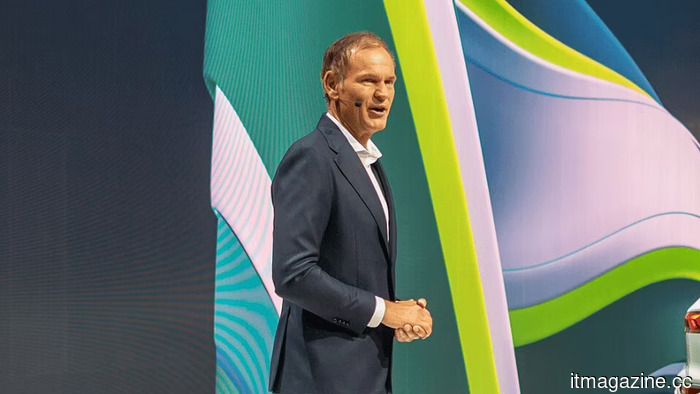
This information comes from the German publication Manager Magazin, which states that CEO Oliver Blume wants these job cuts over the next few years to restore competitiveness to Europe’s largest car manufacturer. Volkswagen has not confirmed the details, citing the confidential nature of internal documents.
While the company did not explicitly deny the proposed changes, a spokesperson for Volkswagen stated, “The entire Group, including its brands and subsidiaries, must undergo profound changes." This statement hints at the company's intentions as negotiations are set to begin.
The scale of the job cuts is significant. Volkswagen employs hundreds of thousands globally, and a 15% reduction would primarily impact Germany, its industrial core. The job losses are expected to unfold over several years, rather than happening all at once. Still, a reduction of 100,000 jobs highlights the severity of a downturn for a leading national firm.
Specific factories named in the report include those in Hanover, Zwickau, and Emden, along with the Audi facility in Neckarsulm. For a company that has a long-standing history of manufacturing in Germany, shutting down domestic plants is nearly unimaginable, yet it is now a possibility.
The situation at Zwickau is especially painful. Volkswagen had recently transformed the Saxony plant to produce electric vehicles, with six different EV models across the VW, Audi, and Cupra brands. It was envisioned as part of the company’s future; however, it has faced multiple production halts, attributed to low demand for electric vehicles.
The core issue lies in Volkswagen's heavy investment in electric vehicles without the anticipated demand materializing quickly enough. European sales of EVs have stagnated, and the company has already decreased manufacturing output. The facilities designed for what was expected to be an electric boom are now operating below capacity.
Timing has also played a role in the downturn. Germany ended its consumer EV subsidies at the close of 2023, slowing sales just as Volkswagen had completed its retooling for electric vehicle production. The company prepared for a surge that did not come to fruition, leading to idle facilities and excess staff.
Competition from lower-priced Chinese rivals has intensified pressure on the company, as they offer electric vehicles in Europe at prices that Volkswagen finds challenging to match. Additionally, U.S. tariffs imposed during President Trump’s administration have exacerbated the financial strain, making it costlier to manufacture vehicles in Germany than many consumers are willing to pay.
Blume has been straightforward about cost concerns, asserting that the company’s production sites and workforce were aligned with a market that no longer exists. He aims to create a more streamlined Volkswagen capable of withstanding a decade of cheaper competition. Unions, however, interpret the data differently, reaching contrasting conclusions.
Volkswagen is not facing this challenge in isolation; both Tesla and Volkswagen have been competitors in the EV sector for years, and both are now confronting a maturing and increasingly difficult market. The era of effortless electric growth is coming to an end for all industry players.
This plan also jeopardizes a previously established promise. Earlier this year, Volkswagen outlined 50,000 job cuts due to Trump’s tariffs and declining sales in China. The unions consented to these cuts based on an agreement that no further reductions or plant closures would occur before 2030.
This new initiative contradicts that agreement. Doubling the cuts and closing factories breaches the intent, if not the letter, of the prior deal, prompting predictable reactions from the unions.
“If such plans were to be implemented, we would resist them vigorously,” stated IG Metall and the General Works Council in a joint statement. In Germany, where labor representatives sit on the supervisory board, this is a significant threat.
Politics complicate matters further. The state of Lower Saxony holds a substantial stake in Volkswagen and has representation on its board. This gives regional politicians a direct voice and a strong incentive to protect local employment. A plan of this magnitude becomes a national debate rather than merely a corporate one.
Additionally, Volkswagen serves as a barometer for the industry. As the largest carmaker in Europe and one of its leading private employers, a loss of 100,000 jobs would send shockwaves through suppliers, communities, and an industrial model reliant on German automotive production.
The broader industry is already reallocating white-collar workers. New automotive startups are also feeling the pinch, with Rivian announcing layoffs amidst a contracting
Other articles
 Apple M7 chips: it is bypassing the premium M6.
Apple's top Macs will feature M7 chips starting in 2027, bypassing the high-end M6 to accelerate on-device AI development during a memory shortage.
Apple M7 chips: it is bypassing the premium M6.
Apple's top Macs will feature M7 chips starting in 2027, bypassing the high-end M6 to accelerate on-device AI development during a memory shortage.
 Apple M7 chips: it’s bypassing the premium M6.
Apple's M7 chips will drive its top Macs starting in 2027, bypassing the advanced M6 in order to accelerate on-device AI development during a memory shortage.
Apple M7 chips: it’s bypassing the premium M6.
Apple's M7 chips will drive its top Macs starting in 2027, bypassing the advanced M6 in order to accelerate on-device AI development during a memory shortage.
 As AI voices become increasingly difficult to detect, ElevenLabs is incorporating Google's SynthID to assist you in identifying the fakes.
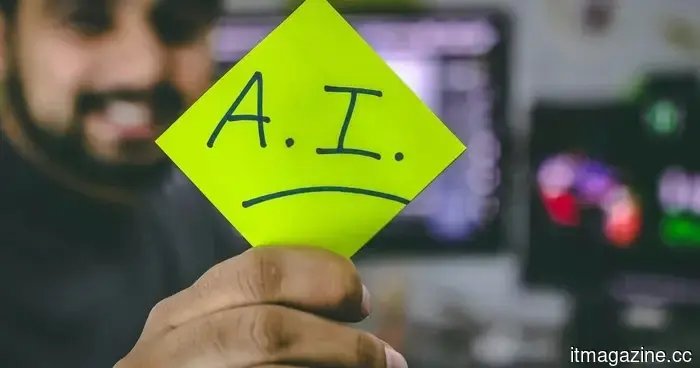
Voices generated by AI are becoming extremely difficult to detect. ElevenLabs is now incorporating invisible watermarks into its audio, allowing you to recognize when you're hearing AI-generated content.
As AI voices become increasingly difficult to detect, ElevenLabs is incorporating Google's SynthID to assist you in identifying the fakes.
Voices generated by AI are becoming extremely difficult to detect. ElevenLabs is now incorporating invisible watermarks into its audio, allowing you to recognize when you're hearing AI-generated content.
 California introduces its inaugural AI job-loss monitoring system.
California has introduced the nation's first AI job-loss tracker. Initial data indicates there are no large-scale layoffs, although there are some concerning signals in the Bay Area.
California introduces its inaugural AI job-loss monitoring system.
California has introduced the nation's first AI job-loss tracker. Initial data indicates there are no large-scale layoffs, although there are some concerning signals in the Bay Area.
 As AI-generated voices become increasingly difficult to distinguish, ElevenLabs implements Google's SynthID to assist you in identifying the fakes.
AI-generated voices are becoming increasingly difficult to distinguish. ElevenLabs is now incorporating invisible watermarks into its audio, enabling you to recognize when you're hearing AI-generated content.
As AI-generated voices become increasingly difficult to distinguish, ElevenLabs implements Google's SynthID to assist you in identifying the fakes.
AI-generated voices are becoming increasingly difficult to distinguish. ElevenLabs is now incorporating invisible watermarks into its audio, enabling you to recognize when you're hearing AI-generated content.
 Your Windows 10 computer has received an additional year of security updates; here's how to obtain them at no cost.
Millions of Windows 10 PCs that aren't able to run Windows 11 have received some relief, as Microsoft has extended its free security update program until October 2027.
Your Windows 10 computer has received an additional year of security updates; here's how to obtain them at no cost.
Millions of Windows 10 PCs that aren't able to run Windows 11 have received some relief, as Microsoft has extended its free security update program until October 2027.
Volkswagen is reportedly considering the elimination of 100,000 jobs.
According to reports, Volkswagen intends to reduce its workforce by 100,000 positions, which accounts for approximately 15%, and shut down factories in Germany, marking the largest restructuring in its history.