
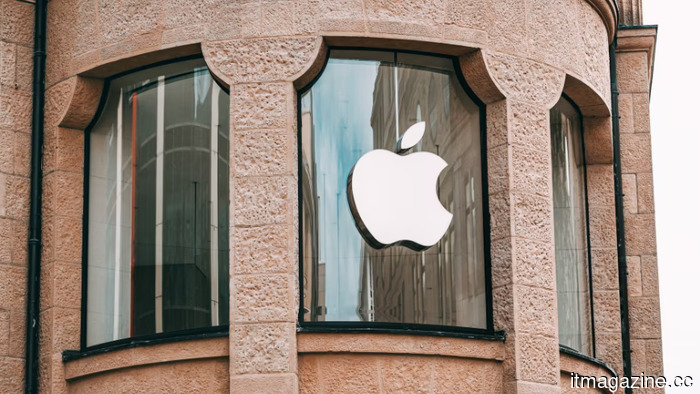
Apple M7 chips: it is bypassing the premium M6.
Apple is altering its standard approach to chip releases. It will bypass the high-end M6 chip versions and transition directly to an M7 line focused on AI. Starting in 2027, the best Macs will be powered by the M7 chips, not the M6.
This change marks a significant departure from Apple's traditional method of rolling out Mac chips. The company is set to launch a basic M6 processor as soon as this year for entry-level Macs, but for the first time, there will be no Pro or Max editions of this chip. Instead, these advanced versions will be released in 2027 as part of the new M7 series, as reported by Bloomberg, based on insights from sources familiar with the plans. Currently, Apple is still on the M5 series and has not commented further.
This shift is important because it breaks a trend Apple has followed since 2020, where every series from M1 to M5 included Pro and Max variants. The M1, M2, and M3 even introduced a high-tier Ultra model, making this the first generation of M-series chips to include only a base version.
The significance of this split downplays which machines use which chips. The Pro and Max chips are utilized in high-end Mac minis, Mac Studios, and MacBook Pros, while the base chips are found in entry-level MacBook Pros, affordable Mac minis, iMacs, and certain iPad Pro and iPad Air models. Consequently, skipping the high-end M6 will impact Apple's most powerful computers rather than their more budget-friendly options.
Apple's rationale behind this leap is rooted in speed. The company aims to accelerate technology previously slated for later releases to meet the demand for AI processing and more intensive graphics workloads. According to sources, the M7 line is generally designed for on-device AI functionality.
There is also a less favorable interpretation of this situation. The entire industry is confronting a chip and memory shortage that has raised costs, compressed margins, and resulted in delays. Coinciding with the leak of this roadmap, Apple increased prices on all current Macs and iPads, suggesting that the “AI fast-track” narrative is a convenient cover for a plan influenced by resource scarcity.
The base M6 chip should not be viewed as a minor update. Apple has been testing it in a revamped entry-level MacBook Pro, known internally as J804, and designed it to excel in its class. Internally referred to as Komodo, the chip's standout feature is its memory bandwidth, critical for AI processing. The M6 is expected to achieve around 200GB/s, an increase from approximately 153GB/s on the M5. It includes a new memory architecture, an upgraded neural engine for AI tasks, and enhanced cores overall. Additionally, a redesigned graphics processor increases to 12 cores—two more than the M5—to manage AI and rendering simultaneously.
However, the timing is a concern. The base M7 is anticipated to launch in the first half of 2027, while the M7 Pro and Max versions might not come until late 2027. The M7 Ultra, which will power the most potent Mac Studio, isn't expected until 2028. The base M7 is projected to provide around 240GB/s of bandwidth.
This means that anyone seeking Apple’s most powerful chips will face a significant wait. Prospective buyers of a leading MacBook Pro or Mac Studio can either accept an M5-era model or wait well into 2027 or 2028 for the Ultra.
One temporary solution is still on the horizon. Apple is set to release an M5 Ultra, possibly later this year in a new Mac Studio that has been delayed due to supply and cost challenges. This chip is robust, featuring approximately 36 processing cores and 80 graphics cores, with testing conducted using up to 768GB of memory. Nonetheless, the pressure is undeniable, as Apple has reduced new orders for the current M3 Ultra Mac Studio from 512GB to just 96GB.
This restructuring occurs at a critical juncture. Apple's chips serve as a significant competitive advantage over those from Intel and Qualcomm. The silicon team now reports to Johny Srouji, who has recently been promoted to chief hardware officer, while John Ternus is potentially moving towards the CEO role.
The changes involve more than just the Mac. Apple is also reportedly shifting iPhone chips to a 2-nanometre process, with new silicon expected for a foldable phone launching this year and for 20th-anniversary iPhones in 2027. Designing its own chips remains Apple's core strength, making this tumultuous roadmap especially noteworthy.
The overarching theme is AI. Apple is reformulating its chip strategy to emphasize on-device intelligence, navigating through a shortage that influences what it can produce and when. Whether this approach leaves Pro users feeling patient or frustrated is a question that will unfold over the next two years.
Other articles
 California introduces its inaugural AI job-loss monitoring system.
California has introduced the nation's first AI job-loss tracker. Initial data indicates there are no large-scale layoffs, although there are some concerning signals in the Bay Area.
California introduces its inaugural AI job-loss monitoring system.
California has introduced the nation's first AI job-loss tracker. Initial data indicates there are no large-scale layoffs, although there are some concerning signals in the Bay Area.
 Volkswagen is reportedly considering the elimination of 100,000 jobs.
According to reports, Volkswagen intends to reduce its workforce by 100,000 positions, which accounts for approximately 15%, and shut down factories in Germany, marking the largest restructuring in its history.
Volkswagen is reportedly considering the elimination of 100,000 jobs.
According to reports, Volkswagen intends to reduce its workforce by 100,000 positions, which accounts for approximately 15%, and shut down factories in Germany, marking the largest restructuring in its history.
 Starlink, owned by Elon Musk, might soon provide mobile services as a carrier in the United States.
SpaceX might be gearing up for its most ambitious Starlink expansion to date. Rather than merely assisting mobile carriers, it could soon transition into being one itself, which could disrupt the entire wireless sector.
Starlink, owned by Elon Musk, might soon provide mobile services as a carrier in the United States.
SpaceX might be gearing up for its most ambitious Starlink expansion to date. Rather than merely assisting mobile carriers, it could soon transition into being one itself, which could disrupt the entire wireless sector.
 I discovered two budget charger deals for Prime Day that don’t seem like the usual cable-drawer clutter.
These Anker and Belkin charger deals for Prime Day are affordable, functional, and from brands I would trust more than taking chances with random wall chargers.
I discovered two budget charger deals for Prime Day that don’t seem like the usual cable-drawer clutter.
These Anker and Belkin charger deals for Prime Day are affordable, functional, and from brands I would trust more than taking chances with random wall chargers.
 Your Windows 10 computer has received an additional year of security updates. Here's how to obtain it at no cost.
Millions of Windows 10 PCs that are unable to run Windows 11 have received some relief, as Microsoft has extended its free security update program until October 2027.
Your Windows 10 computer has received an additional year of security updates. Here's how to obtain it at no cost.
Millions of Windows 10 PCs that are unable to run Windows 11 have received some relief, as Microsoft has extended its free security update program until October 2027.
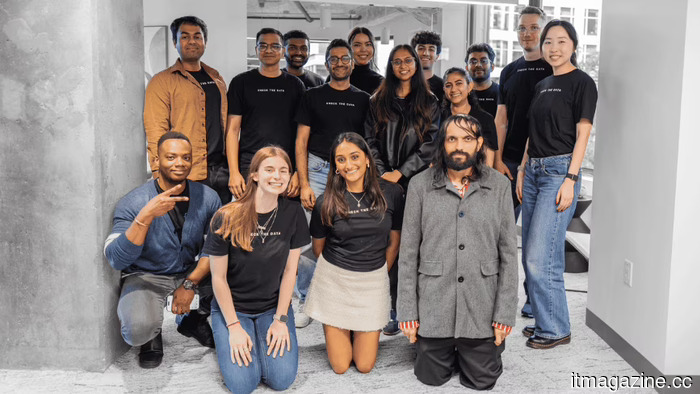 Patronus AI secures $50 million to conduct stress tests on AI agents.
Patronus AI has secured $50 million to develop simulated digital environments that assess AI agents under stress before they are deployed. Investors describe the demand as insatiable.
Patronus AI secures $50 million to conduct stress tests on AI agents.
Patronus AI has secured $50 million to develop simulated digital environments that assess AI agents under stress before they are deployed. Investors describe the demand as insatiable.
Apple M7 chips: it is bypassing the premium M6.
Apple's top Macs will feature M7 chips starting in 2027, bypassing the high-end M6 to accelerate on-device AI development during a memory shortage.