
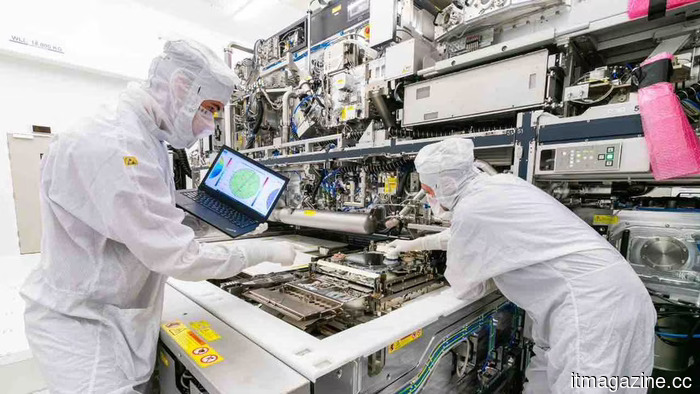
xLight EUV investment: $350 million funding targets ASML.
xLight, a US-backed startup led by former Intel CEO Pat Gelsinger, is aiming to raise $350 million to develop an xLight EUV light source that could challenge ASML's dominance in chip manufacturing. Just days prior, a Dutch competitor set its sights on Nvidia. Deep-tech chips are gaining traction again.
Venture funding is flowing back into the hardware that underpins AI. xLight, a California-based startup focused on creating a new type of light source for chip production, is reportedly in discussions to secure $350 million, as stated by The Information. Boardman Bay Capital Management and Bain Capital are expected to lead this funding round. xLight has maintained a low profile during years of research and development, making the size of this funding round indicative of its ambitious goals.
The proposition is audacious. xLight aims to reduce the time and cost associated with manufacturing the most sophisticated AI chips. The company is investing in an alternative to extreme ultraviolet (EUV) lithography, the method used to project miniature circuits onto silicon. If successful, xLight's EUV system would integrate into the machinery that fabricates Nvidia's chips.
Currently, ASML is the sole producer of EUV machines. Its devices utilize lasers targeting tin droplets to generate light at a wavelength of 13.5 nanometers, which is essential for etching the smallest features onto chips. These machines are enormous, each costing hundreds of millions of dollars, and are delivered in parts.
The core intention of xLight is to innovate the light source itself. Rather than using tin, the company is developing a free-electron laser powered by a compact particle accelerator, claiming it can achieve wavelengths as low as 2nm. Shorter wavelengths allow for finer circuit designs, resulting in more transistors per chip.
The economic implications of this technology are significant. A premium EUV machine can exceed $380 million, and only a few factories worldwide possess the capability to operate one. Any technology that can produce finer circuits or reduce costs will have a profound impact on the industry.
xLight’s strategy does not involve directly competing with ASML; instead, the plan is to sell its light source technology to ASML. The first fully operational prototype is expected by 2028, at the Albany NanoTech complex in New York.
The funding effort follows a significant endorsement from the US government. This month, the Department of Commerce awarded xLight $150 million under the CHIPS and Science Act to support the construction of the free-electron laser prototype. This marks Washington not just as a customer but as an early investor in this private venture. xLight has previously gathered around $200 million, including federal funds and a prior $40 million round, and the new $350 million round could pave the way for additional billions in projected financing for future facilities.
This funding is part of the CHIPS and Science Act initiative which aims to revitalize domestic chip manufacturing, primarily benefiting factories. Supporting a light-source startup represents a more uncommon and riskier investment in a technology that is still in development.
Pat Gelsinger, who previously led Intel until he was pushed out in late 2024, is at the helm of xLight and also works as a venture partner at Playground Global. His reputation lends considerable credibility to the startup among potential chip manufacturers.
Another competitor is emerging in the form of Euclyd, a Dutch startup seeking approximately €200 million ($229 million) in Series A funding, according to Bloomberg. Former ASML CEO Peter Wennink is advising and investing in the Eindhoven-based company, founded by Bernardo Kastrup, another ASML veteran, in 2024.
Euclyd is targeting a distinct giant—designing chips for AI inference, which involves executing models after they have been trained. The company asserts that its "Craftwerk" architecture can perform this task up to 100 times more efficiently than Nvidia's latest Vera Rubin hardware. While xLight aspires to challenge ASML's monopoly, Euclyd aims to diminish Nvidia's market share.
This distinction is intentional: Nvidia's success stems from training, while inference represents the next opportunity, appearing more accessible. Cost-effective, streamlined chips become essential when models are run daily. This is the need that Euclyd and other European contenders are poised to address.
Both funding rounds are reminiscent of each other—Washington lends its support to one while Europe backs the other, both targeting a near-monopoly. Additionally, these announcements coincide with an influx of investment into the essential machinery supporting the AI surge. Dutch company Nearfield Instruments recently secured a record $380 million for chip-inspection technologies, while ASML spinoff Invisix obtained €20 million for chip metrology.
The timing is significant. Chip manufacturing tools, once a quiet sector, are now at the forefront of a geopolitical struggle. The US and the Netherlands have restricted the most advanced lithography equipment exports to China, which is now investing in photonics as an alternative.
Other articles
 What features contribute to a laptop's effectiveness for remote work?
This article is presented in collaboration with Dell. The rise of remote and hybrid work has altered what individuals anticipate from a laptop. Many professionals no longer spend their entire day at a single desk. A standard work routine now includes morning Zoom or Microsoft Teams meetings, multiple browser tabs alongside Slack and email, and the need to move around.
What features contribute to a laptop's effectiveness for remote work?
This article is presented in collaboration with Dell. The rise of remote and hybrid work has altered what individuals anticipate from a laptop. Many professionals no longer spend their entire day at a single desk. A standard work routine now includes morning Zoom or Microsoft Teams meetings, multiple browser tabs alongside Slack and email, and the need to move around.
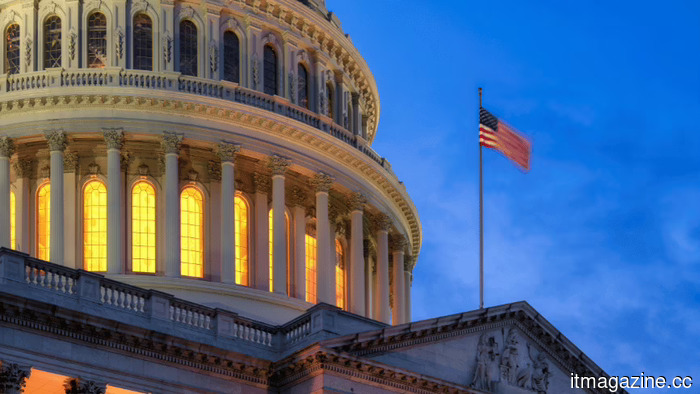 The House legislates on a bill regarding energy expenses for AI data centers.
Congress is aiming for Big Tech to take on the energy expenses of AI data centers. A House committee is set to vote this week on a measure to ensure that the costs associated with AI development do not fall on household electricity bills.
The House legislates on a bill regarding energy expenses for AI data centers.
Congress is aiming for Big Tech to take on the energy expenses of AI data centers. A House committee is set to vote this week on a measure to ensure that the costs associated with AI development do not fall on household electricity bills.
 Laifen Día Prime
Explore Laifen's Prime Day discounts featuring 40% off the SE 2 Hair Dryer and P3 Pro Electric Shaver—high-quality grooming devices that aim to streamline your everyday routine.
Laifen Día Prime
Explore Laifen's Prime Day discounts featuring 40% off the SE 2 Hair Dryer and P3 Pro Electric Shaver—high-quality grooming devices that aim to streamline your everyday routine.
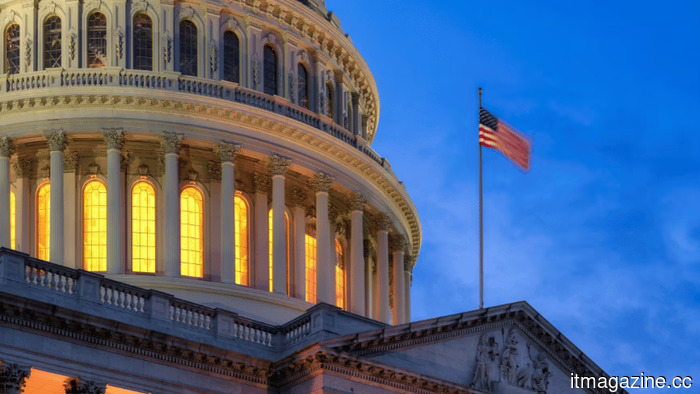 House votes on legislation regarding energy costs for AI data centers.
Congress is looking to have Big Tech responsible for the energy expenses of AI data centers. This week, a House committee is voting to ensure that the costs related to the AI expansion do not get passed on to household electricity bills.
House votes on legislation regarding energy costs for AI data centers.
Congress is looking to have Big Tech responsible for the energy expenses of AI data centers. This week, a House committee is voting to ensure that the costs related to the AI expansion do not get passed on to household electricity bills.
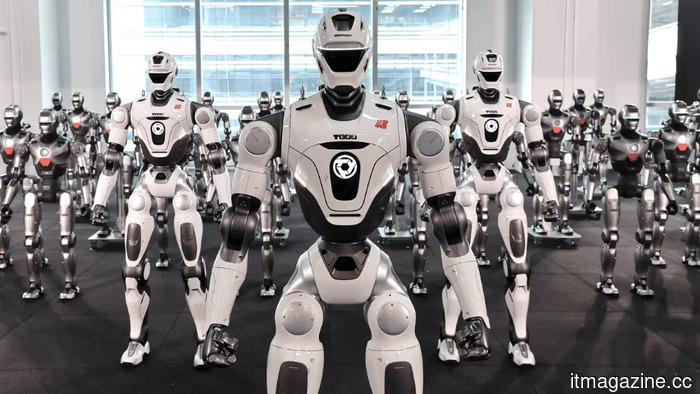 Hyundai robot strike: union decides to combat automation
Workers at Hyundai voted 92% in favor of authorizing a strike, seeking control over the influx of robots expected in its factories. A strike involving Hyundai robots may be forthcoming.
Hyundai robot strike: union decides to combat automation
Workers at Hyundai voted 92% in favor of authorizing a strike, seeking control over the influx of robots expected in its factories. A strike involving Hyundai robots may be forthcoming.
 The new trailer for One Piece has arrived, but why is Netflix choosing to remake it at this time?
The first season of Netflix's One Piece remake adapts only 50 chapters of the manga, featuring the original voice of Luffy, Mayumi Tanaka, making a comeback.
The new trailer for One Piece has arrived, but why is Netflix choosing to remake it at this time?
The first season of Netflix's One Piece remake adapts only 50 chapters of the manga, featuring the original voice of Luffy, Mayumi Tanaka, making a comeback.
xLight EUV investment: $350 million funding targets ASML.
The xLight EUV gamble: the US-supported startup is seeking to raise $350 million to compete with ASML, while a Dutch company sets its sights on Nvidia.