
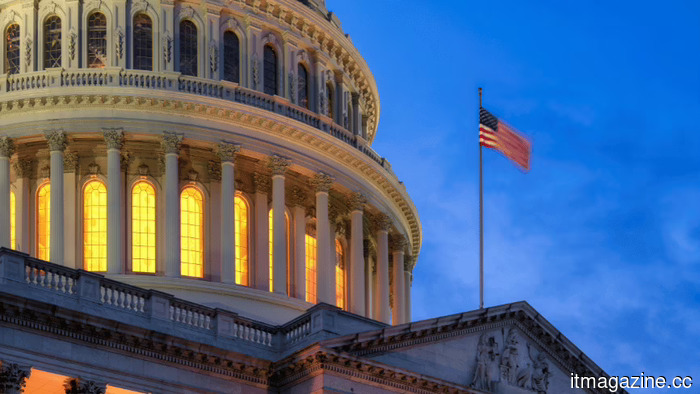
The House legislates on a bill regarding energy expenses for AI data centers.
Congress is taking steps to prevent households from covering the energy bills resulting from Big Tech's AI data centers. This week, a House panel will vote on a series of proposals aimed at shifting the energy costs back to the companies that generate these data centers. With rising electricity bills attributed to AI, lawmakers want Big Tech to shoulder a larger share of these expenses. According to POLITICO’s E&E News, the House Energy and Commerce Committee’s energy panel is scheduled to vote on Wednesday on a set of bills targeting the energy expenses of AI data centers, intending to alleviate the financial burden on ordinary households.
This initiative is just a preliminary measure, not yet a complete law, and represents the beginning of a long process. Nonetheless, it is significant as it marks the first occasion that Republican leaders have come together to propose concrete solutions for addressing increased rates associated with data centers.
The main proposal is the bipartisan Ratepayer Protection Act, or H.R. 9340, which aims to enshrine the concept laid out in President Trump’s “Ratepayer Protection Pledge.” This pledge stated that Big Tech firms would be responsible for their own data center energy expenses. Essentially, the responsibility for powering a data center should be on its owner, not on the local families.
The bill proposes a significant amendment to a 1978 utility regulation, mandating that the largest energy consumers cover the full incremental costs of upgrading the electrical grid that services them. It specifically targets any non-residential facility consuming 100 megawatts or more, designed to encompass major data centers. It even addresses stranded costs, ensuring that if a customer departs, they still bear the costs of any upgrades made on their behalf. This initiative is led by Rep. Gabe Evans, a Republican from Colorado, and co-sponsored by Rep. Kathy Castor, a Democrat from Florida.
A second bill, the Protecting Families from AI Data Center Energy Costs Act (H.R. 6529), introduced by Rep. Greg Landsman, a Democrat from Ohio, has a more focused purpose than its title implies. It aims to instruct federal energy regulators to gather key stakeholders to strategize on how to protect residents from escalating energy bills. This conference would convene utilities, regulators, and consumer advocates in a collaborative effort.
The remainder of the package focuses on underlying grid infrastructure. Some bills will encourage regulators to analyze electricity demand forecasting, while others will test AI technologies for grid operations or establish standards for improved transmission lines. Collectively, these measures respond to the increasing strain on the energy system. The markup will occur on Wednesday afternoon in the Rayburn building.
Included in the named measures are the Load Forecasting Enhancement Act and the Advanced Transmission Technology to Reduce Rates Act, which, while unlikely to dominate headlines, aim to enhance grid data and infrastructure to better accommodate future energy demands.
The urgency behind these measures is reflected in the statistics: electricity bills near major data center locations have surged by up to 267% over the past five years, as reported by CNBC. Data centers currently consume 4% to 5% of all electricity in the U.S., with this percentage rapidly increasing. Key players in this field include Amazon, Google, Meta, Microsoft, and Elon Musk’s xAI, all of whom have ambitious AI goals that necessitate considerable energy consumption, raising the question of who should bear the cost.
The primary concern underpinning these bills is straightforward: when utilities invest billions to connect a data center to the power grid, those costs can be passed on to every customer’s bill. Lawmakers want the companies that initiate the demand for power to bear the costs, as promised in the initial pledge.
The political landscape surrounding these initiatives is notable. Brett Guthrie, the Republican chair of the committee, emphasized that "America must win the race for AI dominance with China," presenting these bills as a means to protect consumers from rising electricity costs. The markup will be overseen by Rep. Bob Latta, an Ohio Republican who helms the energy subcommittee. The fact that Republicans are supporting a cost-shifting proposal marks a noteworthy shift in the party’s stance.
Democrats have pointed out that public sentiment is driving this reaction. Rep. Kathy Castor, who co-sponsored the ratepayer bill, remarked that Republicans are responding to "populist anger" from the electorate, noting that there is significant public concern about increasing electricity costs.
This public discontent has already had tangible effects, as grassroots campaigns have successfully halted numerous data center projects worth billions, with local communities pushing back against the associated strain on resources.
Federal regulators are also taking action, independently of congressional efforts. Just days before the markup, federal energy regulators mandated that grid operators must demonstrate their capability to prevent utilities and AI companies from transferring data center expenses onto average consumers. Should the bills succeed, this principle would be enshrined in law.
As part of a broader context, U.S. utilities plan to invest $1.4 trillion in grid upgrades by
Other articles
 What features contribute to a laptop's effectiveness for remote work?
This article is presented in collaboration with Dell. The rise of remote and hybrid work has altered what individuals anticipate from a laptop. Many professionals no longer spend their entire day at a single desk. A standard work routine now includes morning Zoom or Microsoft Teams meetings, multiple browser tabs alongside Slack and email, and the need to move around.
What features contribute to a laptop's effectiveness for remote work?
This article is presented in collaboration with Dell. The rise of remote and hybrid work has altered what individuals anticipate from a laptop. Many professionals no longer spend their entire day at a single desk. A standard work routine now includes morning Zoom or Microsoft Teams meetings, multiple browser tabs alongside Slack and email, and the need to move around.
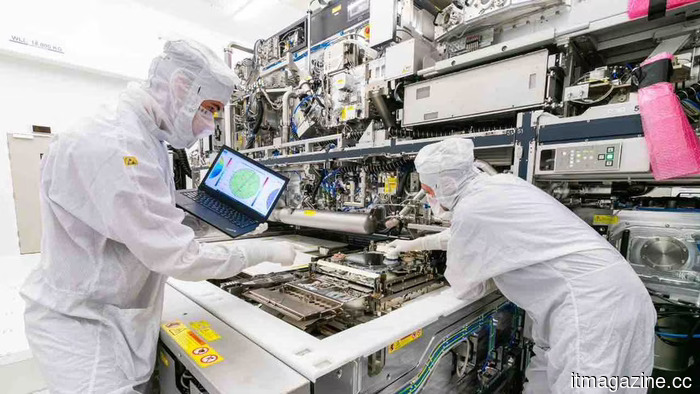 xLight EUV investment: $350 million funding targets ASML.
The xLight EUV gamble: the US-supported startup is seeking to raise $350 million to compete with ASML, while a Dutch company sets its sights on Nvidia.
xLight EUV investment: $350 million funding targets ASML.
The xLight EUV gamble: the US-supported startup is seeking to raise $350 million to compete with ASML, while a Dutch company sets its sights on Nvidia.
 Ferrari has changed its marketing head just a month after the Luce EV unveiling caused a significant drop in its stock value, erasing billions.
Enrico Galliera, Ferrari's CMO for many years, is departing after 16 years. He will be succeeded by former BMW Italy chief Di Silvestre, who will begin on July 1.
Ferrari has changed its marketing head just a month after the Luce EV unveiling caused a significant drop in its stock value, erasing billions.
Enrico Galliera, Ferrari's CMO for many years, is departing after 16 years. He will be succeeded by former BMW Italy chief Di Silvestre, who will begin on July 1.
 Laifen Día Prime
Explore Laifen's Prime Day offers with a 40% discount on the SE 2 Hair Dryer and P3 Pro Electric Shaver—high-quality grooming devices crafted to make your daily routine easier.
Laifen Día Prime
Explore Laifen's Prime Day offers with a 40% discount on the SE 2 Hair Dryer and P3 Pro Electric Shaver—high-quality grooming devices crafted to make your daily routine easier.
 Riviera Partners has purchased the AI startup recruitment firm Lateral Labs as the competition for talent transforms the executive search landscape.
Riviera Partners, an executive search firm, has purchased Lateral Labs, an AI recruitment startup with clients such as Cursor and ElevenLabs.
Riviera Partners has purchased the AI startup recruitment firm Lateral Labs as the competition for talent transforms the executive search landscape.
Riviera Partners, an executive search firm, has purchased Lateral Labs, an AI recruitment startup with clients such as Cursor and ElevenLabs.
 Deezer introduces a remix tool that operates without AI and compensates artists for each stream.
Deezer's Remix Lab enables fans to remix songs with the approval of artists using in-app tools, rather than AI, and provides royalties for every stream of the remixed songs.
Deezer introduces a remix tool that operates without AI and compensates artists for each stream.
Deezer's Remix Lab enables fans to remix songs with the approval of artists using in-app tools, rather than AI, and provides royalties for every stream of the remixed songs.
The House legislates on a bill regarding energy expenses for AI data centers.
Congress is aiming for Big Tech to take on the energy expenses of AI data centers. A House committee is set to vote this week on a measure to ensure that the costs associated with AI development do not fall on household electricity bills.