
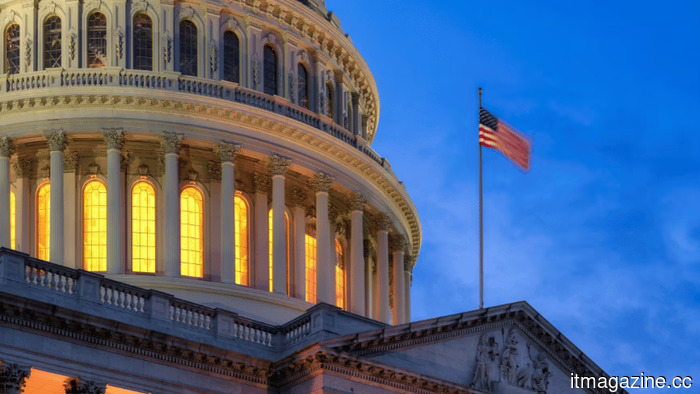
House votes on legislation regarding energy costs for AI data centers.
Congress is taking steps to prevent households from covering the energy expenses incurred by Big Tech's AI operations. A House committee is set to vote this week on a series of measures aimed at placing the financial responsibility for AI data center energy costs back on the companies that generate them. As AI usage leads to increased electricity bills, Congress aims to ensure that Big Tech contributes more to these expenses. According to POLITICO’s E&E News, the House Energy and Commerce Committee's energy panel will vote on Wednesday regarding these bills, which focus on the energy costs associated with AI data centers. The intention is to eliminate the need for average households to subsidize these developments.
This action represents an initial move, rather than a completed legislative measure. The markup process is just the beginning of a lengthy journey. However, its significance is notable as it reflects the first occasion in which Republican leaders have come together to devise concrete strategies to address rising data center costs.
What the bills propose
The primary measure is the bipartisan Ratepayer Protection Act, or H.R. 9340, which would formalize the commitment made by Big Tech firms under President Trump’s “Ratepayer Protection Pledge.” This pledge indicated that these companies would bear their own data center energy expenses, meaning that the financial burden of powering a data center should rest with its owner rather than local households.
The legislative mechanism is technical but straightforward. The bill aims to amend a 1978 utility law, requiring the largest electricity consumers to take on the total incremental expenses of the grid upgrades that are developed to accommodate them. This would apply to any non-residential facility consuming 100 megawatts or more, a threshold designed to capture large data centers.
Additionally, the legislation addresses stranded costs, ensuring that if a customer withdraws, they are still accountable for the upgrades made on their behalf. The bill is spearheaded by Rep. Gabe Evans, a Republican from Colorado, with support from Rep. Kathy Castor, a Democrat from Florida.
A second proposal, titled the Protecting Families from AI Data Center Energy Costs Act (H.R. 6529), introduced by Ohio Democrat Rep. Greg Landsman, has a more focused agenda. It would require federal energy regulators to gather major stakeholders and devise strategies to protect residents from surging electricity costs. This conference would convene utilities, regulators, and consumer advocates.
The remaining proposals in the package revolve around enhancing grid infrastructure. Some of the bills would encourage regulators to investigate electricity demand forecasting, others would assess AI technologies for grid management, and some would establish better standards for transmission lines. Collectively, they aim to address a booming demand that is placing a strain on the current system. The markup is scheduled for Wednesday afternoon at the Rayburn building.
Included in the measures are the Load Forecasting Enhancement Act and the Advanced Transmission Technology to Reduce Rates Act. Although these may not attract significant media attention, both aim to improve grid data and infrastructure to accommodate future demands.
The rationale for urgency
The statistics shed light on the necessity for timely action. According to CNBC, electricity costs near major data center hubs have surged by as much as 267% over the past five years. Data centers currently consume approximately 4% to 5% of total U.S. electricity, and this figure is rapidly increasing.
The major players in this area include Amazon, Google, Meta, Microsoft, and Elon Musk's xAI, all of whom operate substantial data centers that require vast amounts of power. The question remains as to who will shoulder the cost of this power supply.
Underlying these legislative efforts is a straightforward concern: when utilities invest billions in infrastructure for a data center, those expenses may end up reflected in every customer's bills. Legislators aim to ensure that the companies responsible for the increased demand bear the costs instead. The pledge made this commitment, while the proposed bills aim to enforce it.
An uncommon moment of bipartisanship
The political landscape is unusual. Brett Guthrie, the Republican chair of the committee, emphasized the importance of America excelling in AI development against China, presenting the bills as a method to "protect ratepayers from escalating electricity prices."
The markup will be managed by Rep. Bob Latta, an Ohio Republican who chairs the energy subcommittee, as he guides the package through its initial voting phase. The backing of Republicans for this cost-shifting concept marks a notable shift in the party's stance.
Democrats attribute this response to the general public's sentiment. Kathy Castor, who co-sponsored the ratepayer bill, noted that Republicans are reacting to the "populist anger" of voters, stating, “The public is up in arms. They are very wary of paying any more for electricity.”
That discontent is palpable in communities, with grassroots movements successfully halting numerous data center projects worth billions due to local resistance against the added strain.
Regulatory actions in tandem
Congress is not acting independently in this matter. Just days before the markup, federal energy regulators instructed grid operators
Other articles
 At Config 2026, Figma introduced code layers to the canvas, allowing users to create custom AI plugins.
At Config 2026, Figma introduced code layers, animation functionality, AI-generated shaders, personalized skills for its AI assistant, and enhanced Weavy integration.
At Config 2026, Figma introduced code layers to the canvas, allowing users to create custom AI plugins.
At Config 2026, Figma introduced code layers, animation functionality, AI-generated shaders, personalized skills for its AI assistant, and enhanced Weavy integration.
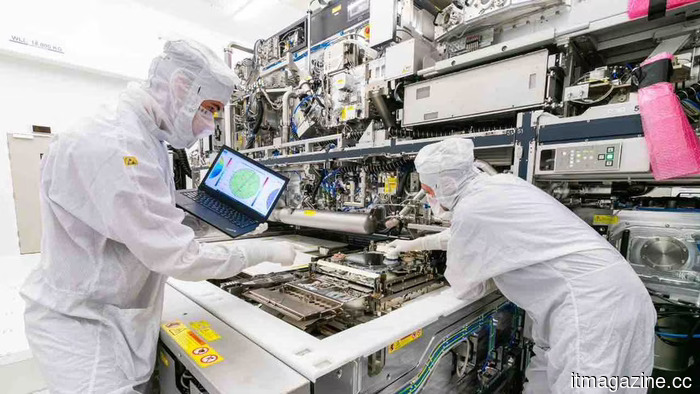 xLight EUV investment: $350 million funding targets ASML.
The xLight EUV gamble: the US-supported startup is seeking to raise $350 million to compete with ASML, while a Dutch company sets its sights on Nvidia.
xLight EUV investment: $350 million funding targets ASML.
The xLight EUV gamble: the US-supported startup is seeking to raise $350 million to compete with ASML, while a Dutch company sets its sights on Nvidia.
 At Config 2026, Figma introduced code layers on the canvas and enabled users to create custom AI plugins.
At Config 2026, Figma introduced code layers, support for animations, AI-generated shaders, custom capabilities for its AI assistant, and enhanced integration with Weavy.
At Config 2026, Figma introduced code layers on the canvas and enabled users to create custom AI plugins.
At Config 2026, Figma introduced code layers, support for animations, AI-generated shaders, custom capabilities for its AI assistant, and enhanced integration with Weavy.
 The projection for humanoid robots in China has increased to 50,000.
Morgan Stanley has raised its forecast for humanoid robots in China to 50,000 this year, marking the second increase as these machines are now being utilized in actual factories and stores.
The projection for humanoid robots in China has increased to 50,000.
Morgan Stanley has raised its forecast for humanoid robots in China to 50,000 this year, marking the second increase as these machines are now being utilized in actual factories and stores.
 Deepfake scams are becoming increasingly severe, and Bitdefender has now launched an app to address the concern.
Bitdefender RealCheck introduces deepfake detection for both Android and iOS, analyzing questionable videos for signs of manipulation and fraudulent intent prior to users sharing clips, clicking links, transferring money, or placing trust in impersonated public figures.
Deepfake scams are becoming increasingly severe, and Bitdefender has now launched an app to address the concern.
Bitdefender RealCheck introduces deepfake detection for both Android and iOS, analyzing questionable videos for signs of manipulation and fraudulent intent prior to users sharing clips, clicking links, transferring money, or placing trust in impersonated public figures.
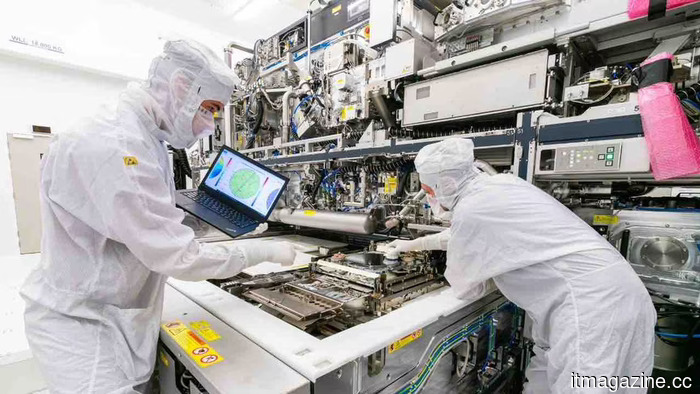 xLight EUV wager: $350 million funding targets ASML.
The xLight EUV bet: The US-supported startup is seeking to raise $350 million to compete with ASML, while a Dutch company sets its sights on Nvidia.
xLight EUV wager: $350 million funding targets ASML.
The xLight EUV bet: The US-supported startup is seeking to raise $350 million to compete with ASML, while a Dutch company sets its sights on Nvidia.
House votes on legislation regarding energy costs for AI data centers.
Congress is looking to have Big Tech responsible for the energy expenses of AI data centers. This week, a House committee is voting to ensure that the costs related to the AI expansion do not get passed on to household electricity bills.