
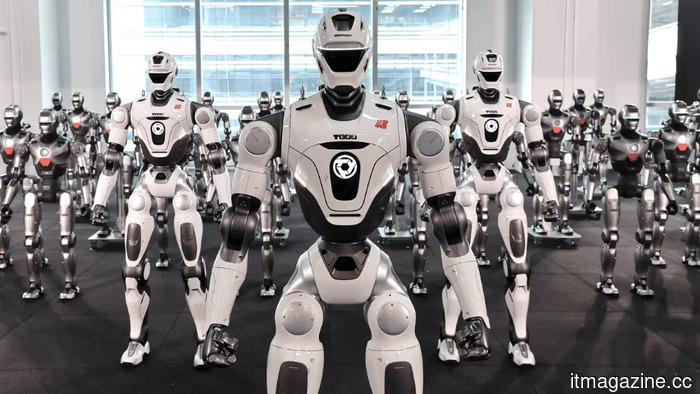
Hyundai robot strike: union decides to combat automation
Hyundai employees have overwhelmingly voted to authorize a strike, marking the first time robots are implicated in the dispute. A potential strike at Hyundai would challenge the dynamics of control on the factory floor as humanoid machines begin to integrate.
According to the Financial Times, the largest car manufacturer in South Korea is anticipating a confrontation regarding the introduction of robots. The Hyundai union has sanctioned a strike, driven by concerns over possible job displacement due to machines. The workers seek a voice in the implementation of AI and automation in production.
The voting results were decidedly in favor of action; 92% of the union's 39,668 members supported the strike after failing to reach a resolution in 11 rounds of wage discussions. Although the union has not initiated a walkout yet, they now possess the mandate to do so.
This represents a significant turnout from a major union. Hyundai stands as one of South Korea's largest private employers, and its Ulsan facility is among the largest car manufacturing plants globally. Any move by this union tends to attract national attention.
The ongoing conflict resembles past labor issues, with the union pushing for increased performance bonuses, higher base wages, and an extended retirement age—concerns faced annually by Korean automakers. However, the context has intensified, as South Korea's automotive sector deals with tariffs, reduced demand, and intense competition from China. While management seeks flexibility, workers desire stability, and the introduction of robots has exacerbated this standoff.
A new demand has emerged from the union: assurances regarding jobs and working conditions as Hyundai incorporates AI and robotics. This issue has not surfaced in previous wage negotiations and has now taken center stage.
The catalyst for these concerns is a robot named Atlas. Hyundai owns Boston Dynamics, the American company that developed the humanoid robot, which was introduced with factory applications at CES in January. The announcement sent shockwaves through the industry.
Hyundai’s commitment is not casual—having acquired a controlling interest in Boston Dynamics in 2021, it is pushing the firm towards industrial applications aggressively. The latest iteration of Atlas can lift loads up to around 100 pounds and operate lengthy shifts, making it well-suited for the roles currently performed by Hyundai workers.
The statistics intensify the concern. Hyundai aims to produce up to 30,000 Atlas units annually by 2028, with over 25,000 designated for its Hyundai and Kia factories. Production is set to commence at a new robot facility in Savannah, Georgia.
The company presents a softer narrative, suggesting that Atlas will initially handle dangerous, monotonous, and physically demanding tasks such as parts sequencing before branching into assembly. However, workers interpret the message more starkly. The Korean Metal Workers’ Union highlights that each robot will cost less than two years' worth of a worker's salary, framing the robot less as an aide and more as a potential replacement.
This disparity between the company's narrative and the union's perspective encapsulates the broader conflict. Hyundai emphasizes safety and labor shortages, while the union focuses on employment and bargaining power, both referencing the same technology.
“Not a single robot without a union” has become the union's resolute stance. They demand that “no humanoid robots” be deployed on production lines without a labor-management agreement, seeking a veto rather than mere consultation, fundamentally reshaping the entire discussion.
The dispute now extends beyond financial compensation. It centers on who determines the replacement of human labor with machines. Hyundai aims to implement changes at its own pace, while the union insists on being involved in these decisions.
The union also holds negotiating power. Hyundai employees have previously staged walkouts, and a strike could significantly disrupt vehicle production. This leverage is why the demand regarding robots resonates so strongly; the company cannot simply ignore it.
This situation arises within a nation that is already reevaluating the interplay between labor and technology. Unions in South Korea, particularly those within Samsung, have become bolder, and recent pay negotiations reflect a shift in how Korean workers advocate for their rights. The conflict at Hyundai adds further momentum to this trend.
Government officials are observing closely, as South Korea’s administration has asserted that the advantages of AI must be shared with the public rather than just benefiting shareholders. A strike at the largest automaker over robots will turn this principle into a real-world measure.
Demographics play a significant role as well, with South Korea quickly aging. Automakers contend that robots will address labor shortages that the aging population will exacerbate. However, the union disputes this narrative, viewing it instead as an attempt by the company to reduce costs while masking it as a measure for future-proofing.
Hyundai is at the forefront but not isolated in this trend; factories across Asia are hurriedly adopting humanoid robots, from China's smartphone manufacturers to logistics firms. JD.com has announced plans for robots to eventually substitute for its couriers. This brings forth the essential question: what becomes of the workforce?
The scale of this transformation is unprecedented. While earlier automation involved fixed machinery
Other articles
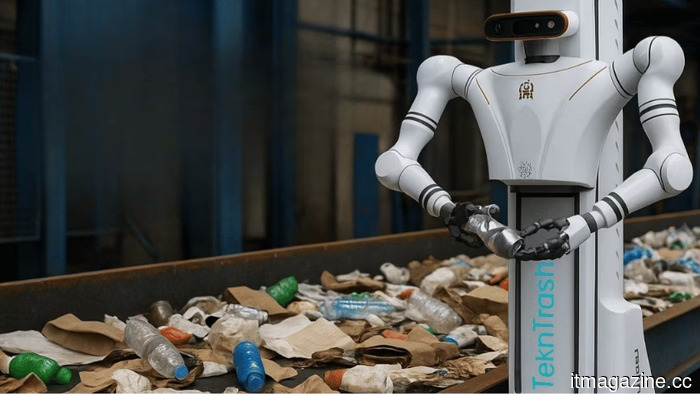 China's projection for humanoid robots has been doubled to 50,000.
Morgan Stanley has increased its forecast for humanoid robots in China to 50,000 this year, marking its second revision, as these machines begin to appear in actual factories and stores.
China's projection for humanoid robots has been doubled to 50,000.
Morgan Stanley has increased its forecast for humanoid robots in China to 50,000 this year, marking its second revision, as these machines begin to appear in actual factories and stores.
 What features contribute to a laptop's effectiveness for remote work?
This article is presented in collaboration with Dell. The rise of remote and hybrid work has altered what individuals anticipate from a laptop. Many professionals no longer spend their entire day at a single desk. A standard work routine now includes morning Zoom or Microsoft Teams meetings, multiple browser tabs alongside Slack and email, and the need to move around.
What features contribute to a laptop's effectiveness for remote work?
This article is presented in collaboration with Dell. The rise of remote and hybrid work has altered what individuals anticipate from a laptop. Many professionals no longer spend their entire day at a single desk. A standard work routine now includes morning Zoom or Microsoft Teams meetings, multiple browser tabs alongside Slack and email, and the need to move around.
 I would suggest these Prime Day charger deals before the prices rise again.
Prime Day has reduced prices on practical charging accessories from Anker, Ugeen, and Belkin, which feature GaN power bricks and magnetic charging stands.
I would suggest these Prime Day charger deals before the prices rise again.
Prime Day has reduced prices on practical charging accessories from Anker, Ugeen, and Belkin, which feature GaN power bricks and magnetic charging stands.
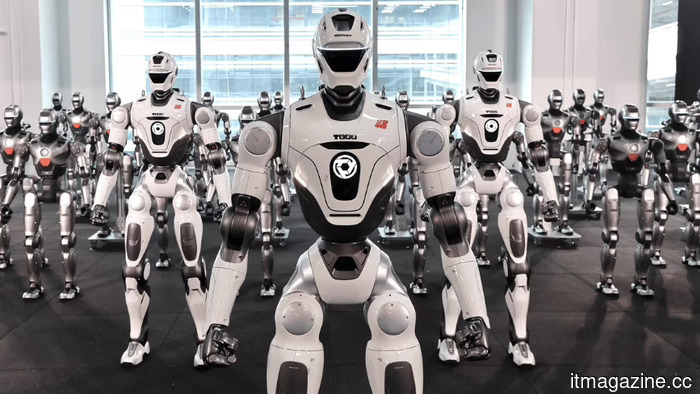 Hyundai workers vote to oppose automation in robot strike.
Workers at Hyundai voted 92% in favor of authorizing a strike, seeking control over the robots that are expected to fill its factories. This could lead to a strike involving Hyundai robots.
Hyundai workers vote to oppose automation in robot strike.
Workers at Hyundai voted 92% in favor of authorizing a strike, seeking control over the robots that are expected to fill its factories. This could lead to a strike involving Hyundai robots.
 I would take advantage of this 8BitDo Prime Day keyboard offer before purchasing another dull gaming keyboard.
8BitDo’s mechanical keyboard, inspired by Xbox, is now available at a discounted price for Prime Day. It combines a transparent green design that evokes nostalgia, wireless connectivity, hot-swappable switches, and an 87-key layout, making it a more appealing option for upgrading your desk.
I would take advantage of this 8BitDo Prime Day keyboard offer before purchasing another dull gaming keyboard.
8BitDo’s mechanical keyboard, inspired by Xbox, is now available at a discounted price for Prime Day. It combines a transparent green design that evokes nostalgia, wireless connectivity, hot-swappable switches, and an 87-key layout, making it a more appealing option for upgrading your desk.
 By 2028, expenses associated with AI coding might exceed the salaries of developers.
According to Gartner, by 2028, the expenses associated with AI coding will surpass the typical salary of a developer, due to the rise in token usage and consumption-based pricing.
By 2028, expenses associated with AI coding might exceed the salaries of developers.
According to Gartner, by 2028, the expenses associated with AI coding will surpass the typical salary of a developer, due to the rise in token usage and consumption-based pricing.
Hyundai robot strike: union decides to combat automation
Workers at Hyundai voted 92% in favor of authorizing a strike, seeking control over the influx of robots expected in its factories. A strike involving Hyundai robots may be forthcoming.