
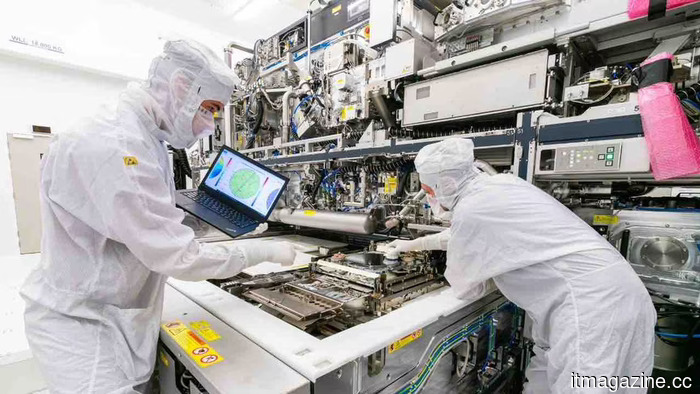
xLight EUV wager: $350 million funding targets ASML.
xLight, a US-backed startup led by former Intel CEO Pat Gelsinger, is in the process of securing $350 million to develop an xLight EUV light source that could challenge ASML's dominance in semiconductor manufacturing. Just days prior, a Dutch competitor targeted Nvidia. Interest in deep-tech chips is once again on the rise.
The technology behind AI is once again attracting venture capital. xLight, a startup based in California that is creating a new type of light source for chip production, is reportedly in discussions to raise $350 million, according to The Information. Boardman Bay Capital Management and Bain Capital are preparing to lead this funding round. Having remained relatively silent during years of development, the size of this fundraising indicates the extent of the company's aspirations.
The proposal is ambitious. xLight aims to reduce both the cost and time required to manufacture the most advanced AI chips. It is betting on an alternative method to extreme ultraviolet (EUV) lithography, the process currently used to print tiny circuits on silicon. Should it succeed, xLight's EUV hardware would fit into the machines used to produce Nvidia's chips.
What xLight is actually creating
Currently, ASML is the sole manufacturer of EUV machines. Their systems utilize lasers aimed at tin droplets to generate light at a wavelength of 13.5 nanometers, which is used to print the smallest features onto chips. These machines are enormous, each costing hundreds of millions of dollars, and are delivered in segments.
The heart of EU technologyThe latest updates from the EU tech sector, a story from our founder Boris, and some questionable AI artwork. It's free, weekly, in your inbox. Subscribe now!xLight aims to innovate by developing a new light source. Instead of using tin, the company is working on a free-electron laser powered by a compact particle accelerator. The firm claims that this approach can achieve wavelengths as low as 2nm. Shorter wavelengths enable finer circuit prints, resulting in more transistors on each chip.
The financial aspect explains the heightened interest. A single high-end EUV machine can exceed $380 million, with only a few factories globally capable of operating one. Any advancements that allow for finer circuit printing or cost reductions will have a ripple effect throughout the entire industry.
The strategy is not to compete directly with ASML. xLight's intention is to sell its light source to ASML. A functioning prototype is anticipated by 2028 at the Albany NanoTech complex in New York.
Washington enters as a chip investor
This funding initiative follows a significant endorsement from the US government. This month, the Department of Commerce finalized a $150 million grant to xLight under the CHIPS and Science Act, which will support the construction of the free-electron laser prototype.
This makes Washington an early supporter of a private chip initiative rather than just a buyer. xLight has previously raised around $200 million, comprising federal funds and an earlier $40 million round. The new $350 million funding will take this total higher, and the company is reportedly securing billions in non-binding project financing for upcoming facilities.
The grant is provided under the CHIPS and Science Act, legislation aimed at revitalizing domestic chip manufacturing. Most of these funds have been allocated to factories. Supporting a light-source startup is a more unusual and riskier investment in a technology that has yet to be realized.
The leader of this effort understands the industry's challenges. Pat Gelsinger, who led Intel until he was ousted by the board in late 2024, is now the chair of xLight while also serving as a venture partner at Playground Global. His reputation lends the startup considerable credibility among the chipmakers it seeks to serve.
A Dutch competitor takes aim at Nvidia
xLight is not the only chip hardware investment making headlines this week. In the Netherlands, Euclyd is targeting approximately €200 million ($229 million) in Series A funding, according to Bloomberg. Peter Wennink, the former CEO of ASML, is advising and investing in the Eindhoven-based startup. Bernardo Kastrup, a fellow ASML veteran, founded the company in 2024.
Euclyd is focused on a different main adversary. It designs chips for AI inference, the process of running models post-training. It claims that its "Craftwerk" architecture performs this task with up to 100 times the efficiency of Nvidia's latest Vera Rubin hardware. While xLight seeks to dethrone ASML, Euclyd’s aim is to undermine Nvidia.
This strategic division is intentional. Nvidia's empire was built on training. Inference is the next target, and it appears to be more accessible. More efficient and cost-effective chips become crucial once a model operates daily. This is a gap that European challengers believe they can fill, with Euclyd being one of several pursuing it.
The two funding rounds share similarities. One is backed by Washington, while the other is supported by Europe, with
Other articles
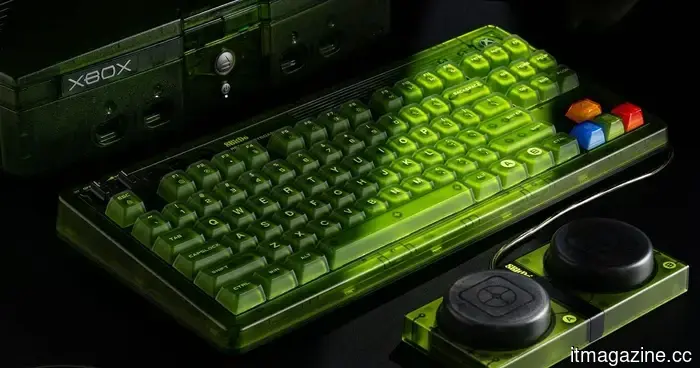 I would take advantage of this 8BitDo Prime Day keyboard offer before purchasing another dull gaming keyboard.
8BitDo’s mechanical keyboard, inspired by Xbox, is now available at a discounted price for Prime Day. It combines a transparent green design that evokes nostalgia, wireless connectivity, hot-swappable switches, and an 87-key layout, making it a more appealing option for upgrading your desk.
I would take advantage of this 8BitDo Prime Day keyboard offer before purchasing another dull gaming keyboard.
8BitDo’s mechanical keyboard, inspired by Xbox, is now available at a discounted price for Prime Day. It combines a transparent green design that evokes nostalgia, wireless connectivity, hot-swappable switches, and an 87-key layout, making it a more appealing option for upgrading your desk.
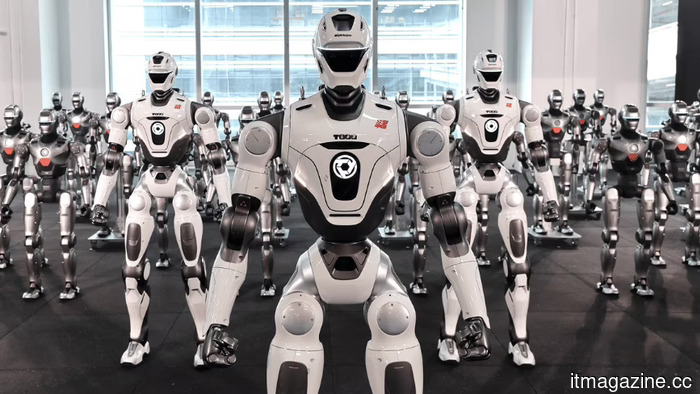 Hyundai robotic strike: union decides to challenge automation.
Workers at Hyundai voted 92% in favor of authorizing a strike, seeking control over the robots that are poised to inundate its factories. A strike involving Hyundai robots may be imminent.
Hyundai robotic strike: union decides to challenge automation.
Workers at Hyundai voted 92% in favor of authorizing a strike, seeking control over the robots that are poised to inundate its factories. A strike involving Hyundai robots may be imminent.
 Riviera Partners purchases the AI recruitment startup Lateral Labs as the competition for talent transforms executive search.
The executive search company Riviera Partners has purchased Lateral Labs, an AI recruitment startup with clients such as Cursor and ElevenLabs.
Riviera Partners purchases the AI recruitment startup Lateral Labs as the competition for talent transforms executive search.
The executive search company Riviera Partners has purchased Lateral Labs, an AI recruitment startup with clients such as Cursor and ElevenLabs.
 This Roborock robot vacuum has just received a significant price reduction and could be the most intelligent home improvement you make this summer.
Robot vacuums have significantly progressed from the novelty devices they used to be. The latest high-end models not only vacuum but also map your living space, navigate around obstacles, mop hard floors, and handle one of the most labor-intensive household tasks with little involvement from homeowners. This is precisely why the Roborock Qrevo S Pro has gained popularity.
This Roborock robot vacuum has just received a significant price reduction and could be the most intelligent home improvement you make this summer.
Robot vacuums have significantly progressed from the novelty devices they used to be. The latest high-end models not only vacuum but also map your living space, navigate around obstacles, mop hard floors, and handle one of the most labor-intensive household tasks with little involvement from homeowners. This is precisely why the Roborock Qrevo S Pro has gained popularity.
 The new trailer for One Piece has arrived, but why is Netflix choosing to remake it at this time?
The first season of Netflix's One Piece remake adapts only 50 chapters of the manga, featuring the original voice of Luffy, Mayumi Tanaka, making a comeback.
The new trailer for One Piece has arrived, but why is Netflix choosing to remake it at this time?
The first season of Netflix's One Piece remake adapts only 50 chapters of the manga, featuring the original voice of Luffy, Mayumi Tanaka, making a comeback.
xLight EUV wager: $350 million funding targets ASML.
The xLight EUV bet: The US-supported startup is seeking to raise $350 million to compete with ASML, while a Dutch company sets its sights on Nvidia.