
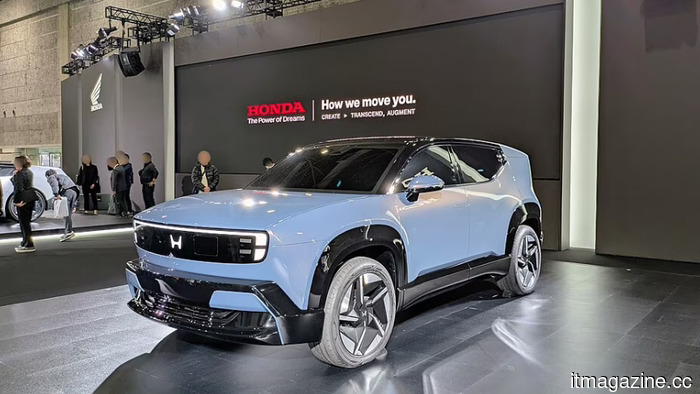
Honda has reached a multiyear agreement for solid-state batteries with QuantumScape after discontinuing its electric vehicle lineup.
**TL;DR** Honda R&D has entered into a multiyear agreement with QuantumScape to work on solid-state batteries, making it the second major OEM to do so after Volkswagen.
Honda R&D, the autonomous research division of Honda Motor Company, has established a multiyear collaborative research agreement with California-based QuantumScape to develop and produce solid-state battery cells. This deal, unveiled on June 18, positions Honda as the second prominent automaker to collaborate with QuantumScape, following Volkswagen. The agreement comes after Honda performed an extensive technology assessment, which included practical testing and competitive benchmarking of QuantumScape’s solid-state technology.
Solid-state batteries replace the liquid electrolyte typically found in conventional lithium-ion cells with a solid substance, offering potential benefits like increased energy density, quicker charging times, and enhanced safety. Automakers have been striving to commercialize this technology for several years, with companies like Toyota, BMW, and Nissan investing significantly in various competing methodologies. QuantumScape's design features a ceramic separator and a lithium-metal anode, which the company claims allows for significantly superior performance compared to traditional cells.
“QS technology showed impressive and distinct benefits during our evaluation,” stated Atsushi Ogawa, chief operating officer of Honda R&D’s Research Center of Excellence. “We believe there is potential for QS technology to deliver value across multiple applications, including automotive, and we are eager to advance to the next phase of our partnership.”
The timing is significant as Honda has been stepping back from electric vehicle initiatives rather than making progress in that area. Earlier this year, the company scrapped its entire 0 Series EV lineup in North America, which included the Honda 0 Saloon, Honda 0 SUV, and Acura RSX, leading to an estimated $15 billion in related losses. Honda was among several automakers that withdrew EVs from the US market in 2026, as tariffs and weakening demand altered the industry's financial landscape.
Since then, Honda has shifted its focus toward hybrids, with new models set for release in 2027, and has reduced its 2030 global targets for battery electric sales to around 20 percent of total volume. The partnership with QuantumScape indicates that the company has not completely abandoned EV battery research, even as it scales back on immediate electric vehicle production. Solid-state batteries could potentially support a renewed effort at electrification if the technology becomes commercially viable.
Volkswagen, which has licensed the technology through its battery subsidiary PowerCo SE, is QuantumScape's other major automotive partner. In September 2025, Volkswagen presented the first test vehicle equipped with QuantumScape cells, a modified Ducati V21L motorcycle. The QSE-5 cell, currently produced in pilot volumes, boasts an energy density of 844 watt-hours per liter and can be charged from 10 to 80 percent in around 12 minutes.
Earlier this year, QuantumScape launched its Eagle Line pilot production facility at its San Jose headquarters, which manufactures QSE-5 solid-state battery samples for partner assessments and serves as a model for large-scale production. The Eagle Line utilizes QuantumScape’s Cobra process, a rapid separator production method that the company claims facilitates manufacturing at gigawatt-hour levels.
QuantumScape CEO Siva Sivaram described Honda's evaluation as “one of the most thorough assessments of our technology to date” and noted that the agreement signifies increasing confidence in solid-state lithium-metal batteries. However, Honda has not yet licensed the technology for production; it is only engaged in joint research at this stage. There is still a considerable gap between a research agreement and the deployment of batteries in production vehicles.
Honda is also pursuing its own solid-state battery initiative, having started pilot production of solid-state cells at its Sakura plant in Japan in January 2025. The partnership with QuantumScape suggests Honda is diversifying its approach to the technology instead of relying solely on its internal program.
On the day of the announcement, QuantumScape's shares rose by 12 percent. The company remains pre-revenue, reporting a loss of approximately $100 million in the first quarter of 2026, highlighting that solid-state battery technology is still several years away from generating commercial returns, despite the OEM collaborations.
This deal provides Honda with access to one of the more promising solid-state platforms, as confirmed by independent testing, while offering QuantumScape another major automaker to demonstrate that its technology can endure rigorous evaluations. The broader question remains whether either company can convert this research collaboration into batteries capable of powering production vehicles, an issue that the entire solid-state industry has been striving to resolve for nearly a decade.
Other articles
 This clever photographic technique causes AI chatbots to bypass their safety protocols.
An emerging exploit from Florida International University demonstrates how imperceptible pixel-level alterations in an image can deceive AI chatbots into producing responses they typically would reject.
This clever photographic technique causes AI chatbots to bypass their safety protocols.
An emerging exploit from Florida International University demonstrates how imperceptible pixel-level alterations in an image can deceive AI chatbots into producing responses they typically would reject.
 I discovered the top Prime Day headphone bargains that are worth your investment and avoided the low-quality options.
Prime Day is bursting with headphone offers, but I would prioritize checking these discounts from Sony, Bose, Sennheiser, JBL, and Beats first.
I discovered the top Prime Day headphone bargains that are worth your investment and avoided the low-quality options.
Prime Day is bursting with headphone offers, but I would prioritize checking these discounts from Sony, Bose, Sennheiser, JBL, and Beats first.
 Meta introduces its own smart glasses, one of which is designed in collaboration with Kylie Jenner.
Meta has introduced its inaugural self-branded smart glasses, featuring a unique edition by Kylie Jenner, along with the launch of the company's latest MuseSpark AI platform.
Meta introduces its own smart glasses, one of which is designed in collaboration with Kylie Jenner.
Meta has introduced its inaugural self-branded smart glasses, featuring a unique edition by Kylie Jenner, along with the launch of the company's latest MuseSpark AI platform.
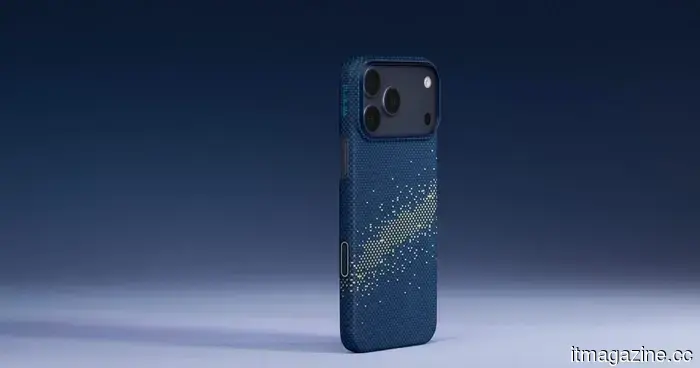 Your $2,000 premium phone merits premium protection.
High-end smartphones are designed to attract attention while challenging the boundaries of technology and cost. However, safeguarding them shouldn't compromise their attractiveness. This Prime Day, PITAKA is making that decision simpler.
Your $2,000 premium phone merits premium protection.
High-end smartphones are designed to attract attention while challenging the boundaries of technology and cost. However, safeguarding them shouldn't compromise their attractiveness. This Prime Day, PITAKA is making that decision simpler.
 Brexit after ten years: seven Prime Ministers, a 6% decline in GDP, and a mounting bill.
Ten years following the Brexit referendum, a study by the NBER indicates that the UK economy is 6-8% smaller than it would have been had it remained in the EU. The nation has seen seven prime ministers, a devalued pound, and is facing a demographic crisis.
Brexit after ten years: seven Prime Ministers, a 6% decline in GDP, and a mounting bill.
Ten years following the Brexit referendum, a study by the NBER indicates that the UK economy is 6-8% smaller than it would have been had it remained in the EU. The nation has seen seven prime ministers, a devalued pound, and is facing a demographic crisis.
 Stark Defence secures €500 million in funding, spearheaded by Sequoia and Founders Fund, with a valuation exceeding €3.5 billion.
Berlin-based drone manufacturer Stark Defence secured €500 million from Sequoia and Founders Fund, giving the two-year-old kamikaze drone startup a valuation exceeding three billion euros.
Stark Defence secures €500 million in funding, spearheaded by Sequoia and Founders Fund, with a valuation exceeding €3.5 billion.
Berlin-based drone manufacturer Stark Defence secured €500 million from Sequoia and Founders Fund, giving the two-year-old kamikaze drone startup a valuation exceeding three billion euros.
Honda has reached a multiyear agreement for solid-state batteries with QuantumScape after discontinuing its electric vehicle lineup.
Honda R&D has entered into a joint research agreement with QuantumScape to work on solid-state batteries, becoming the second large automaker, following Volkswagen, to do so.