
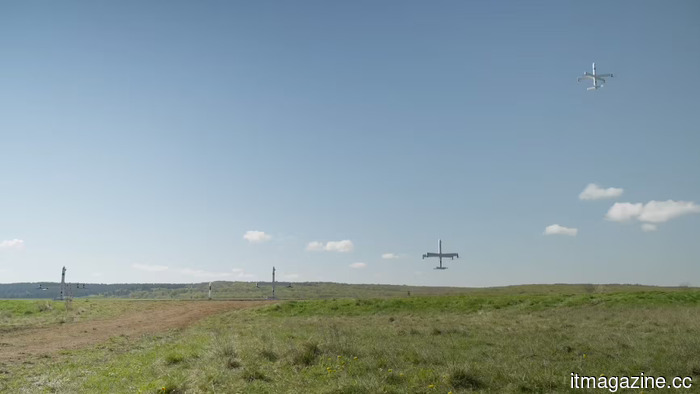
Stark Defence secures €500 million in funding, spearheaded by Sequoia and Founders Fund, with a valuation exceeding €3.5 billion.
**TL;DR** Berlin drone startup Stark Defence has secured €500 million in funding led by Sequoia and Founders Fund, elevating its valuation to over €3.5 billion just two years post-establishment.
Stark Defence, the Berlin-based strike drone company established in 2024, raised €500 million in a financing round headed by Sequoia Capital and Peter Thiel’s Founders Fund, as reported by Bloomberg on Monday. This investment values the startup at more than €3.5 billion, nearly three times the €1 billion mark it achieved earlier this year. Other contributors to this funding round include the NATO Innovation Fund, Döpfner Capital, Air Street Capital, 201 Ventures, and Project A.
This funding makes Stark one of the most well-capitalized defence tech startups in Europe. The company has now accumulated over €660 million in total funding, a significant increase from about €160 million prior to this round. More than 80% of the newly raised capital will be directed towards expanding manufacturing and research capabilities.
Stark specializes in loitering munitions, which are military drones designed to hover over a target, autonomously identify threats, and self-destruct upon impact. Its premier product, the Virtus, has seen deployment in Ukraine and can be assembled in just ten minutes. The company operates in Germany, Ukraine, Sweden, and Greece, and last year established a 40,000-square-foot production facility in Swindon, England.
Uwe Horstmann, who was appointed CEO in October 2025, is also a founding partner at the Berlin-based venture capital firm Project A, which is one of the investors in this funding round. He is a reserve officer in the German Armed Forces and has previously invested in defence tech firms, including ARX Robotics, a manufacturer of unmanned ground vehicles. Stark was co-founded by Florian Seibel, who previously built the competing German drone company Quantum Systems, alongside Johannes Schaback.
This fundraising follows Germany granting Stark and its Munich-based competitor Helsing initial contracts approximating €269 million each in February for kamikaze drones intended to equip the Bundeswehr’s 45th Armoured Brigade in Lithuania. Future framework agreements could potentially raise the total contract value to €1 billion for each company. Rheinmetall, Germany's largest defence contractor, was excluded from this initial award due to delays in its in-house drone program.
Peter Thiel’s participation in Stark has raised political concerns in Germany. In a confidential briefing before the Bundestag's vote on the drone contracts, the defence ministry informed lawmakers that Thiel Capital owned less than 10% of the company. Following this latest funding round, Bloomberg reported that Thiel's overall ownership has further decreased, with the founding team and employees holding the majority stake, while remaining shares are distributed among around 50 different investors.
The competition for funding in European defence tech has intensified significantly. Helsing is currently raising $1.5 billion at an $18 billion valuation, while Quantum Systems garnered €340 million in 2025. In the United States, Anduril raised $5 billion at a $61 billion valuation in May, doubling its valuation within a year.
Global venture capital investment in defence tech reached $49 billion in 2025, nearly doubling compared to the previous year. Much of this demand is driven by government expenditure. The EU’s ReArm Europe initiative seeks to mobilize up to €800 billion in defence spending over four years, while Germany's special defence fund, instituted following Russia’s invasion of Ukraine, has accelerated the procurement of autonomous systems. The European Defence Industry Programme, approved in March 2026 with a budget of nearly €1.5 billion, allocates specific funding for counter-drone and autonomous strike capabilities.
Stark now faces the challenge of scaling production to meet military procurement requirements. While it holds contracts and a deployed product, it has yet to prove its ability to manufacture at the volume required by defence ministries. In contrast, Helsing incorporates more advanced AI integration into its platform, and Quantum Systems, Seibel's previous company, has a longer history of operational maturity. The rivalry for contracts, technical talent, and investor funding among the three German firms is becoming more fierce.
Stark’s valuation growth is remarkable, even within the defence tech sector. It soared from a $500 million valuation in August 2025, during its Series B led by Sequoia, to over €3.5 billion in less than a year. Whether the company can leverage this fundraising momentum into large-scale production will be crucial in determining if it becomes a permanent player in European defence or serves as a cautionary tale regarding the rapid capital influx into a sector reshaped by conflict.
Otros artículos
 Prime Day 2026 is filled with Samsung offers, but only these made it to my shortlist.
Prime Day 2026 is bringing some of the most significant discounts on Samsung products we've encountered this year. Ranging from the Galaxy S26 series to Galaxy Watches, tablets, and earbuds, these deals provide the best value for your investment.
Prime Day 2026 is filled with Samsung offers, but only these made it to my shortlist.
Prime Day 2026 is bringing some of the most significant discounts on Samsung products we've encountered this year. Ranging from the Galaxy S26 series to Galaxy Watches, tablets, and earbuds, these deals provide the best value for your investment.
 Your $2,000 premium phone merits premium protection.
High-end smartphones are designed to attract attention while challenging the boundaries of technology and cost. However, safeguarding them shouldn't compromise their attractiveness. This Prime Day, PITAKA is making that decision simpler.
Your $2,000 premium phone merits premium protection.
High-end smartphones are designed to attract attention while challenging the boundaries of technology and cost. However, safeguarding them shouldn't compromise their attractiveness. This Prime Day, PITAKA is making that decision simpler.
 The MLRO of CryptoProcessing discusses why access to banking remains the most significant hurdle for cryptocurrency.
Cryptocurrency companies have invested years in persuading banks that they are reliable partners for business. Despite the increased regulation compared to previous years, many of these firms continue to be rejected. Jelizaveta Paskovskaja,
The MLRO of CryptoProcessing discusses why access to banking remains the most significant hurdle for cryptocurrency.
Cryptocurrency companies have invested years in persuading banks that they are reliable partners for business. Despite the increased regulation compared to previous years, many of these firms continue to be rejected. Jelizaveta Paskovskaja,
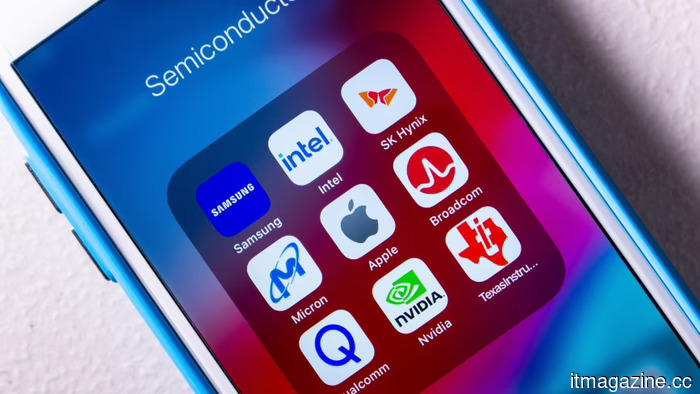 Concerns raised over South Korea's chip bonuses as a potential inflation threat.
Employees of Samsung and SK Hynix may receive profit-related bonuses of as much as $477,000 each, and the Bank of Korea has indicated that these payouts pose a risk to price stability.
Concerns raised over South Korea's chip bonuses as a potential inflation threat.
Employees of Samsung and SK Hynix may receive profit-related bonuses of as much as $477,000 each, and the Bank of Korea has indicated that these payouts pose a risk to price stability.
 The dominance of Google is beginning to wane in the age of AI.
Google maintains a 90% share of the search market and recently reported record earnings; however, the departure of talent, the rise of ChatGPT, and antitrust measures are gradually undermining its dominance.
The dominance of Google is beginning to wane in the age of AI.
Google maintains a 90% share of the search market and recently reported record earnings; however, the departure of talent, the rise of ChatGPT, and antitrust measures are gradually undermining its dominance.
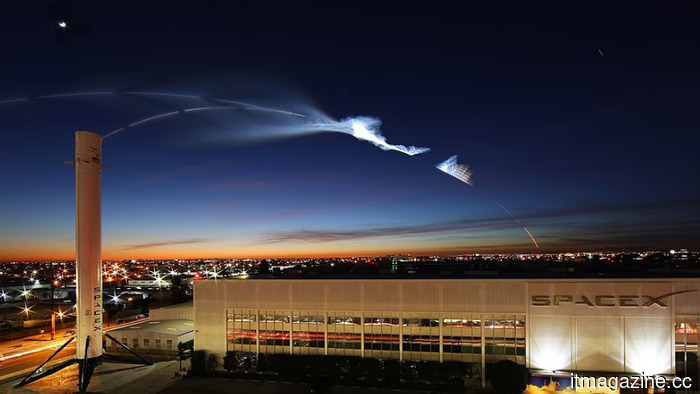 SpaceX garners $89 billion in demand for its inaugural bond sale, marking one of the largest offerings in the US this year.
SpaceX secured $89 billion in orders for its inaugural investment-grade bond offering, aiming to raise as much as $25 billion to refinance a bridge loan from its initial public offering.
SpaceX garners $89 billion in demand for its inaugural bond sale, marking one of the largest offerings in the US this year.
SpaceX secured $89 billion in orders for its inaugural investment-grade bond offering, aiming to raise as much as $25 billion to refinance a bridge loan from its initial public offering.
Stark Defence secures €500 million in funding, spearheaded by Sequoia and Founders Fund, with a valuation exceeding €3.5 billion.
Berlin-based drone manufacturer Stark Defence secured €500 million from Sequoia and Founders Fund, giving the two-year-old kamikaze drone startup a valuation exceeding three billion euros.