
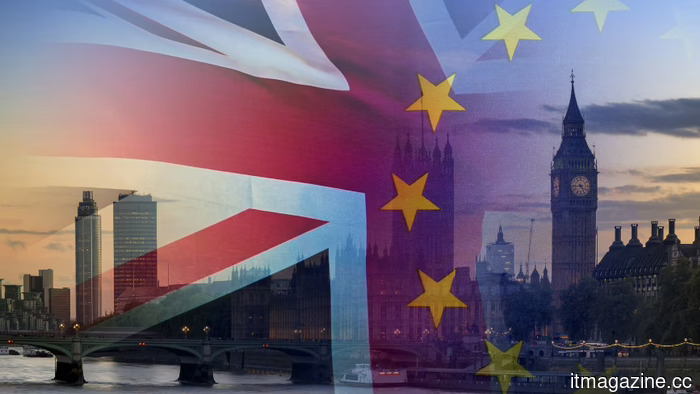
Brexit after ten years: seven Prime Ministers, a 6% decline in GDP, and a mounting bill.
TL;DR: Today marks the tenth anniversary of the Brexit referendum, which resulted in an NBER study estimating that the UK economy is 6-8% smaller than if it had remained in the EU, with investments down 12-13% and productivity reduced by 3-4%. Since the referendum, seven prime ministers have served, and 57% of the British public now believe leaving was a mistake.
On this day a decade ago, 52% of British voters chose to exit the European Union. The subsequent ten years have seen seven prime ministers come and go, a weakened currency, and an economy that, according to a significant study, is now 6% to 8% smaller than it would have been if the country had voted to stay.
On Monday, Keir Starmer became the sixth prime minister to resign since the referendum, stepping down after less than two years due to a leadership challenge from Andy Burnham. No prime minister since Brexit has lasted longer than three years in office, with Liz Truss serving only 49 days.
The economic impact
A recent working paper from the National Bureau of Economic Research, led by Stanford professor Nicholas Bloom, estimates the total cost of Brexit at 6% to 8% of GDP. Investment has decreased by 12% to 13%, while employment is down 3% to 4%, and productivity has faced similar declines.
About half of the GDP loss is attributed to five years of heightened policy uncertainty from the 2016 referendum until the Trade and Cooperation Agreement took effect in 2021. The rest comes from increased costs linked to more complex trade barriers.
The effects have not manifested as an immediate crisis but rather as a gradual decline that worsens over time. The authors note that the disparity between actual and counterfactual GDP is expected to continue expanding, even without new shocks.
Currency and trade
Following the referendum, the pound plummeted and has yet to recover. The GBP/EUR exchange rate has averaged €1.16 post-referendum, down from €1.27 in the prior decade, with sterling spending 98% of trading days below €1.20.
UK goods exports are estimated to be 13% to 15% lower than they would be without Brexit, according to research from the Centre for European Reform and the London School of Economics. New trade agreements with Australia, New Zealand, India, and Japan have not made up for the loss of seamless access to the EU market.
This divergence is evident in London's capital markets, where the domestically-focused FTSE 250 has significantly lagged behind the multinational FTSE 100 for most of the last decade, reflecting waning business confidence in companies serving the UK market.
Tech companies have been especially hesitant to go public in London, opting for New York or Amsterdam instead. This trend has accelerated even as the combined valuation of the UK tech sector reached $1 trillion.
A demographic shift
Amid the turnover in leadership, Britain's demographic situation has begun a decline largely unrelated to the referendum, though exacerbated by it. The Office for National Statistics projects that 2025 will be the last year when births exceed deaths in England and Wales.
From 2026 onwards, net migration will be the sole factor keeping the population from shrinking. The ONS anticipates 6.4 million births against 6.85 million deaths between 2024 and 2034, creating a natural deficit of approximately 450,000 individuals.
The fiscal ramifications are already apparent. Over the next decade, the number of Britons of retirement age is expected to increase by 1.8 million, while the number of children decreases by 1.6 million, narrowing the tax base needed for pensions and healthcare.
Public sentiment has shifted
A YouGov poll conducted on June 9, 2026, indicated that 57% of Britons now view leaving the EU as a misstep, compared to 30% who believe it was the right choice. This gap has steadily widened since 2021.
The political landscape created by the referendum has fragmented significantly. Reform UK, the populist party originating from the initial Brexit movement, led the latest Westminster voting intention poll at 27%, surpassing both the Conservatives and Labour at 18% each.
Insights from the tech sector
The UK technology industry illustrates a paradox that reflects the broader Brexit narrative. Valued at £1.2 trillion, the UK tech sector is the largest in Europe, with British AI startups raising over £8.2 billion in venture capital during the first half of 2026.
However, this impressive figure conceals underlying structural challenges. Companies that previously hired freely from cities like Paris, Berlin, and Warsaw now contend with an immigration system that causes lengthy delays and incurs significant costs for recruitment.
UK startups have needed to exert extra effort to maintain ties with the EU, facing obstacles to data sharing and market entry that did not exist prior to
Other articles
 Oracle eliminates 21,000 positions, with an SEC filing attributing the decision to AI.
Oracle reduced its workforce by 13% while investing $55.7 billion in data centers. Its SEC filing specifically attributes the job cuts to the adoption of AI.
Oracle eliminates 21,000 positions, with an SEC filing attributing the decision to AI.
Oracle reduced its workforce by 13% while investing $55.7 billion in data centers. Its SEC filing specifically attributes the job cuts to the adoption of AI.
 Your $2,000 premium phone merits premium protection.
High-end smartphones are designed to attract attention while stretching the boundaries of innovation and costs. However, safeguarding them shouldn't entail sacrificing their attractiveness. This Prime Day, PITAKA is simplifying that decision.
Your $2,000 premium phone merits premium protection.
High-end smartphones are designed to attract attention while stretching the boundaries of innovation and costs. However, safeguarding them shouldn't entail sacrificing their attractiveness. This Prime Day, PITAKA is simplifying that decision.
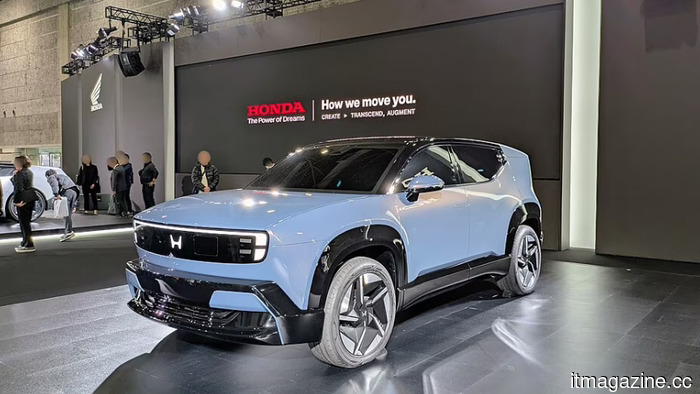 Honda has reached a multiyear agreement for solid-state batteries with QuantumScape after discontinuing its electric vehicle lineup.
Honda R&D has entered into a joint research agreement with QuantumScape to work on solid-state batteries, becoming the second large automaker, following Volkswagen, to do so.
Honda has reached a multiyear agreement for solid-state batteries with QuantumScape after discontinuing its electric vehicle lineup.
Honda R&D has entered into a joint research agreement with QuantumScape to work on solid-state batteries, becoming the second large automaker, following Volkswagen, to do so.
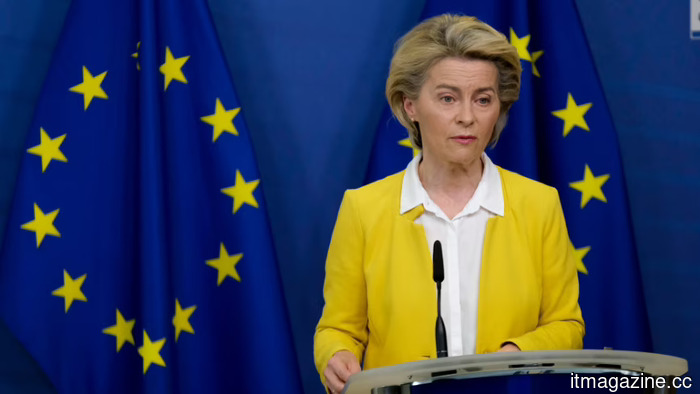 CEOs of Europe's largest tech companies establish a lobbying group to engage with von der Leyen.
Airbus, ASML, Ericsson, Mistral, Nokia, SAP, and Siemens are urging the EU to expedite regulatory changes, reconsider merger regulations, and establish European champions to prevent the US and China from advancing further.
CEOs of Europe's largest tech companies establish a lobbying group to engage with von der Leyen.
Airbus, ASML, Ericsson, Mistral, Nokia, SAP, and Siemens are urging the EU to expedite regulatory changes, reconsider merger regulations, and establish European champions to prevent the US and China from advancing further.
 Stark Defence secures €500 million in funding, spearheaded by Sequoia and Founders Fund, with a valuation exceeding €3.5 billion.
Berlin-based drone manufacturer Stark Defence secured €500 million from Sequoia and Founders Fund, giving the two-year-old kamikaze drone startup a valuation exceeding three billion euros.
Stark Defence secures €500 million in funding, spearheaded by Sequoia and Founders Fund, with a valuation exceeding €3.5 billion.
Berlin-based drone manufacturer Stark Defence secured €500 million from Sequoia and Founders Fund, giving the two-year-old kamikaze drone startup a valuation exceeding three billion euros.
 SpaceX generates $89 billion in interest for its inaugural bond sale, marking one of the largest offerings in the US this year.
SpaceX garnered $89 billion in orders for its initial investment-grade bond offering, aiming to collect up to $25 billion to refinance a bridge loan from its initial public offering (IPO).
SpaceX generates $89 billion in interest for its inaugural bond sale, marking one of the largest offerings in the US this year.
SpaceX garnered $89 billion in orders for its initial investment-grade bond offering, aiming to collect up to $25 billion to refinance a bridge loan from its initial public offering (IPO).
Brexit after ten years: seven Prime Ministers, a 6% decline in GDP, and a mounting bill.
Ten years following the Brexit referendum, a study by the NBER indicates that the UK economy is 6-8% smaller than it would have been had it remained in the EU. The nation has seen seven prime ministers, a devalued pound, and is facing a demographic crisis.