
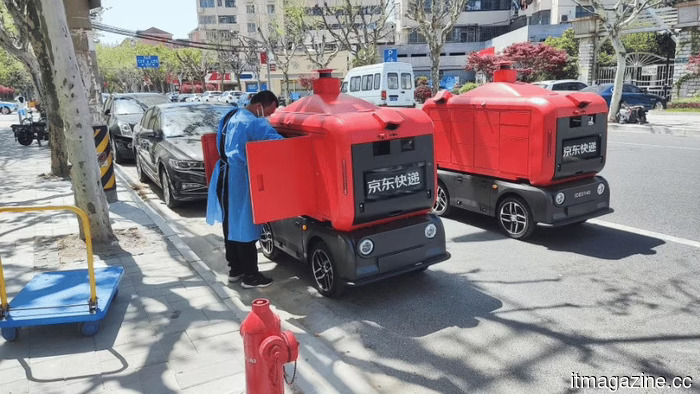
JD.com plans to replace its 700,000 delivery couriers with robots.
JD.com’s founder has stated that robots will ultimately replace the company’s 700,000 delivery couriers. This is a noteworthy acknowledgment that automation will impact blue-collar jobs. While many tech leaders are evasive about the role of machines in displacing workers, Richard Liu has been straightforward.
As the chairman of JD.com, one of China’s largest e-commerce companies, Liu spoke at the APEC China CEO Forum in Shenzhen on Sunday, indicating that robots will take over delivery tasks and displace the firm’s 700,000 delivery personnel “sooner or later.” In his words, “In the future, when robots are delivering parcels, there will come a day when couriers are basically no longer needed.” He expressed concern about the welfare of these workers, saying, “I really do not want our 700,000 brothers to go without meals, without jobs.” However, he did not specify when robot deliveries would become common.
Along with this warning, Liu introduced a plan named Nirvana, aimed at transitioning couriers into new roles before robots are implemented. JD.com has formed partnerships with around 120 schools across China to retrain delivery staff in skills needed for the maintenance and repair of the robots set to replace them. New job opportunities will include roles as robot maintenance engineers and AI trainers. Liu emphasized that he does not want to see his 700,000 employees left without jobs or income. Previously, he made a stronger commitment in an internal speech, stating that JD would not terminate any front-line workers displaced by machines.
These two messages present a clear contradiction. Liu predicts the disappearance of couriers while promising to safeguard the jobs of his existing employees. His strategy relies on the idea that retraining will outpace the advancing automation. Nevertheless, whether 120 schools can effectively reskill a workforce of 700,000 remains uncertain, as the demand for robot maintenance roles will not match the current number of couriers. The integrity of JD’s labor data over the next few years will be crucial to evaluate this situation.
JD.com is actively involved in developing robots, not merely observing the automation trend from afar. The company operates one of the most automated logistics systems in China and is already testing unmanned warehouses, drone deliveries, self-driving vehicles, and unattended pickup stations, with various pilot projects underway nationwide. In Shenzhen, delivery robots transport meals to airport departure gates, while others are utilized on commuter trains to replenish stock at convenience stores. The same automation that supports JD’s operations is the technology Liu claims will eliminate many jobs within the company.
These remarks come at a time of heightened anxiety in the Chinese job market. Policymakers are concerned that the rapid adoption of robots could jeopardize the livelihoods of the nation’s most vulnerable workers. Beijing has begun to prioritize tracking the impact of AI on employment. The statistics reflect this concern, with China expected to have approximately 320 million gig workers this year, up from 200 million five years ago, accounting for about 40 percent of urban employment. Youth unemployment reached 16.3 percent in April, indicating that any significant layoffs among couriers could severely affect an already pressured job market.
Liu’s honesty is particularly striking amidst a contentious global conversation. Many tech leaders in the West have shifted their narratives on whether AI will replace jobs, often softening their stance in response to political pressures. Meanwhile, technological advancements continue, with researchers enhancing robots' capabilities, and companies from the autonomous vehicle sector to automotive manufacturers are eagerly acquiring robotics firms to implement these technologies.
For JD.com’s 700,000 couriers, the crucial question is no longer if robots will arrive, but whether the job retraining efforts will be implemented in time.
Altri articoli
 UPS allocates $48 million to cold chain investments amid the rise in biologics.
UPS is enhancing 27 temperature-controlled freight centers across three continents due to the rising demand for biologics and GLP-1 medications, which is fueling a boom in the pharmaceutical cold chain market.
UPS allocates $48 million to cold chain investments amid the rise in biologics.
UPS is enhancing 27 temperature-controlled freight centers across three continents due to the rising demand for biologics and GLP-1 medications, which is fueling a boom in the pharmaceutical cold chain market.
 Germany informs Trump: no moon landing without European technology.
Germany's space minister has stated that NASA's Artemis missions rely on hardware manufactured in Germany, amid an escalating transatlantic technology sovereignty conflict.
Germany informs Trump: no moon landing without European technology.
Germany's space minister has stated that NASA's Artemis missions rely on hardware manufactured in Germany, amid an escalating transatlantic technology sovereignty conflict.
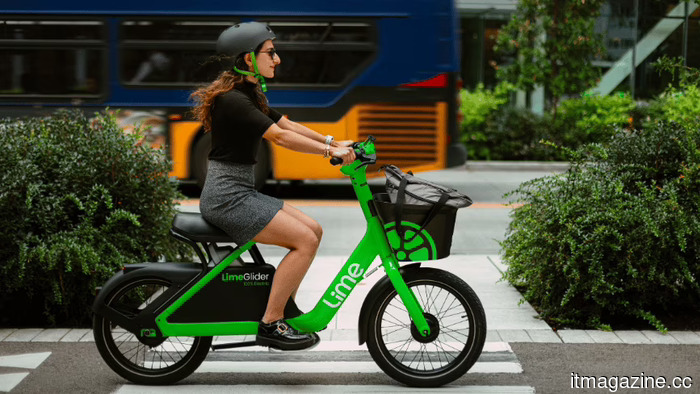 Lime IPO: Uber supports the scooter company's market launch.
The Lime IPO is valued at as much as $180.9 million, with its long-term supporter Uber poised to anchor the offering at an estimated valuation of around $1.8 billion.
Lime IPO: Uber supports the scooter company's market launch.
The Lime IPO is valued at as much as $180.9 million, with its long-term supporter Uber poised to anchor the offering at an estimated valuation of around $1.8 billion.
 China's trade restrictions affect 56 US companies following the Pentagon's listing.
China's trade restrictions affected 56 American companies, including rare-earth mining firms and drone manufacturers, as a response to the Pentagon's broadened military blacklist.
China's trade restrictions affect 56 US companies following the Pentagon's listing.
China's trade restrictions affected 56 American companies, including rare-earth mining firms and drone manufacturers, as a response to the Pentagon's broadened military blacklist.
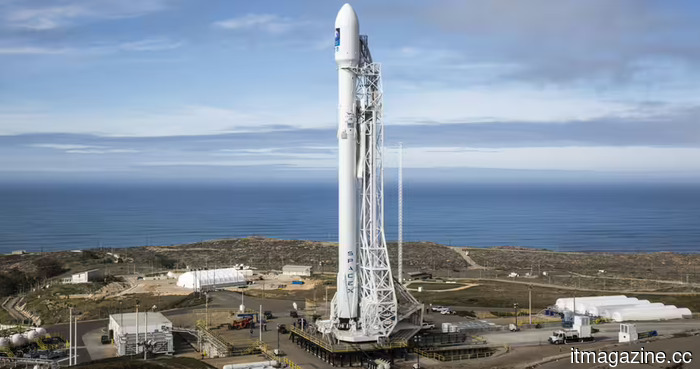 SpaceX launches its first sale of investment-grade bonds.
A few days following its historic IPO, SpaceX is securing a minimum of $20 billion through its initial investment-grade bond sale to finance a significant expansion of its AI data center.
SpaceX launches its first sale of investment-grade bonds.
A few days following its historic IPO, SpaceX is securing a minimum of $20 billion through its initial investment-grade bond sale to finance a significant expansion of its AI data center.
 OpenAI's lean balance sheet presents challenges for a potential IPO.
OpenAI has no debt and only $46 million in quarterly capital expenditures. As it approaches its IPO, that remarkably tidy balance sheet is raising questions rather than serving as a selling point.
OpenAI's lean balance sheet presents challenges for a potential IPO.
OpenAI has no debt and only $46 million in quarterly capital expenditures. As it approaches its IPO, that remarkably tidy balance sheet is raising questions rather than serving as a selling point.
JD.com plans to replace its 700,000 delivery couriers with robots.
Richard Liu, the founder of JD.com, stated that the company's robots will eventually replace its 700,000 couriers, but he promises to provide retraining for them.