
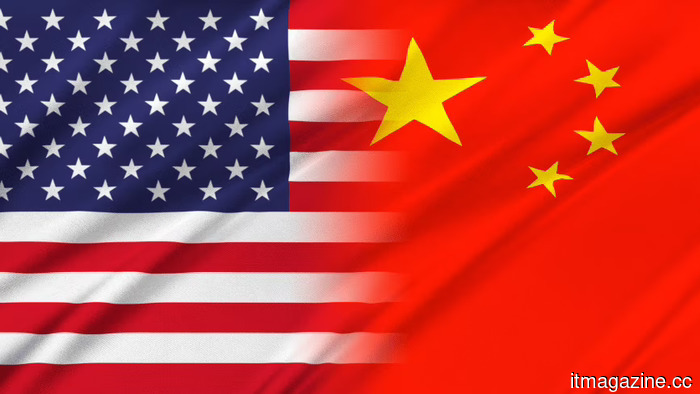
China's trade restrictions affect 56 US companies following the Pentagon's listing.
China has implemented new trade restrictions targeting 56 American companies, including rare-earth miners and drone manufacturers. This action comes as a direct response to Washington's decision to include Chinese companies on its military blacklist.
In retaliation to the Pentagon’s list, Beijing unveiled its own. On Monday, it announced trade restrictions affecting 56 U.S. firms, particularly impacting drone manufacturers and defense contractors. The most significant targets are two rare-earth companies backed by Washington, aimed at reducing China’s dominance over essential minerals.
This move serves as an explicit counteraction. Earlier this month, the U.S. Department of Defense expanded its roster of Chinese military firms under Section 1260H, adding a new group of Chinese technology companies. China's response was delivered in two parts.
First, the Ministry of Commerce placed 10 American companies on its export-control list, prohibiting Chinese exporters from sending them dual-use items, and preventing anyone from supplying them with goods of Chinese origin. Existing shipments must cease, although exporters can request a waiver from Beijing.
These 10 firms represent the U.S. defense technology sector and include drone manufacturers Red Cat Holdings and Teal Drones, as well as radar firm IMSAR, Jaia Robotics, Ball Aerospace, Oshkosh Defense, and L3Harris Maritime Services. Notably, MP Materials and USA Rare Earth are prominent among them, as both are central to Washington's efforts to establish a supply chain for critical minerals outside of China, and they have now been cut off from Chinese dual-use supplies.
Secondly, the Ministry of Finance restricted government buyers from procuring products from 46 U.S. companies, effective Monday. This list features many key players in American defense, including Lockheed Martin, Raytheon, Boeing Defense, Anduril, Shield AI, and Edge Autonomy, though their Chinese subsidiaries are exempt from this ban.
The restrictions on rare-earth companies mark the clearest signal in this exchange. China processes approximately 90% of the globe’s rare earths, which are essential for the magnets used in electric vehicles, wind turbines, fighter jets, and missiles.
MP Materials operates the only significant rare-earth mine in the U.S., while USA Rare Earth is developing magnet production capabilities. Both companies aim to reduce U.S. reliance on China, with Washington providing public funding to support their initiatives. Consequently, they have been designated as official targets by Beijing.
Last year, the U.S. government became MP Materials' largest shareholder as part of efforts to localize magnet manufacturing. China's recent actions appear to directly counteract this initiative.
This development aligns with a broader trend, as Beijing has been tightening its control over strategic materials throughout the year, from increased scrutiny on various rare metals to more extensive licensing regulations. It has already imposed restrictions on the exports of gallium, germanium, and antimony, all critical for semiconductor and weapons systems.
This ongoing exchange signifies the latest escalation in a protracted conflict. The U.S. has for years limited China's access to advanced semiconductor technology and the machinery necessary for its production, a dispute that recently involved ASML, the Dutch manufacturer of cutting-edge lithography equipment.
China continues to leverage its dominance over critical materials while attempting to cultivate goodwill in other regions, promoting affordable AI technology to developing countries, even amidst tensions with Washington.
For the companies named, the impact varies; defense contractors are less reliant on China and can withstand a procurement ban, whereas export controls have a more substantial effect, hindering access to essential Chinese inputs they might still require.
The overarching message is clear. With each new tightening of restrictions on Chinese technology by Washington, Beijing now has a well-established counter-response, and the rare-earth leverage, which the U.S. seeks to neutralize, remains firmly within China's control.
Other articles
 Lime IPO: Uber supports the scooter company's market launch.
The Lime IPO is valued at as much as $180.9 million, with its long-term supporter Uber poised to anchor the offering at an estimated valuation of around $1.8 billion.
Lime IPO: Uber supports the scooter company's market launch.
The Lime IPO is valued at as much as $180.9 million, with its long-term supporter Uber poised to anchor the offering at an estimated valuation of around $1.8 billion.
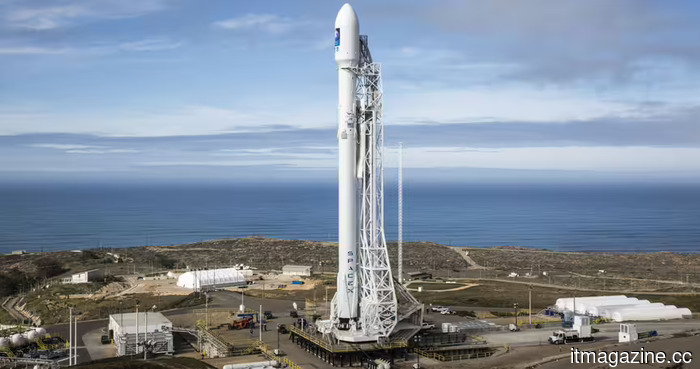 SpaceX launches its first sale of investment-grade bonds.
Just days after its record-breaking IPO, SpaceX is set to raise at least $20 billion through its inaugural investment-grade bond sale to finance a significant expansion of its AI data center.
SpaceX launches its first sale of investment-grade bonds.
Just days after its record-breaking IPO, SpaceX is set to raise at least $20 billion through its inaugural investment-grade bond sale to finance a significant expansion of its AI data center.
 Lime IPO: Uber plays a key role in the scooter company's market launch.
The Lime IPO is priced at a maximum of $180.9 million, with Uber, a longstanding supporter, expected to anchor the deal at approximately a $1.8 billion valuation.
Lime IPO: Uber plays a key role in the scooter company's market launch.
The Lime IPO is priced at a maximum of $180.9 million, with Uber, a longstanding supporter, expected to anchor the deal at approximately a $1.8 billion valuation.
 Meta acquires a stake in Cred and appoints a new head for WhatsApp.
Meta is putting $900 million into India's Cred for approximately a 20% ownership, and appointing founder Kunal Shah as the new head of WhatsApp, taking over from Will Cathcart.
Meta acquires a stake in Cred and appoints a new head for WhatsApp.
Meta is putting $900 million into India's Cred for approximately a 20% ownership, and appointing founder Kunal Shah as the new head of WhatsApp, taking over from Will Cathcart.
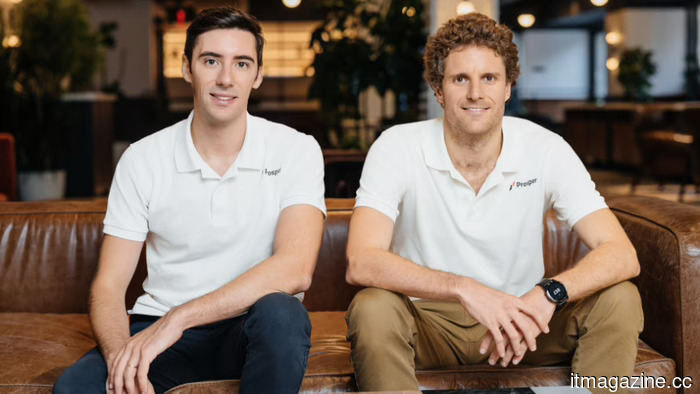 Prosper AI secures $30 million in funding from a16z to streamline the patient journey through automation.
Prosper AI, which operates in both Madrid and New York, has secured $30 million in a Series A funding round led by Andreessen Horowitz to expand its healthcare voice AI capabilities beyond just scheduling.
Prosper AI secures $30 million in funding from a16z to streamline the patient journey through automation.
Prosper AI, which operates in both Madrid and New York, has secured $30 million in a Series A funding round led by Andreessen Horowitz to expand its healthcare voice AI capabilities beyond just scheduling.
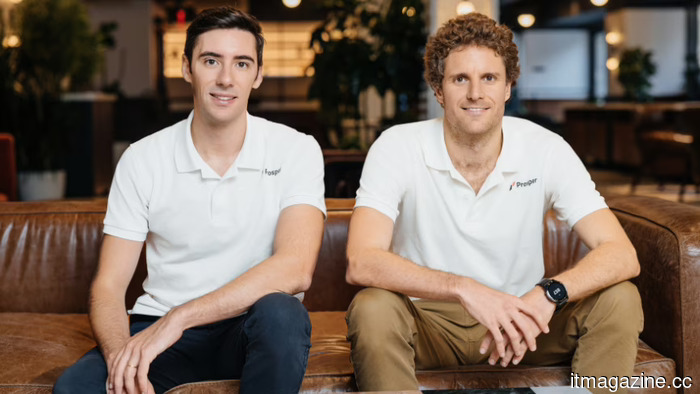 Prosper AI secures $30 million from a16z to streamline the patient journey through automation.
Prosper AI, which operates out of Madrid and New York, has secured $30 million in Series A funding led by Andreessen Horowitz to expand its healthcare voice AI capabilities beyond just scheduling.
Prosper AI secures $30 million from a16z to streamline the patient journey through automation.
Prosper AI, which operates out of Madrid and New York, has secured $30 million in Series A funding led by Andreessen Horowitz to expand its healthcare voice AI capabilities beyond just scheduling.
China's trade restrictions affect 56 US companies following the Pentagon's listing.
China's trade restrictions affected 56 American companies, including rare-earth mining firms and drone manufacturers, as a response to the Pentagon's broadened military blacklist.