
The EU will not mandate that publishers maintain the playability of games, yet the struggle against the termination of games is not finished.
The Commission has turned down the proposal, but the Digital Fairness Act may provide a way forward.
The European Commission has responded to the Stop Killing Games movement with a decision that is expected to disappoint many of its supporters. The regulator states that it cannot mandate publishers to keep video games playable once they are taken off the market, but it plans to collaborate with industry associations and consumer organizations to establish a voluntary code of conduct for managing the end of a game's lifecycle.
This decision comes after months of advocacy from consumer groups and game preservationists who contend that publishers should not be allowed to make purchased games unusable once support ceases.
According to the Commission, current copyright and intellectual property laws inhibit it from imposing a legal requirement that would obligate publishers to maintain the playability of discontinued games.
Instead, the regulator indicates that it will concentrate on increasing awareness of existing consumer rights and promoting more robust enforcement of those protections. The Commission also hinted that this might motivate publishers to provide longer support durations and clearer plans for the discontinuation of online games.
Stop Killing Games was initiated by YouTuber Ross Scott in 2024 after Ubisoft's closure of The Crew, which rendered the online racing game completely unplayable for customers who had purchased it.
The campaign does not call for publishers to keep servers running indefinitely. Instead, it advocates for games to remain in a playable state when official support concludes, whether through offline modes, private servers, or other alternatives that allow customers to continue using what they have bought.
The movement garnered enough support through the European Citizens' Initiative process to prompt a formal reply from the European Commission.
Ross Scott mentioned that the Commission’s response was largely anticipated, but he believes it still leaves crucial questions regarding the responsibilities of publishers when ceasing support for games that consumers own.
He pointed out that the campaign's next chance might arise with the upcoming Digital Fairness Act from the EU, which could facilitate stronger consumer protections concerning digital ownership. Scott also observed that the initiative continues to receive backing within the European Parliament, while similar movements addressing game shutdowns are gaining momentum in the United States.
Although the European Commission remains a significant hurdle, Scott asserts that the campaign is far from over. Supporters are now concentrating on the next chance to advocate for stronger protections for digital purchases.
Meanwhile, two of the most acclaimed titles in the Call of Duty series are making their way to modern PlayStation consoles.
Treyarch has confirmed that the original Call of Duty: Black Ops and Call of Duty: Black Ops 2 will soon be available on contemporary PlayStation systems for the first time. While Treyarch has not explicitly specified the target platforms, various reports and backend findings suggest the games are being set up as native PlayStation 4 releases, which will also be playable on PlayStation 5 through backward compatibility.
Epic Games has unveiled Unreal Engine 5.8, which marks the last major release planned in the UE5 series. The update introduces an experimental plugin that integrates large language model (LLM) support directly into the engine, along with a suite of new tools for worldbuilding, rendering, animation, and virtual production.
Roblox has also launched age-based accounts for children, complete with enhanced parental controls. Roblox Kids and Roblox Select accounts have now been rolled out globally, following a limited pilot in Australia, Indonesia, the Netherlands, and New Zealand last month. These account types are specifically designed for users under 16, aiming to ensure that child safety measures adapt as the child grows rather than remain fixed.






Other articles
 A US judge has determined that the admissions made by Huawei's CFO can be utilized against the company.
A US judge decided that Meng Wanzhou's 2021 statements regarding sanctions compliance can be used as evidence against Huawei in its criminal trial set for September.
A US judge has determined that the admissions made by Huawei's CFO can be utilized against the company.
A US judge decided that Meng Wanzhou's 2021 statements regarding sanctions compliance can be used as evidence against Huawei in its criminal trial set for September.
 SK Hynix has delivered its initial samples of 12-layer HBM4E to AI customers.
SK Hynix announced that it has delivered samples of its 12-layer HBM4E to key customers, boasting a speed of 16Gbps per pin and more than a 20% improvement in efficiency.
SK Hynix has delivered its initial samples of 12-layer HBM4E to AI customers.
SK Hynix announced that it has delivered samples of its 12-layer HBM4E to key customers, boasting a speed of 16Gbps per pin and more than a 20% improvement in efficiency.
 Tim Cook states that price increases for Apple products are inevitable due to rising memory costs driven by AI advancements.
Apple has refrained from significant price increases even with rising costs for RAM and storage. However, Tim Cook indicates that the memory challenges driven by AI are making it harder to sustain this approach.
Tim Cook states that price increases for Apple products are inevitable due to rising memory costs driven by AI advancements.
Apple has refrained from significant price increases even with rising costs for RAM and storage. However, Tim Cook indicates that the memory challenges driven by AI are making it harder to sustain this approach.
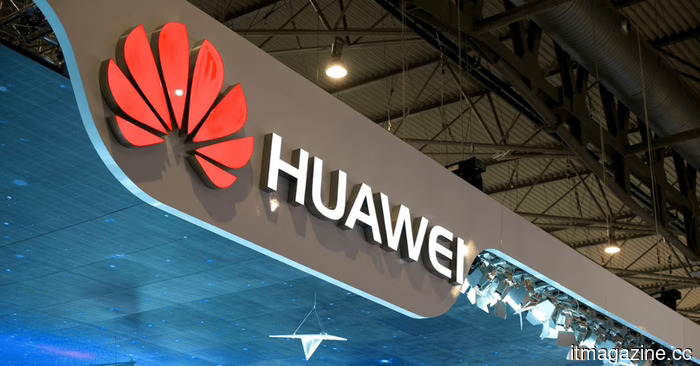 Bosch to compensate $36 million for unauthorized shipments to Huawei.
Germany's Bosch will pay $36 million to the US to resolve allegations that its subsidiaries sent phone components to Huawei without the necessary licenses.
Bosch to compensate $36 million for unauthorized shipments to Huawei.
Germany's Bosch will pay $36 million to the US to resolve allegations that its subsidiaries sent phone components to Huawei without the necessary licenses.
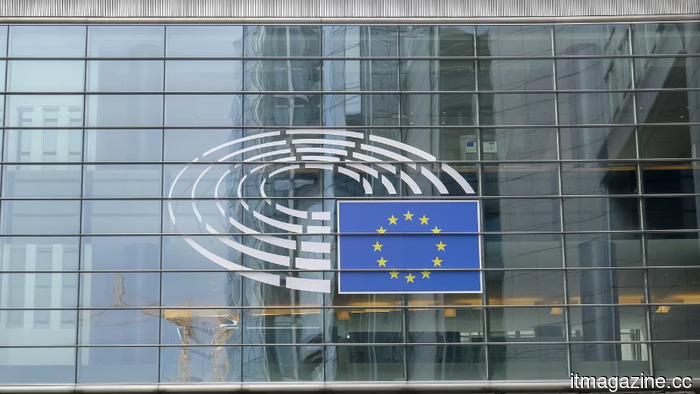 The EU cybersecurity agency is set to hold discussions with Anthropic under the framework of US export regulations.
According to the EU Commission, ENISA was scheduled to meet with Anthropic on Thursday regarding access to Mythos, a meeting that was arranged prior to a US export directive that complicated matters.
The EU cybersecurity agency is set to hold discussions with Anthropic under the framework of US export regulations.
According to the EU Commission, ENISA was scheduled to meet with Anthropic on Thursday regarding access to Mythos, a meeting that was arranged prior to a US export directive that complicated matters.
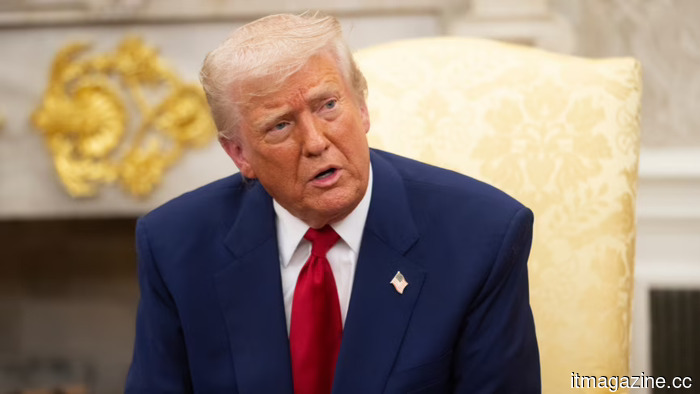 Trump states that Apple will manufacture chips in collaboration with Intel in the United States.
Trump states that Apple has committed to designing and manufacturing chips alongside Intel in the US, a year following Washington's investment in the chip company.
Trump states that Apple will manufacture chips in collaboration with Intel in the United States.
Trump states that Apple has committed to designing and manufacturing chips alongside Intel in the US, a year following Washington's investment in the chip company.
The EU will not mandate that publishers maintain the playability of games, yet the struggle against the termination of games is not finished.
Top Killing Games has encountered a significant obstacle in Europe after the Commission turned down its proposal. According to campaign founder Ross Scott, upcoming legislation might still pave the way for progress.