

The EU cybersecurity agency is set to hold discussions with Anthropic under the framework of US export regulations.
The European Commission confirmed that the EU’s cybersecurity agency was scheduled to meet with Anthropic on Thursday, a meeting that had been arranged before the situation became more complicated due to Washington’s actions. ENISA, the EU’s cybersecurity agency, had been invited to talks with the AI company as part of a process initiated weeks earlier, prior to the US export directive now hanging over them.
The primary aspect of the relationship is access. Anthropic had proposed that ENISA participate in Project Glasswing, an initiative allowing select organizations to test its Mythos model before its wider release, which would make the agency the first European entity to receive such access. This arrangement came after months of negotiations, including visits by Commission officials to San Francisco in late May to discuss the terms. The upcoming meeting is a continuation of those discussions rather than an initial engagement.
Then circumstances changed. The US Department of Commerce instructed Anthropic to halt access to its most advanced models, including for foreign nationals, citing concerns that these could be utilized by military or intelligence users in countries deemed problematic.
This directive directly impacts the agreement with ENISA: a good-faith offer to provide a European agency early access to an advanced model now conflicts with an American order that restricts that very access. This clash makes Thursday's meeting more significant than a standard vendor discussion. The Commission has confirmed the meeting is occurring; however, it has not clarified how Anthropic intends to reconcile its prior offer to a European partner with the new instructions from its own government to restrict access.
Discussions are reportedly focusing on establishing secure access arrangements and exploring how, if at all, ENISA can receive what was promised without putting Anthropic in violation of Commerce regulations. For Brussels, this situation serves as a stark reminder of its dependencies. The EU has spent years advancing its AI and cybersecurity objectives, and ENISA’s interest in Mythos illustrates a need to comprehend the most advanced systems available.
However, such advanced systems are predominantly American, and the US export policies can now influence a European agency’s ability to access them. The export dispute that has engaged Anthropic in Washington is, through this meeting, affecting Brussels as well.
Anthropic, meanwhile, is juggling relationships in two directions simultaneously. The company is preparing for an IPO while cautioning about AI risks, engaging with governments and businesses worldwide even as its own government tightens restrictions on what it can sell and to whom.
The ENISA meeting exemplifies this wider dilemma: a company trying to establish itself as a reliable partner for a European regulator while adhering to regulations set by another country. This situation highlights the limited options available to Europe. ENISA pursued access to Mythos specifically because cutting-edge capabilities are centralized in a few American laboratories, and the EU lacks a domestic equivalent for comparison.
This reliance reflects the same motivation pushing the bloc towards seeking sovereignty in AI and cloud computing, with the Anthropic meeting illustrating the urgency of this effort: a European agency’s capacity to evaluate the most advanced systems can be revoked by a decision made in Washington.
This dynamic is also impacting how banks are interacting with the technology, as Wall Street institutions are restricting Claude in sensitive areas while simultaneously engaging with the company in other markets.
For Anthropic, this meeting tests the feasibility of serving a foreign regulator while adhering to its own government's rules. The company has dedicated the year to alerting about AI risks while advancing toward its IPO and has characterized access initiatives like Project Glasswing as sincere engagement with regulatory bodies overseeing technology.
However, the Commerce directive reframes that engagement as a potential export issue, and the current discussions about secure access represent an effort to establish a framework that meets both perspectives. Determining whether such a framework can be achieved is, essentially, the focal point of Thursday's meeting.
The Commission has confirmed the meeting and the general topics for discussion; however, it has not specified whether ENISA will gain entry into Project Glasswing, nor under what conditions. For now, the meeting itself is the highlight, with the most significant aspect being the directive governing it.
Other articles
 You will soon have the ability to send view-once messages on WhatsApp.
According to WABetaInfo, WhatsApp is developing a feature for view-once text messages. This function allows users to send messages that can only be read once and then become unavailable, utilizing the same restrictions on screenshots and forwarding that are already applied to view-once images and videos.
You will soon have the ability to send view-once messages on WhatsApp.
According to WABetaInfo, WhatsApp is developing a feature for view-once text messages. This function allows users to send messages that can only be read once and then become unavailable, utilizing the same restrictions on screenshots and forwarding that are already applied to view-once images and videos.
 Epic Games has made a significant advancement in AI-generated games with Unreal Engine 5.8.
Unreal Engine 5.8 includes an experimental plugin that enables developers to link any LLM with the core engine systems, and Epic aims for even more extensive integration in Unreal Engine 6.
Epic Games has made a significant advancement in AI-generated games with Unreal Engine 5.8.
Unreal Engine 5.8 includes an experimental plugin that enables developers to link any LLM with the core engine systems, and Epic aims for even more extensive integration in Unreal Engine 6.
 Epic Games has made a significant advancement in AI-generated games with Unreal Engine 5.8.
Unreal Engine 5.8 includes an experimental plugin that allows developers to link any LLM to the main engine systems, and Epic intends to implement even more comprehensive integration in Unreal Engine 6.
Epic Games has made a significant advancement in AI-generated games with Unreal Engine 5.8.
Unreal Engine 5.8 includes an experimental plugin that allows developers to link any LLM to the main engine systems, and Epic intends to implement even more comprehensive integration in Unreal Engine 6.
 The EU will not require publishers to maintain the playability of games, but the battle against game abandonment is far from finished.
The top Killing Games initiative has encountered a significant setback in Europe following the Commission's rejection of its proposal. According to campaign founder Ross Scott, upcoming legislation might still offer a potential way forward.
The EU will not require publishers to maintain the playability of games, but the battle against game abandonment is far from finished.
The top Killing Games initiative has encountered a significant setback in Europe following the Commission's rejection of its proposal. According to campaign founder Ross Scott, upcoming legislation might still offer a potential way forward.
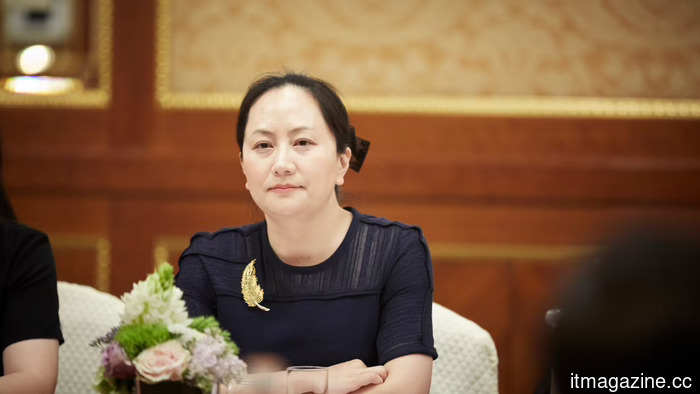 A US judge has determined that the admissions made by Huawei's CFO can be utilized against the company.
A US judge decided that Meng Wanzhou's 2021 statements regarding sanctions compliance can be used as evidence against Huawei in its criminal trial set for September.
A US judge has determined that the admissions made by Huawei's CFO can be utilized against the company.
A US judge decided that Meng Wanzhou's 2021 statements regarding sanctions compliance can be used as evidence against Huawei in its criminal trial set for September.
 Meta executive in charge of the internal AI revamp leaves after just two months.
Emily Dalton Smith, who spearheaded Meta's initiative to restructure around AI agents, is departing just two months after assuming the position.
Meta executive in charge of the internal AI revamp leaves after just two months.
Emily Dalton Smith, who spearheaded Meta's initiative to restructure around AI agents, is departing just two months after assuming the position.
The EU cybersecurity agency is set to hold discussions with Anthropic under the framework of US export regulations.
According to the EU Commission, ENISA was scheduled to meet with Anthropic on Thursday regarding access to Mythos, a meeting that was arranged prior to a US export directive that complicated matters.