

Tim Cook states that price increases for Apple products are inevitable due to rising memory costs driven by AI advancements.
Purchasing a new Apple device this fall might come at a higher price than anticipated.
The escalating costs of RAM and storage have become an increasing issue in the tech sector. Apple has so far managed to shield its customers from these price hikes, but as reported recently by the Wall Street Journal, this may change soon.
In an interview with the publication, Apple CEO Tim Cook mentioned that price increases are now “unavoidable” due to the rising costs of DRAM memory and NAND storage. The increase is primarily fueled by the AI boom, as cloud providers and AI enterprises compete for the same chips that are used in consumer devices. Although Apple has previously insulated customers from these costs, Cook suggested that this approach may have reached its limit.
Apple's ability to maintain stable prices has not been coincidental. The company started 2026 with inventory secured before the escalation of memory prices and leveraged its scale to negotiate supply agreements that many of its competitors were unable to replicate. Earlier this year, Apple also made product configuration adjustments, like removing lower-capacity options from certain Macs, rather than raising prices directly.
The situation is becoming more challenging as Apple gears up to launch a new range of AI-oriented products. Following WWDC, the company is already testing its next-generation Siri experience along with broader upgrades in Apple Intelligence. These features demand more memory, explaining why some of the company's most advanced Siri functionalities are currently restricted to devices equipped with higher RAM configurations.
Apple is also anticipated to introduce new Macs and its long-awaited foldable iPhone later this year, both of which might necessitate larger memory allocations to support more advanced on-device AI features. Reports have indicated that the iPhone 18 Pro could begin at approximately $1,399 this fall, which would mark a $300 increase over its predecessor.
Cook informed the Wall Street Journal that Apple is prepared to utilize its financial resources to secure memory supplies but ruled out the option of building its own memory or storage manufacturing facilities. “We can’t do everything. We know what we’re good at,” said Cook. Despite Apple’s substantial influence over suppliers, this situation leaves the company vulnerable to the same market forces that are affecting the broader industry.
As memory suppliers increasingly focus on customers related to AI infrastructure, and analysts caution that shortages could last into 2027, Apple’s prolonged period of absorbing these rising costs may finally be coming to a close.





Other articles
 JPMorgan terminates Anthropic access for employees in Hong Kong.
According to the Financial Times, JPMorgan has taken Anthropic's Claude off its list of approved AI tools for staff in Hong Kong due to licensing conditions.
JPMorgan terminates Anthropic access for employees in Hong Kong.
According to the Financial Times, JPMorgan has taken Anthropic's Claude off its list of approved AI tools for staff in Hong Kong due to licensing conditions.
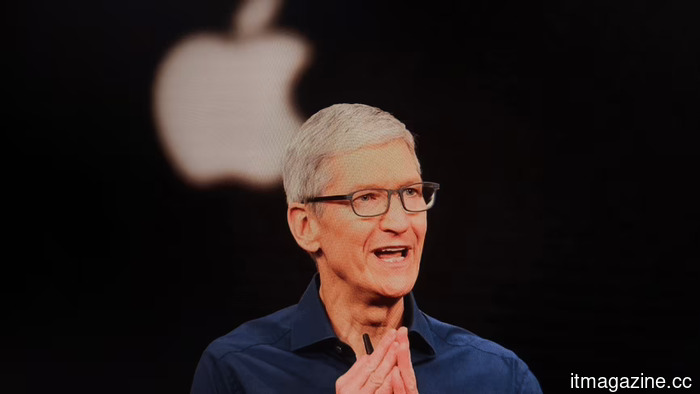 Apple plans to increase prices due to the impact of the memory chip shortage, according to Tim Cook.
Tim Cook informed the WSJ that price hikes at Apple are inevitable due to rising memory chip costs driven by demand for AI.
Apple plans to increase prices due to the impact of the memory chip shortage, according to Tim Cook.
Tim Cook informed the WSJ that price hikes at Apple are inevitable due to rising memory chip costs driven by demand for AI.
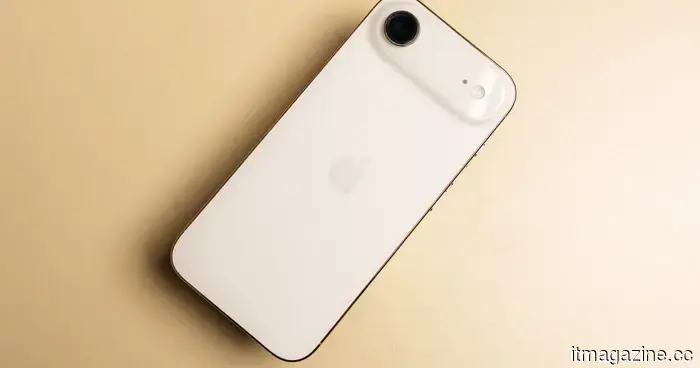 The iPhone Air may feature a dual-camera setup and an upgraded chip in the spring of 2027.
According to Gurman's sources, the upcoming iPhone Air will feature a dual camera system, the A20 Pro chip, and improved battery life.
The iPhone Air may feature a dual-camera setup and an upgraded chip in the spring of 2027.
According to Gurman's sources, the upcoming iPhone Air will feature a dual camera system, the A20 Pro chip, and improved battery life.
 7 top receipt photobooths for commercial applications in 2026
A comprehensive ranking of seven receipt photo booths designed for commercial spaces and brand activations, evaluating aspects such as construction quality, operating expenses, branding opportunities, software capabilities, and data collection for each available option.
7 top receipt photobooths for commercial applications in 2026
A comprehensive ranking of seven receipt photo booths designed for commercial spaces and brand activations, evaluating aspects such as construction quality, operating expenses, branding opportunities, software capabilities, and data collection for each available option.
 A US judge has determined that the statements made by Huawei's CFO can be utilized as evidence against the company.
A US judge has determined that Meng Wanzhou's statements regarding sanctions compliance from 2021 can be used as evidence against Huawei in its criminal trial set for September.
A US judge has determined that the statements made by Huawei's CFO can be utilized as evidence against the company.
A US judge has determined that Meng Wanzhou's statements regarding sanctions compliance from 2021 can be used as evidence against Huawei in its criminal trial set for September.
 A US judge has determined that the admissions made by Huawei's CFO can be utilized against the company.
A US judge decided that Meng Wanzhou's 2021 statements regarding sanctions compliance can be used as evidence against Huawei in its criminal trial set for September.
A US judge has determined that the admissions made by Huawei's CFO can be utilized against the company.
A US judge decided that Meng Wanzhou's 2021 statements regarding sanctions compliance can be used as evidence against Huawei in its criminal trial set for September.
Tim Cook states that price increases for Apple products are inevitable due to rising memory costs driven by AI advancements.
Apple has refrained from significant price increases even with rising costs for RAM and storage. However, Tim Cook indicates that the memory challenges driven by AI are making it harder to sustain this approach.