
Bosch to compensate $36 million for unauthorized shipments to Huawei.
The German engineering corporation Robert Bosch has agreed to pay $36 million to the United States to resolve allegations that two of its subsidiaries outside the U.S. transferred sensor products and software to China’s Huawei without obtaining the necessary licenses. The U.S. Commerce Department announced the settlement on Wednesday, noting that the goods, valued at over $70 million, were exported on more than 100 occasions from 2020 to 2024, as stated in the agreement.
The $36 million constitutes the civil penalty Bosch will pay to the Commerce Department’s Bureau of Industry and Security, which has confirmed the amount in its own announcement. It is important to distinguish this figure from a smaller sum related to a different arrangement with the Department of Justice, where Bosch agreed to forfeit profits, partially postponed, amounting to approximately $3.6 million. Thus, there are two distinct figures, two agencies, and two separate matters.
According to Bosch, the conduct in question was not intentional. The company described the violations as “unintentional,” and the resolution reflects a regulatory approach that acknowledges this. Bosch voluntarily reported the misconduct, leading the Justice Department to close its related investigation and refrain from prosecuting the company.
Self-disclosure and cooperation are typically the factors that differentiate a settlement like this from criminal charges, and Bosch seems to have utilized both approaches.
The shipments, while mundane individually, were sensitive in aggregate: sensor products and software for mobile phones exported by two non-U.S. subsidiaries over a four-year period. The licenses they failed to obtain are those required by the U.S. for transfers to Huawei, the Chinese telecommunications company that has been central to American export control policy for many years. Selling components for Huawei phones without these licenses is precisely the type of transaction that Washington aimed to regulate.
The settlement highlights the extensive reach of U.S. export laws. Although Bosch is a German company and the goods were shipped by non-U.S. entities, the transactions fell under American jurisdiction due to regulations concerning technology intended for Huawei.
This case aligns with a broader trend in which Washington has progressively expanded the scope of its export controls, encompassing foreign companies whose products are sold to restricted Chinese buyers. Huawei has spent years adapting to this pressure, developing domestic alternatives as U.S. measures have cut off its access to foreign technology. The Bosch settlement represents the enforcement aspect of this dynamic: it targets a supplier that continued to sell to Huawei without the required documentation, rather than Huawei itself.
The resolution structure serves as a small case study of how U.S. export enforcement now applies to foreign firms. Bosch's self-disclosure led to the Justice Department declining to pursue criminal charges, resulting in a civil penalty instead—a reward that encourages companies to come forward.
The $36 million penalty, in conjunction with a partially suspended forfeiture, is designed to impose a punishment that isn't overly severe, making the cooperative route evidently less costly than the alternative. This arithmetic is crucial for multinationals evaluating whether to report their own infractions.
For nearly a decade, Huawei has been at the center of this enforcement initiative, and the restrictions surrounding it have only intensified. Beijing has showcased the company's advancements in domestic chips even as Washington seeks to cut off its foreign supply, turning Huawei into a symbol for both sides.
The Bosch settlement serves as a reminder that the boundaries drawn by Washington not only encompass chipmakers but also a wide range of ordinary suppliers whose components ultimately end up in Huawei devices. With the Bureau of Industry and Security penalizing Bosch and the Department of Justice opting not to pursue prosecution, the issue is mostly resolved for the company. Bosch has deemed the violations unintentional, paid the civil penalty, and returned a portion of the profits. What remains significant is the principle established: that the repercussions of failing to comply with export laws concerning Huawei extend well beyond the borders of the United States.
Other articles
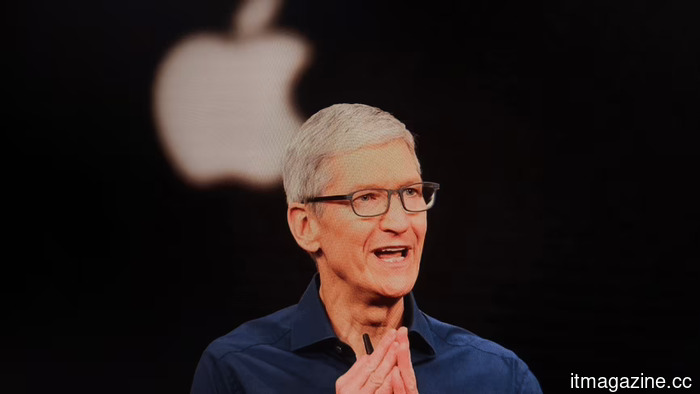 Apple plans to increase prices due to the impact of the memory chip shortage, according to Tim Cook.
Tim Cook informed the WSJ that price hikes at Apple are inevitable due to rising memory chip costs driven by demand for AI.
Apple plans to increase prices due to the impact of the memory chip shortage, according to Tim Cook.
Tim Cook informed the WSJ that price hikes at Apple are inevitable due to rising memory chip costs driven by demand for AI.
 Epic Games has made a significant advancement in AI-generated games with Unreal Engine 5.8.
Unreal Engine 5.8 includes an experimental plugin that enables developers to link any LLM with the core engine systems, and Epic aims for even more extensive integration in Unreal Engine 6.
Epic Games has made a significant advancement in AI-generated games with Unreal Engine 5.8.
Unreal Engine 5.8 includes an experimental plugin that enables developers to link any LLM with the core engine systems, and Epic aims for even more extensive integration in Unreal Engine 6.
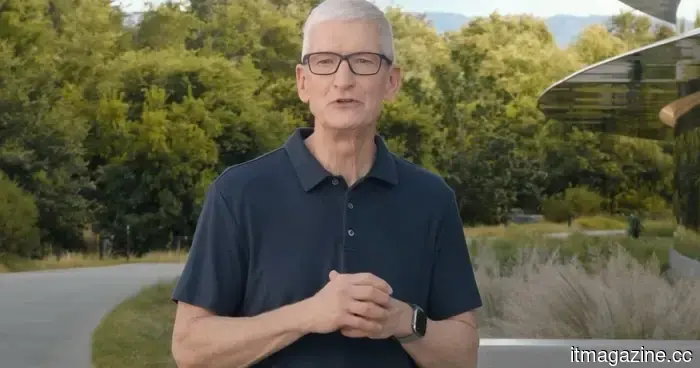 Tim Cook states that price increases for Apple products are inevitable due to rising memory costs driven by AI advancements.
Apple has refrained from significant price increases even with rising costs for RAM and storage. However, Tim Cook indicates that the memory challenges driven by AI are making it harder to sustain this approach.
Tim Cook states that price increases for Apple products are inevitable due to rising memory costs driven by AI advancements.
Apple has refrained from significant price increases even with rising costs for RAM and storage. However, Tim Cook indicates that the memory challenges driven by AI are making it harder to sustain this approach.
 Noam Shazeer, co-lead of Google's Gemini, is departing to join OpenAI.
Noam Shazeer, a co-lead at Gemini and co-inventor of the transformer, is departing from Google to join OpenAI, less than two years after a reported return of $2.7 billion.
Noam Shazeer, co-lead of Google's Gemini, is departing to join OpenAI.
Noam Shazeer, a co-lead at Gemini and co-inventor of the transformer, is departing from Google to join OpenAI, less than two years after a reported return of $2.7 billion.
 ChatGPT's updated Scheduled page consolidates all your automated tasks into a single location.
OpenAI is introducing a specific Scheduled page for ChatGPT, allowing users to view, manage, and oversee all active tasks through the sidebar.
ChatGPT's updated Scheduled page consolidates all your automated tasks into a single location.
OpenAI is introducing a specific Scheduled page for ChatGPT, allowing users to view, manage, and oversee all active tasks through the sidebar.
 The EU cybersecurity agency is set to hold discussions with Anthropic under the framework of US export regulations.
According to the EU Commission, ENISA was scheduled to meet with Anthropic on Thursday regarding access to Mythos, a meeting that was arranged prior to a US export directive that complicated matters.
The EU cybersecurity agency is set to hold discussions with Anthropic under the framework of US export regulations.
According to the EU Commission, ENISA was scheduled to meet with Anthropic on Thursday regarding access to Mythos, a meeting that was arranged prior to a US export directive that complicated matters.
Bosch to compensate $36 million for unauthorized shipments to Huawei.
Germany's Bosch will pay $36 million to the US to resolve allegations that its subsidiaries sent phone components to Huawei without the necessary licenses.