
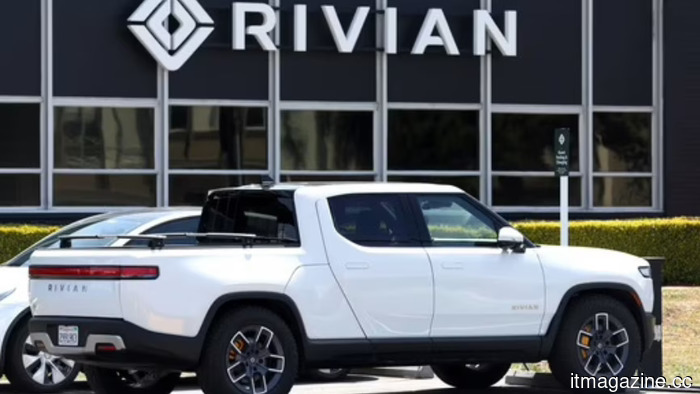
Rivian faces a lawsuit for misleading claims regarding self-driving capabilities for the first generation R1.
Rivian is currently contending with a class action lawsuit that alleges the company misled consumers for five years regarding the autonomous driving features of its first-generation R1T truck and R1S SUV. The suit, lodged on Wednesday in the US District Court for the Central District of California, asserts that Rivian claimed its key vehicles would offer hands-free, eyes-off driving—a capability recognized as Level 3 autonomy by the Society of Automotive Engineers. Rivian has refrained from commenting due to the ongoing legal proceedings.
The lawsuit is focused on Driver+, Rivian’s driver assistance system, which the company purportedly advertised as an intermediate step toward complete hands-free operation across all its vehicles. The complaint points to a “coordinated nationwide marketing campaign” that lasted five years, highlighting comments made by CEO RJ Scaringe at TechCrunch Disrupt in 2022.
According to the complaint, “No software update, no matter how advanced, will allow its Gen 1 vehicles to operate as claimed.” The three plaintiffs, represented by Coleman Law and Tycko & Zavareei, are pursuing a jury trial based on allegations of fraud, negligent misrepresentation, and unjust enrichment.
The central allegation posits that Rivian was aware that its first-generation hardware could not perform the driving features it promoted, yet continued to advertise them to drive sales. The initial R1 vehicles do not support hands-free driving and will never be able to, as their sensor suite and computing infrastructure are insufficient.
Second-generation capabilities
Rivian’s revamped second-generation R1 vehicles, launched in 2024, do provide hands-free driving capabilities. This update included the Rivian Autonomy Platform, which features 11 cameras, five radar sensors, and a computer that is ten times more powerful than the earlier version.
In December 2025, Rivian introduced Universal Hands-Free through a software update exclusive to the second-generation vehicles, enabling drivers to remove their hands from the wheel on over 3.5 million miles of road across the U.S. and Canada, provided lane markings are visible. The lawsuit argues that this capability would always require hardware assets that the first-generation vehicles lack and that Rivian was aware of this.
Industry-wide issues
Rivian is not alone in facing legal ramifications for its self-driving assertions. Tesla has been claiming for a decade that its vehicles would achieve full autonomy with its Full Self-Driving software, and several owners have taken legal action against the company for not delivering on unsupervised driving.
In December 2025, a California administrative judge ruled that Tesla's marketing of Autopilot represented “a long but unlawful tradition” of using vague language to mislead customers, with the company also found to have provided misleading safety data to European regulators regarding its driving systems. Consequently, Tesla removed the “Autopilot” term from its California marketing, although it later sued the DMV to contest the ruling on false advertising.
Even some engineers who developed Tesla’s self-driving AI have expressed reluctance to use it. Waymo, often viewed as a leader in autonomous driving, has had to issue six recalls due to its robotaxis encountering unmanageable situations.
This is not the first significant legal hurdle for Rivian. In October 2025, the company settled a class action shareholder lawsuit for $250 million after implementing an abrupt price increase of nearly 20% on R1 models in 2022. While the new lawsuit addresses a different issue, it raises the same crucial question: to what extent can automakers promote features that do not yet exist, and are consumers paying for technologies that the companies are aware they cannot deliver in their vehicles?
Other articles
 A mutual bank that has been in operation for 201 years has recently established an AI Center of Excellence in collaboration with a startup partner.
Liberty Bank, the oldest mutual bank in the United States with $9 billion in assets, has established an AI Center of Excellence in collaboration with enterprise AI partner Flare AI.
A mutual bank that has been in operation for 201 years has recently established an AI Center of Excellence in collaboration with a startup partner.
Liberty Bank, the oldest mutual bank in the United States with $9 billion in assets, has established an AI Center of Excellence in collaboration with enterprise AI partner Flare AI.
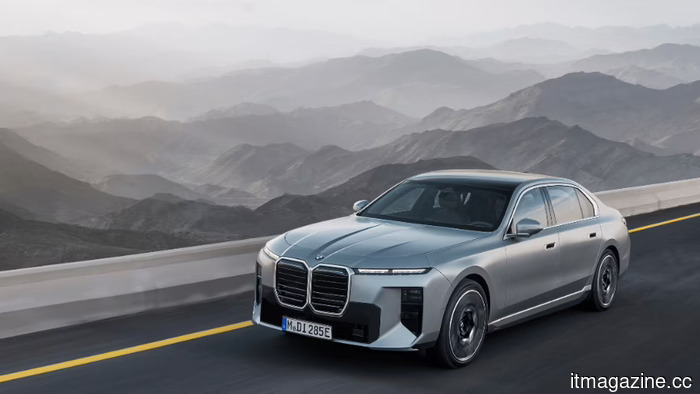 BMW cuts profit expectations as China puts pressure on Europe.
BMW has reduced its forecast for the car division's margin to as low as 1%. Chinese manufacturers now account for almost 10% of the car market in Europe, significantly impacting European profits in China.
BMW cuts profit expectations as China puts pressure on Europe.
BMW has reduced its forecast for the car division's margin to as low as 1%. Chinese manufacturers now account for almost 10% of the car market in Europe, significantly impacting European profits in China.
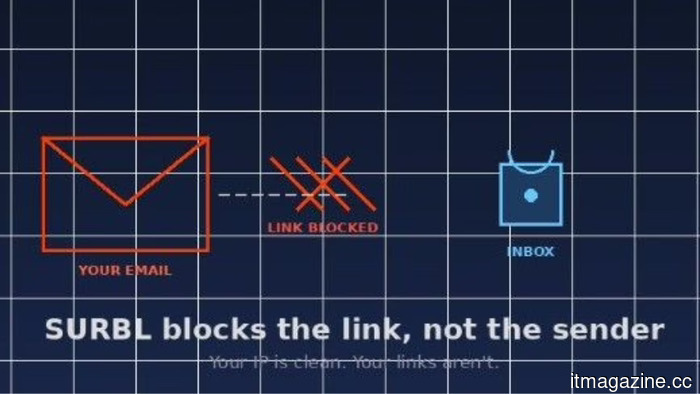 Within SURBL, the email blacklist that evaluates your links rather than your IP address.
SURBL identifies the URLs within your emails instead of the sender's IP address. Just one link to a flagged domain can quietly deactivate every link in a delivered email, and many senders remain unaware that it has occurred.
Within SURBL, the email blacklist that evaluates your links rather than your IP address.
SURBL identifies the URLs within your emails instead of the sender's IP address. Just one link to a flagged domain can quietly deactivate every link in a delivered email, and many senders remain unaware that it has occurred.
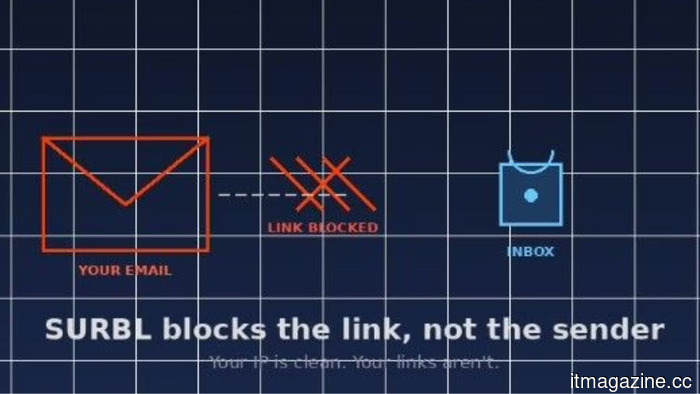 Within SURBL, the email blacklist that verifies your links rather than your IP address.
SURBL identifies the URLs within your emails instead of the sender's IP address. A single link to a flagged domain can quietly deactivate every link in a sent message, and most senders remain unaware of this occurrence.
Within SURBL, the email blacklist that verifies your links rather than your IP address.
SURBL identifies the URLs within your emails instead of the sender's IP address. A single link to a flagged domain can quietly deactivate every link in a sent message, and most senders remain unaware of this occurrence.
 Apple allows rival app stores on iOS in Brazil.
Apple will permit alternative app marketplaces and third-party payments in Brazil with the release of iOS 26.5, as part of a CADE antitrust agreement. These modifications are similar to the concessions made in the EU.
Apple allows rival app stores on iOS in Brazil.
Apple will permit alternative app marketplaces and third-party payments in Brazil with the release of iOS 26.5, as part of a CADE antitrust agreement. These modifications are similar to the concessions made in the EU.
 Apple allows competitor app stores on iOS in Brazil.
Apple will permit alternative app marketplaces and third-party payment options in Brazil beginning with iOS 26.5, as a result of a CADE antitrust agreement. These modifications are similar to concessions made in the EU.
Apple allows competitor app stores on iOS in Brazil.
Apple will permit alternative app marketplaces and third-party payment options in Brazil beginning with iOS 26.5, as a result of a CADE antitrust agreement. These modifications are similar to concessions made in the EU.
Rivian faces a lawsuit for misleading claims regarding self-driving capabilities for the first generation R1.
A class action lawsuit claims that Rivian spent five years assuring customers of hands-free driving capabilities for its R1T and R1S vehicles, despite being aware that the first-generation hardware was incapable of supporting such features.