
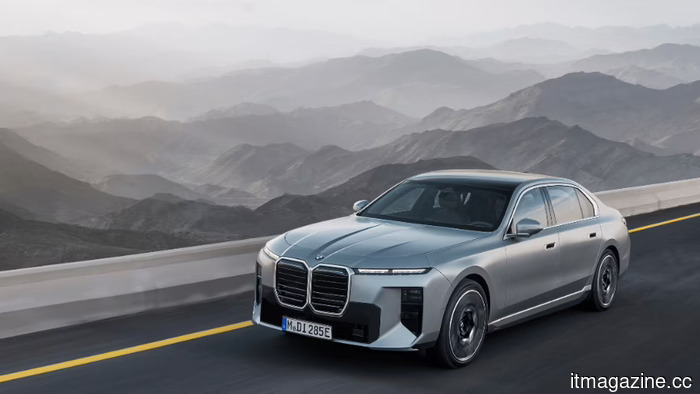
BMW cuts profit expectations as China puts pressure on Europe.
TL;DR: BMW has revised its car division's expected operating margin down to 1-3 percent, from a previous estimate of 4-6 percent, citing a rapid decline in the Chinese market and the economic repercussions from the conflict in the Middle East. This warning indicates a double challenge as Chinese manufacturers are diminishing European automakers’ profits in China while capturing nearly 10 percent market share in Europe.
On Tuesday, BMW lowered its profit outlook for the car segment, adjusting its expected automotive EBIT margin to a range of 1 to 3 percent, down from 4 to 6 percent. The company attributed this change to an ongoing decline in China and the expanding economic fallout from the Middle East crisis. Following this announcement, BMW's stock dropped to its lowest level since 2020. In the first five months of the year, deliveries in China fell by 17.6 percent as local brands like BYD, Xiaomi, and NIO competitively priced their vehicles against European premium brands.
The shrinking profit pool in China is not unique to BMW. Other European car manufacturers are increasingly being pushed out of the Chinese market, where cheaper locally produced electric vehicles are taking market share from the premium combustion-engine models offered by brands like BMW, Mercedes-Benz, and Volkswagen. Porsche, which moved away from its all-electric strategy after a dramatic 93 percent reduction in operating profit last year, experienced a drop in China deliveries from 93,300 units in 2022 to around 41,900 in 2025. Analysts from Citigroup have observed that during peak years, the Chinese profit pool represented nearly half of the operating profits for both BMW and Mercedes-Benz.
Volkswagen's operating profits from its Chinese joint ventures nearly halved last year to €958 million, and the company has forecasted a much lower profit of only €200 million to €600 million from those ventures in 2026. The Chinese market itself is contracting due to a struggling economy and the reduction of subsidies, leaving local manufacturers with substantial excess capacity to export.
In Europe, this excess capacity from China is steadily being absorbed. According to industry data, Chinese manufacturers have increased their market share in Europe from nearly zero in 2021 to just under 10 percent, and they are close to 16 percent in the electric vehicle and plug-in hybrid segments. Geely has halted the construction of new factories and has started utilizing Volvo’s European plants, which allows them to avoid EU tariffs while maintaining cost benefits. BYD has initiated trial production at a new facility in Hungary, with plans for full-scale output in the near future.
While European car sales have seen a slight rebound this year, aided by new lower-priced models and a surge in EV sales due to high oil prices, the European market does not offer significant growth. Aggressive new entrants are unable to expand their market presence without affecting the sales of established manufacturers. Currently, the industry operates at only about 70 percent of its production capacity, as reported by S&P Global. This situation has led to higher fixed costs relative to revenue, meaning that any additional challenges, such as US tariffs or disruptions from the Middle East, severely impact profit margins.
Some European automakers are shifting focus towards defense contracts as EV demand fluctuates and military budgets rise, though these revenues still account for a small portion of what the car business generates.
In response, Brussels is implementing industrial policies. The EU's proposed Industrial Accelerator Act would place local content requirements on public procurement and subsidies, mandating that at least 70 percent of non-battery components for vehicles assembled in the bloc be sourced from Europe.
At the same time, certain European manufacturers have begun collaborating with their Chinese counterparts instead of attempting to compete solely on cost. Recently, Stellantis and Dongfeng announced plans for a 51/49 European joint venture, which could lead to Dongfeng's electric vehicles being produced at Stellantis’s Rennes plant in France.
This cooperation is based on practical considerations. China's manufacturing edge stems from structural advantages rather than just subsidies; BYD, for example, manages its own battery supply chain, produces its own semiconductors, and operates at volumes unattainable by European competitors. BMW's recent profit warning underscores a broader issue facing Europe's auto industry, one that tariffs alone cannot resolve. Competition from China is undermining profits in both the Chinese and European markets, and the disparity between the prices European automakers can charge and those of their Chinese rivals continues to grow.
Other articles
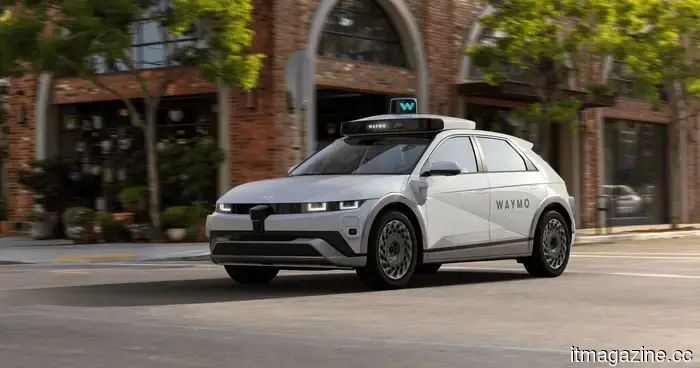 Waymo's robotaxis continue to encounter new obstacles, with construction zones being the most recent.
Waymo's robotaxis navigated highway construction zones 13 times before the company decided to withdraw the entire fleet from highway operations.
Waymo's robotaxis continue to encounter new obstacles, with construction zones being the most recent.
Waymo's robotaxis navigated highway construction zones 13 times before the company decided to withdraw the entire fleet from highway operations.
 Honor's latest Watch 6 offers battery life that Apple Watch users can only wish for.
The Honor Watch 6 is set to launch worldwide, boasting a battery life of 35 days, a vibrant display, wet touch controls, and specific tracking modes for football and badminton.
Honor's latest Watch 6 offers battery life that Apple Watch users can only wish for.
The Honor Watch 6 is set to launch worldwide, boasting a battery life of 35 days, a vibrant display, wet touch controls, and specific tracking modes for football and badminton.
 Apple allows competing app stores on iOS in Brazil.
Apple will permit alternative app marketplaces and third-party payments in Brazil with the release of iOS 26.5, as a result of a CADE antitrust agreement. These modifications reflect concessions similar to those made in the EU.
Apple allows competing app stores on iOS in Brazil.
Apple will permit alternative app marketplaces and third-party payments in Brazil with the release of iOS 26.5, as a result of a CADE antitrust agreement. These modifications reflect concessions similar to those made in the EU.
 UPS is creating a real-time digital replica of its entire logistics network, with updates occurring every 10 minutes.
UPS outlined its AI initiatives, which feature a digital twin of its worldwide network, agentic control towers for customer service, and RFID-enabled tracking for all vehicles in the US.
UPS is creating a real-time digital replica of its entire logistics network, with updates occurring every 10 minutes.
UPS outlined its AI initiatives, which feature a digital twin of its worldwide network, agentic control towers for customer service, and RFID-enabled tracking for all vehicles in the US.
 Spotify introduces Reserved ticketing for dedicated fans.
Spotify's Reserved feature retains concert tickets for Premium subscribers, utilizing listening data, and is debuting in the US via a multi-year exclusive agreement with Live Nation.
Spotify introduces Reserved ticketing for dedicated fans.
Spotify's Reserved feature retains concert tickets for Premium subscribers, utilizing listening data, and is debuting in the US via a multi-year exclusive agreement with Live Nation.
 A mutual bank that has been in operation for 201 years has recently established an AI Center of Excellence in collaboration with a startup partner.
Liberty Bank, the oldest mutual bank in the United States with assets totaling $9 billion, has established an AI Center of Excellence in collaboration with enterprise AI partner Flare AI.
A mutual bank that has been in operation for 201 years has recently established an AI Center of Excellence in collaboration with a startup partner.
Liberty Bank, the oldest mutual bank in the United States with assets totaling $9 billion, has established an AI Center of Excellence in collaboration with enterprise AI partner Flare AI.
BMW cuts profit expectations as China puts pressure on Europe.
BMW has reduced its forecast for the car division's margin to as low as 1%. Chinese manufacturers now account for almost 10% of the car market in Europe, significantly impacting European profits in China.