
European automakers are shifting their focus to defense as demand for electric vehicles decreases and military budgets increase.
In a notable development, four European automakers have announced partnerships in the defense sector within a single week as they adapt to a decline in electric vehicle (EV) demand. Companies Ineos, Daimler, Mercedes, and Renault are reorienting their production towards military vehicles.
Ineos Automotive revealed on Tuesday the creation of “Team Grenadier,” a consortium with armored vehicle manufacturers SMT Defence and NMS UK, to enter its 4×4 Grenadier into the UK Ministry of Defence's Light Mobility Vehicle tender. The Grenadier's features, including four-wheel drive, beam axles, and significant payload capacity, facilitate its military application in various roles.
Daimler Truck introduced Daimler Truck Defence on Monday, backed by an investment of several hundred million euros. CEO Karin Radstrom identified defense as a “key pillar” in the company’s growth strategy, highlighting existing orders of 1,500 trucks for the Canadian military and 7,000 for France, with a revenue target of EUR 1 billion by 2028. The defense division currently employs around 1,000 individuals, with plans for further recruitment.
Renault has partnered with French defense firm Thales to create a new armored vehicle intended for reconnaissance, troop coordination, and UAV deployment. Meanwhile, Mercedes-Benz collaborated with German startup Tytan Technologies to develop drone-defense vehicles based on the G-Class and Sprinter, aimed at safeguarding individuals and essential infrastructure.
This shift is economically viable due to the European automotive industry's structural crisis, characterized by decreasing EV demand, loss of market share to Chinese competitors, and high borrowing costs. In contrast, defense spending in Europe has surged following Russia's full-scale invasion of Ukraine in 2022, and NATO allies are under pressure from the White House to enhance their self-sufficiency in defense production.
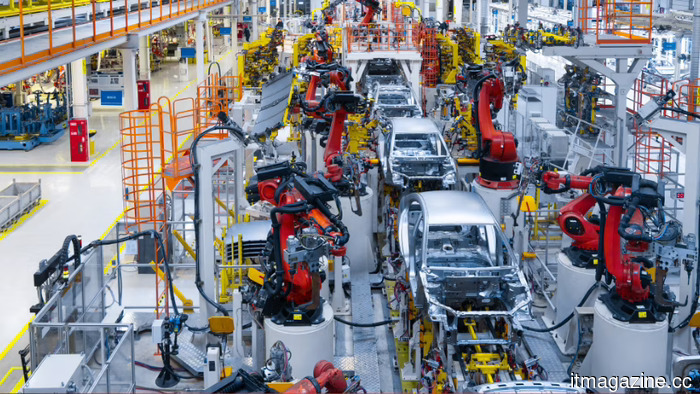
The transition leverages existing skills, as manufacturing processes, supply chain management, and engineering expertise gained from car production translate directly to military vehicle manufacturing. Daimler anticipates that its defense expansion will drive “additional demand for highly qualified specialists,” rather than lead to layoffs. For an industry facing worker reductions elsewhere, the defense sector offers a viable method to sustain production facilities and retain employment.
This broader trend illustrates how European industries are repositioning themselves around issues of sovereignty and security. Semiconductor companies are establishing fabs in Europe, robotics startups are securing defense-oriented funding, and now automakers are following suit. The automotive industry’s challenges extend beyond just EVs or competition from China; they relate to redefining European manufacturing in a landscape where security expenditure is the primary growth area, in contrast to wavering consumer demand.
Other articles
 Apple investors are growing impatient with the delays in AI developments following WWDC.
Apple's stock lags behind the Nasdaq 100 by nine points this year. Following an underwhelming WWDC and the introduction of Siri AI as a beta, Wall Street is seeking tangible results rather than just plans.
Apple investors are growing impatient with the delays in AI developments following WWDC.
Apple's stock lags behind the Nasdaq 100 by nine points this year. Following an underwhelming WWDC and the introduction of Siri AI as a beta, Wall Street is seeking tangible results rather than just plans.
 Jackery’s FridgeGuard is currently the thinnest backup battery available for refrigerators.
While power outages might be unavoidable, Jackery's new FridgeGuard and HomePower Series aim to minimize their disruption significantly.
Jackery’s FridgeGuard is currently the thinnest backup battery available for refrigerators.
While power outages might be unavoidable, Jackery's new FridgeGuard and HomePower Series aim to minimize their disruption significantly.
 Samsung Display recently demonstrated that the future of XR might hinge on the development of improved small screens.
Samsung Display's AWE USA exhibition highlights RGB OLEDoS as a key element of its XR goals, featuring ultra-bright panels designed for MR headsets, prototype smart glasses, and future spatial display ideas.
Samsung Display recently demonstrated that the future of XR might hinge on the development of improved small screens.
Samsung Display's AWE USA exhibition highlights RGB OLEDoS as a key element of its XR goals, featuring ultra-bright panels designed for MR headsets, prototype smart glasses, and future spatial display ideas.
 Xreal Aura glasses bring Android technology to your face and are expected to be priced below $1,500.
Xreal Aura is now available for reservations, introducing Android XR, Gemini, and spatial computing to tethered smart glasses set to be released in Fall 2026.
Xreal Aura glasses bring Android technology to your face and are expected to be priced below $1,500.
Xreal Aura is now available for reservations, introducing Android XR, Gemini, and spatial computing to tethered smart glasses set to be released in Fall 2026.
 FTC halts extensive subscription business operating through shell companies in Cyprus and Delaware.
The FTC has secured a court order to freeze Genesis Tech, a group of 15 companies responsible for apps such as Nebula and MadMuscles, due to misleading subscription practices.
FTC halts extensive subscription business operating through shell companies in Cyprus and Delaware.
The FTC has secured a court order to freeze Genesis Tech, a group of 15 companies responsible for apps such as Nebula and MadMuscles, due to misleading subscription practices.
 Xreal Aura glasses bring Android to your face and are expected to be priced below $1,500.
Xreal Aura is now available for reservations, introducing Android XR, Gemini, and spatial computing to tethered smart glasses anticipated to launch in Fall 2026.
Xreal Aura glasses bring Android to your face and are expected to be priced below $1,500.
Xreal Aura is now available for reservations, introducing Android XR, Gemini, and spatial computing to tethered smart glasses anticipated to launch in Fall 2026.
European automakers are shifting their focus to defense as demand for electric vehicles decreases and military budgets increase.
In the last week, Ineos, Daimler Truck, Mercedes-Benz, and Renault each revealed partnerships focused on military vehicles. The automotive sector is adapting for increased defense production.