

Xreal Aura glasses bring Android technology to your face and are expected to be priced below $1,500.
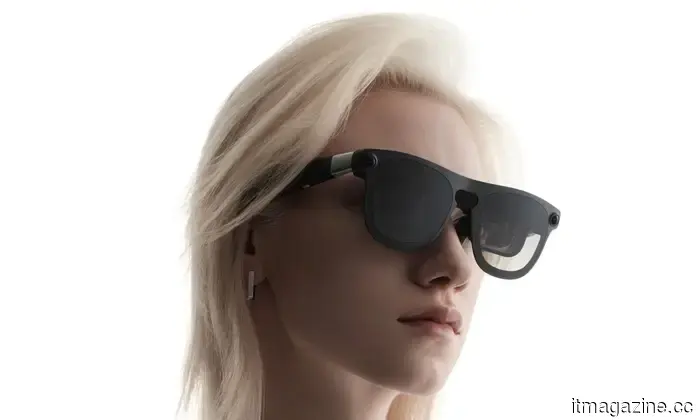
Xreal Aura aims to condense a complete XR headset into glasses.
Xreal Aura is now closer to being ready for consumers, as the company has initiated reservations for these Android XR-enabled smart glasses developed in collaboration with Google. Previously known as Project Aura, this device is poised to be a significant early test for Android XR beyond traditional headset devices.
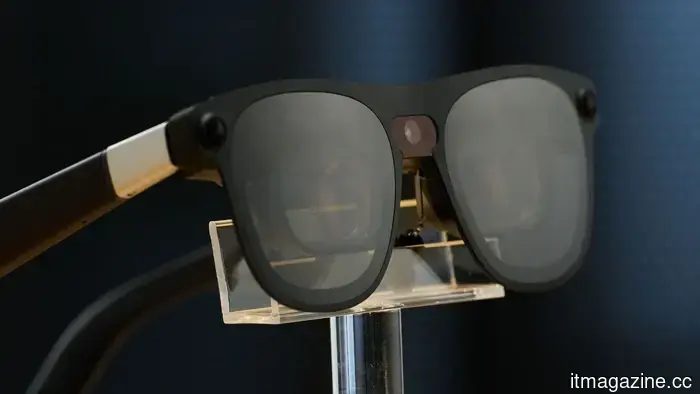
Xreal promotes Aura as a portable spatial computing device in a glasses format. It transcends the idea of basic glasses that merely track notifications. Aura merges lightweight glasses with a dedicated compute puck, allowing the heavier processing and battery components to be worn off the face.
Expanding Gemini into a large virtual canvas.
Aura operates on Android XR, integrating Gemini into the user experience. With user consent, Xreal states that Gemini can comprehend the visual content presented to the user, including the surrounding environment and screen elements. Users can control the glasses through voice commands and additional support. The glasses feature a 70-degree optical see-through display, electrochromic dimming, a sensor array facing the world, hand tracking, 6DoF tracking, and DP-in support for connecting to PCs, laptops, or handheld consoles, enhancing versatility.
Internally, it utilizes a dual-chip architecture. The compute puck is driven by Qualcomm’s Snapdragon Reality Elite platform, while the glasses themselves incorporate Xreal’s X1S spatial coprocessor for efficient spatial display and sensor data processing.
What will it cost you?
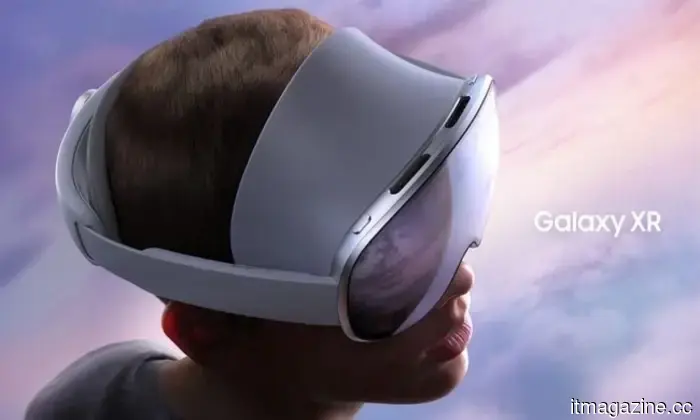
The most striking aspect is the price. Xreal asserts that the base model will be priced at no more than $1,500, though that remains a significant amount. This price is lower than the launch cost of Samsung’s Galaxy XR and considerably less than Apple Vision Pro. Reservations are currently open, where a $99 deposit provides buyers with a $199 launch credit, effectively resulting in a $100 discount on the final price. Additionally, Xreal is offering a $299 Founder Pass to the first 2,000 customers, featuring numbered hardware and delivery on launch day.
The product is expected to launch in Fall 2026, although final pricing, configuration specifics, and shipping dates will likely be revealed closer to the release.
Vikhyaat Vivek is a technology journalist and reviewer with seven years of experience focusing on consumer hardware.
Samsung Display recently demonstrated why the future of XR may hinge on improved miniature screens.
At AWE 2026, Samsung Display is promoting RGB OLEDoS as a fundamental element in the upcoming generation of XR hardware. The exhibition highlights displays tailored for mixed reality headsets and augmented reality smart glasses, where brightness, size, and efficiency converge.
A standout feature is a 1.3-inch RGB OLEDoS panel rated at 40,000 nits. Samsung Display showcased it in a dark-room installation, demonstrating the distinct brightness and color differences among the seven panels, with only two utilizing the ultra-bright technology. This booth demonstration carries a sharper underlying message.
Are you a smartwatch user? You can participate in a study assessing how the World Cup influences your heart.
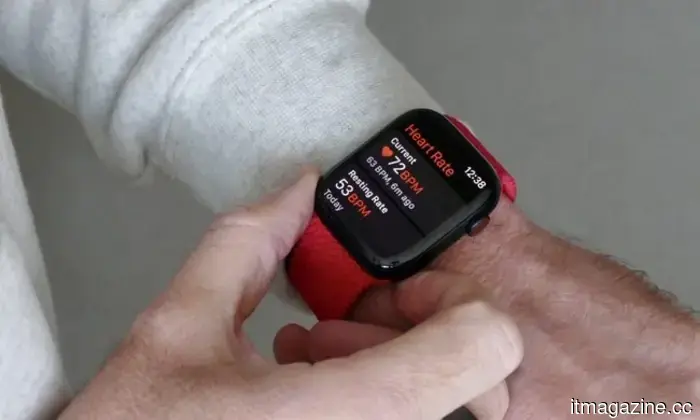
Your emotional responses during the World Cup can now be tracked as valuable data by your smartwatch. Researchers at Bielefeld University are seeking football fans to join the World Cup Fever Study, which aims to use smartwatch and fitness tracker data to measure physiological responses during the 2026 FIFA World Cup.
The study will analyze heart rate, stress levels, movement, and sleep patterns to evaluate how key football moments, such as goals, victories, losses, and tense situations, affect physical reactions.
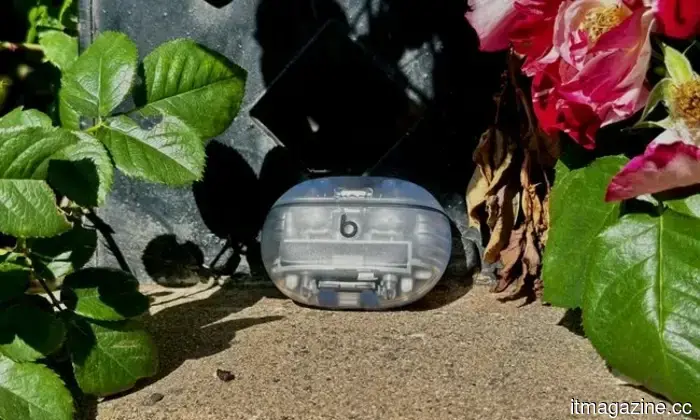
Beats Studio Buds receive an important fix for a concerning microphone issue.
Apple has released a security update for Beats Studio Buds to rectify a Bluetooth-related microphone vulnerability that poses a risk during the pairing process. Firmware 1B211 addresses a flaw that could allow an attacker within Bluetooth range to listen through the microphone while the earbuds are searching for connection requests before being paired. This serious detail makes the update particularly noteworthy, despite the absence of any new visible features.


Other articles
 Quit creating dull slides, as Google Vids has just made AI avatars available for free for all.
Google launched complimentary AI avatars in Vids, in addition to longer Veo video clips, multilingual voiceovers, and an upcoming feature for emotion steering to enhance personalized delivery.
Quit creating dull slides, as Google Vids has just made AI avatars available for free for all.
Google launched complimentary AI avatars in Vids, in addition to longer Veo video clips, multilingual voiceovers, and an upcoming feature for emotion steering to enhance personalized delivery.
 A Colombian AI startup aims to support 50% of physicians in Latin America. Andreessen Horowitz has recently invested in the company.
Telepatia secured $33 million from a16z to provide an AI clinical assistant to 950,000 doctors in Latin America by 2027. It currently serves 14 million patients.
A Colombian AI startup aims to support 50% of physicians in Latin America. Andreessen Horowitz has recently invested in the company.
Telepatia secured $33 million from a16z to provide an AI clinical assistant to 950,000 doctors in Latin America by 2027. It currently serves 14 million patients.
 European automakers are shifting their focus to defense as demand for electric vehicles decreases and military budgets increase.
In the last week, Ineos, Daimler Truck, Mercedes-Benz, and Renault each revealed partnerships focused on military vehicles. The automotive sector is adapting for increased defense production.
European automakers are shifting their focus to defense as demand for electric vehicles decreases and military budgets increase.
In the last week, Ineos, Daimler Truck, Mercedes-Benz, and Renault each revealed partnerships focused on military vehicles. The automotive sector is adapting for increased defense production.
 A study indicates that TikTok's feeds display three times as much AI-generated content compared to YouTube.
A recent report from Kapwing revealed that 59% of videos presented to new TikTok accounts are considered AI-generated content, which is approximately three times the rate observed on YouTube.
A study indicates that TikTok's feeds display three times as much AI-generated content compared to YouTube.
A recent report from Kapwing revealed that 59% of videos presented to new TikTok accounts are considered AI-generated content, which is approximately three times the rate observed on YouTube.
 China promotes free AI for developing nations as the G7 discusses access to American models.
China's leading diplomat has proposed the establishment of a global organization for AI collaboration while the G7 deliberated on "trusted partner" access to American models. Two different perspectives on AI governance are emerging.
China promotes free AI for developing nations as the G7 discusses access to American models.
China's leading diplomat has proposed the establishment of a global organization for AI collaboration while the G7 deliberated on "trusted partner" access to American models. Two different perspectives on AI governance are emerging.
 PsiQuantum makes advancements in the development of a utility-scale quantum computer.
The Palo Alto startup has begun construction in Queensland, supported by A$940 million from the Australian government and $100 million from the US CHIPS Act. A functional machine is still years in the future.
PsiQuantum makes advancements in the development of a utility-scale quantum computer.
The Palo Alto startup has begun construction in Queensland, supported by A$940 million from the Australian government and $100 million from the US CHIPS Act. A functional machine is still years in the future.
Xreal Aura glasses bring Android technology to your face and are expected to be priced below $1,500.
Xreal Aura is now available for reservations, introducing Android XR, Gemini, and spatial computing to tethered smart glasses set to be released in Fall 2026.