
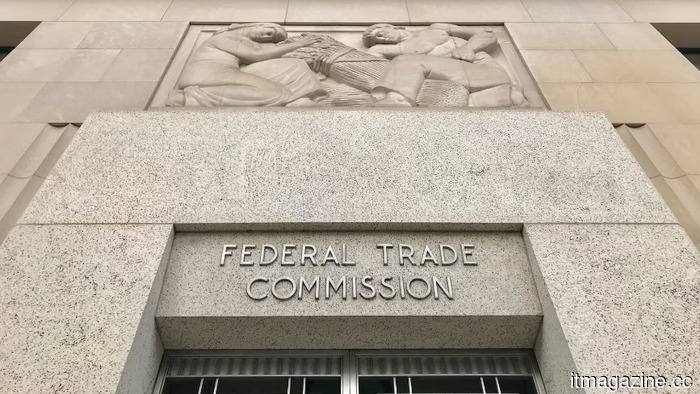
FTC halts extensive subscription business operating through shell companies in Cyprus and Delaware.
A federal court has temporarily halted what the US Federal Trade Commission describes as a vast operation of misleading subscription apps, freezing the activities of 15 companies and eight individuals accused of charging consumers without their consent and intentionally complicating the cancellation process. The order, issued at the request of the agency, was accompanied by a complaint filed on June 17 in the US District Court for the Northern District of California.
At the core of the case is Genesis Tech, which the FTC claims functioned as a unified enterprise behind a diverse array of seemingly unrelated products. The lineup includes fitness and nutrition apps like MadMuscles, Harna, and Unimeal; PDF editing applications PDF Guru and PDF Master; a fashion advice app named Lumi; the self-help brand Wisey, which the agency alleges promoted courses claiming to assess and address ADHD symptoms; and Nebula, an app for horoscopes and psychic chats.
The complaint lists founder-CEOs Vladimir Mnogoletny and Vasily Ulianov among six other co-defendants.
The FTC emphasizes the structure of Genesis Tech. The complaint states that the company operated through a network of affiliates incorporated in Cyprus and functioning in Ukraine, which marketed the apps to American customers while handling payment processing through associated companies established in Delaware.
When fraud-monitoring systems identified one merchant account, the agency claims the operators would simply create another company and open a new account, subsequently transferring the funds across borders between affiliates. This practice is likened to changing one’s name every time a bill is due.
The financial scale was significant. From early 2023 to mid-2025, five of the products alone generated nearly $250 million in global revenue, according to the complaint. The transactions through the enterprise's linked PayPal accounts amounted to almost $700 million within the 12 months ending in September 2025.
The alleged tactics were consistent throughout their offerings. Products were marketed as free or available for a low one-time fee, often accompanied by a money-back guarantee, while the auto-renewing subscription details were buried in the fine print. The defendants then imposed charges that consumers had not consented to, including double-billing for identical products or stealthily adding extra fees.
Cancellation was fraught with challenges: options were often missing from apps and websites, users were required to justify their desire to cancel, and in some instances, charges persisted even after a cancellation had been confirmed.
The agency contends that these actions breach both the FTC Act and the Restore Online Shoppers’ Confidence Act, the 2010 legislation designed to combat such recurring billing pitfalls.
“The Trump-Vance FTC is undertaking vigorous enforcement to tackle deception and unlawful subscription practices,” stated Christopher Mufarrige, director of the Bureau of Consumer Protection, referring to the case as an example of the bureau’s revitalized anti-fraud initiative.
The Commission voted 2-0 to approve the complaint. The co-defendants cited are Stamatis Skianis, Oksana Kucher, Iryna Oleksyn, Olga Garbuzenko, Rostyslav Ivanitsa, and Viktoriia Savchuk.
The FTC files a complaint only when it has reason to suspect that laws are being violated; the claims are unproven, and it will be up to the court to decide the case.
For Apple and Google, this case represents not just a verdict but an analysis. A network that can quickly establish new entities faster than the stores can take down the old is not simply a single problematic app that can be eliminated. It is a dynamic target, and the FTC has provided a detailed account of its movements.
Other articles
 A Colombian AI startup aims to support 50% of physicians in Latin America. Andreessen Horowitz has recently invested in the company.
Telepatia secured $33 million from a16z to provide an AI clinical assistant to 950,000 doctors in Latin America by 2027. It currently serves 14 million patients.
A Colombian AI startup aims to support 50% of physicians in Latin America. Andreessen Horowitz has recently invested in the company.
Telepatia secured $33 million from a16z to provide an AI clinical assistant to 950,000 doctors in Latin America by 2027. It currently serves 14 million patients.
 Google's latest Home Speaker, priced at $99, provides 360-degree sound and advanced features from Gemini.
Gemini takes over from Google Assistant; it features 360-degree audio and offers four color choices, while the Nest Audio has been officially discontinued.
Google's latest Home Speaker, priced at $99, provides 360-degree sound and advanced features from Gemini.
Gemini takes over from Google Assistant; it features 360-degree audio and offers four color choices, while the Nest Audio has been officially discontinued.
 Do you have a smartwatch? You can now participate in a study that examines how the football World Cup impacts your heart.
Bielefeld University is calling on smartwatch users to participate in a World Cup research project that monitors how football games influence fans' heart rates, stress levels, movement, and sleep patterns.
Do you have a smartwatch? You can now participate in a study that examines how the football World Cup impacts your heart.
Bielefeld University is calling on smartwatch users to participate in a World Cup research project that monitors how football games influence fans' heart rates, stress levels, movement, and sleep patterns.
 France disrupts EDF's monopoly on hydropower by implementing a new auction law.
The French Parliament approved a bill that changes EDF's hydropower concessions into permits and mandates annual auctions of 6 GW. EDF is said to be planning a new investment of 4.5 billion euros in pumped-hydro projects.
France disrupts EDF's monopoly on hydropower by implementing a new auction law.
The French Parliament approved a bill that changes EDF's hydropower concessions into permits and mandates annual auctions of 6 GW. EDF is said to be planning a new investment of 4.5 billion euros in pumped-hydro projects.
 Xreal Aura glasses bring Android to your face and are expected to be priced below $1,500.
Xreal Aura is now available for reservations, introducing Android XR, Gemini, and spatial computing to tethered smart glasses anticipated to launch in Fall 2026.
Xreal Aura glasses bring Android to your face and are expected to be priced below $1,500.
Xreal Aura is now available for reservations, introducing Android XR, Gemini, and spatial computing to tethered smart glasses anticipated to launch in Fall 2026.
 Stop creating dull slides, as Google Vids has now made AI avatars available for free to all users.
Google introduced complimentary AI avatars in Vids, along with longer Veo video clips, multilingual voiceovers, and a forthcoming emotion steering feature for tailored delivery.
Stop creating dull slides, as Google Vids has now made AI avatars available for free to all users.
Google introduced complimentary AI avatars in Vids, along with longer Veo video clips, multilingual voiceovers, and a forthcoming emotion steering feature for tailored delivery.
FTC halts extensive subscription business operating through shell companies in Cyprus and Delaware.
The FTC has secured a court order to freeze Genesis Tech, a group of 15 companies responsible for apps such as Nebula and MadMuscles, due to misleading subscription practices.