

Xreal Aura glasses bring Android to your face and are expected to be priced below $1,500.
Xreal Aura aims to fit an entire XR headset into a pair of glasses.
Xreal Aura is now closer to being available for consumers. The company has begun accepting reservations for the Xreal Aura, its smart glasses powered by Android XR and developed in collaboration with Google. Previously known as Project Aura, this device is poised to be a key early evaluation of Android XR beyond traditional headset hardware.
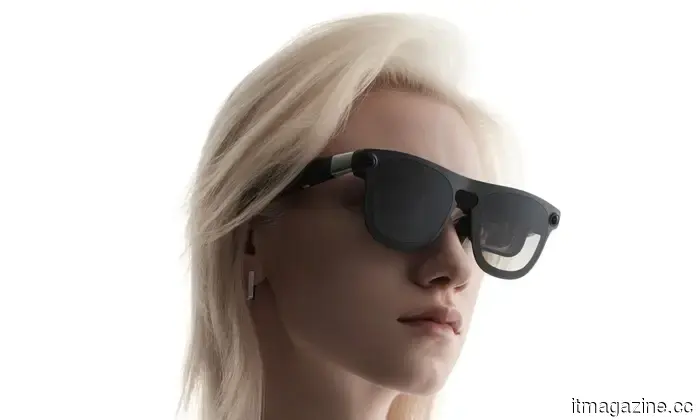
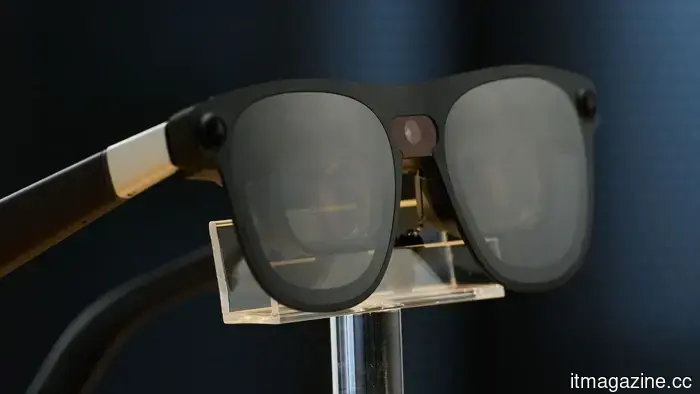
Xreal promotes Aura as a compact spatial computing device in the form of glasses. It is more than just a basic pair of glasses that records or notifies you. Aura merges lightweight glasses with a separate compute puck, allowing the heavier processing and battery components to be situated away from your face.
How it expands Gemini into a large virtual canvas
XREAL Aura Glasses Xreal
Aura operates on Android XR and integrates the Gemini experience. With user consent, Xreal claims Gemini can perceive your view as well as the surrounding environment and content on your screen. Users can control the glasses using voice commands and other interactive methods. The glasses include a 70-degree optical see-through display, electrochromic dimming, a world-facing sensor array, hand tracking, 6DoF tracking, and DP-in support for connectivity with a PC, laptop, or handheld console, enhancing its versatility.
Internally, it features a dual-chip architecture. The compute puck utilizes Qualcomm’s Snapdragon Reality Elite platform, while the glasses have Xreal’s X1S spatial coprocessor for efficient spatial display and sensor management.
What will it cost you?
Google
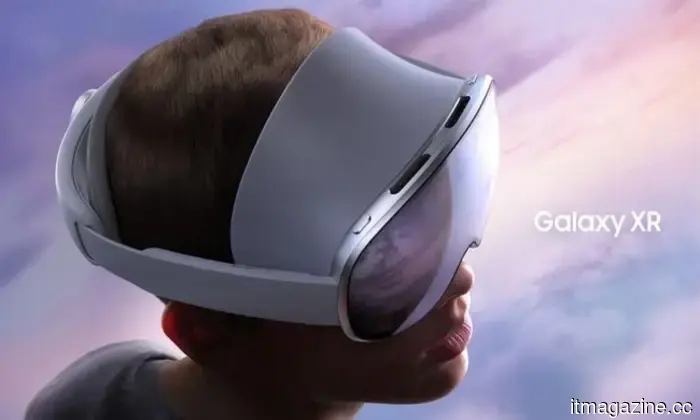
The most surprising aspect is the pricing. Xreal asserts that the base model will be priced at no more than $1,500. However, this is still relatively expensive. It is lower than the launch price of Samsung’s Galaxy XR and significantly less than Apple Vision Pro. Reservations are currently open. A $99 reservation deposit will grant buyers a $199 launch credit, effectively giving them a $100 discount on the final price. Additionally, Xreal is offering a $299 Founder Pass for the first 2,000 customers, which includes numbered hardware and delivery on launch day.
The anticipated launch is set for Fall 2026, although final pricing, configurations, and shipping details are expected to be revealed closer to the official release.
Vikhyaat Vivek is a technology journalist and reviewer with seven years of experience covering consumer hardware.
Samsung Display recently highlighted that the future of XR may hinge on improved miniature screens.
At AWE 2026, Samsung Display is promoting RGB OLEDoS as a fundamental element for the next generation of XR hardware. The exhibition focuses on displays created for mixed reality headsets and augmented reality smart glasses, where factors like brightness, size, and efficiency are essential.
A notable feature is a 1.3-inch RGB OLEDoS panel with a brightness rating of 40,000 nits. Samsung Display showcases this in a dark-room Big Dipper installation, where only two of seven panels utilize the ultra-bright technology to clearly demonstrate the disparity in brightness and colors. This booth demo conveys a sharper message.
If you own a smartwatch, you can now partake in a study examining how the World Cup impacts your heart.
Your emotional responses during the World Cup may now translate into valuable data from your smartwatch.
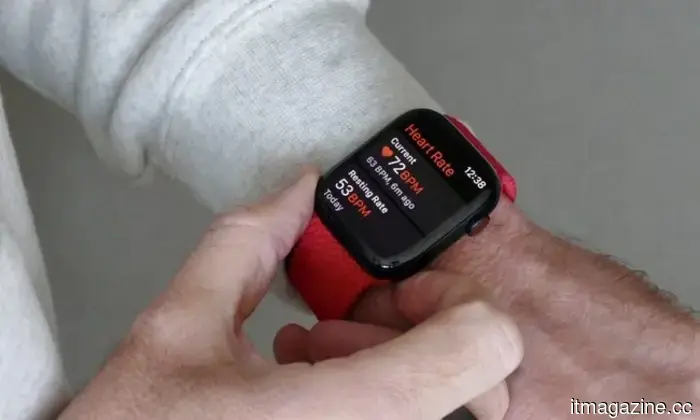
Following the World Cup can be an exhilarating experience, causing your heart rate to spike. Now, your smartwatch is prepared to measure your emotional reactions related to your favorite team’s victories or defeats. Researchers at Bielefeld University invite football fans to participate in the World Cup Fever Study, which aims to analyze smartwatch and fitness tracker data to assess how fans physically react to games during the 2026 FIFA World Cup.
The study focuses on heart rate, stress levels, movement, and sleep to gain insights into how significant football moments, such as goals, wins, losses, and tense situations, affect the body.
Beats Studio Buds receive an essential security fix for a concerning microphone issue.
The security update resolves a Bluetooth vulnerability related to the earbuds’ microphone before pairing occurs.
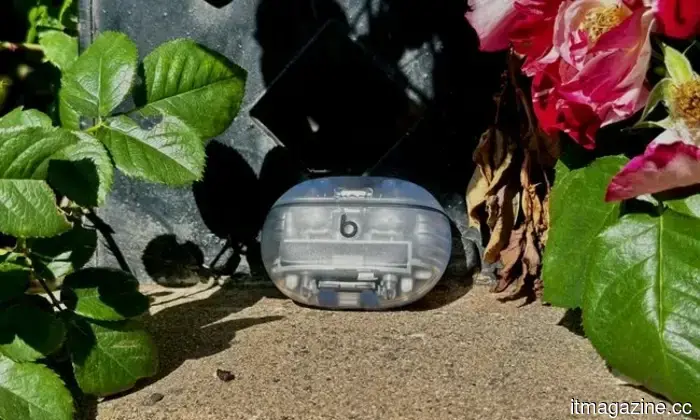
Apple's security update for Beats Studio Buds addresses a Bluetooth microphone flaw that poses a troubling risk during the setup phase. Firmware version 1B211 remedies a vulnerability affecting unpaired Beats Studio Buds that are actively searching for connection requests. Apple warns that an attacker within Bluetooth range could exploit this situation to eavesdrop through the microphone before pairing is complete. This critical detail makes the update significant, despite it not introducing any visible enhancements.


Other articles
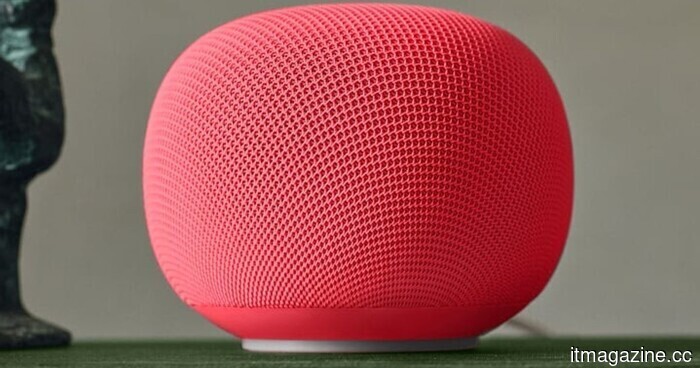 Google's latest Home Speaker, priced at $99, provides 360-degree sound and advanced features from Gemini.
Gemini takes over from Google Assistant; it features 360-degree audio and offers four color choices, while the Nest Audio has been officially discontinued.
Google's latest Home Speaker, priced at $99, provides 360-degree sound and advanced features from Gemini.
Gemini takes over from Google Assistant; it features 360-degree audio and offers four color choices, while the Nest Audio has been officially discontinued.
 Quit creating uninteresting slides, as Google Vids has just made AI avatars available for free to everyone.
Google introduced free AI avatars in Vids, along with longer Veo video clips, multilingual voiceovers, and an upcoming feature for emotional steering to enhance personalized delivery.
Quit creating uninteresting slides, as Google Vids has just made AI avatars available for free to everyone.
Google introduced free AI avatars in Vids, along with longer Veo video clips, multilingual voiceovers, and an upcoming feature for emotional steering to enhance personalized delivery.
 PsiQuantum makes advancements in the development of a utility-scale quantum computer.
The Palo Alto startup has begun construction in Queensland, supported by A$940 million from the Australian government and $100 million from the US CHIPS Act. A functional machine is still years in the future.
PsiQuantum makes advancements in the development of a utility-scale quantum computer.
The Palo Alto startup has begun construction in Queensland, supported by A$940 million from the Australian government and $100 million from the US CHIPS Act. A functional machine is still years in the future.
 Xreal Aura glasses bring Android technology to your face and are expected to be priced below $1,500.
Xreal Aura is now available for reservations, introducing Android XR, Gemini, and spatial computing to tethered smart glasses set to be released in Fall 2026.
Xreal Aura glasses bring Android technology to your face and are expected to be priced below $1,500.
Xreal Aura is now available for reservations, introducing Android XR, Gemini, and spatial computing to tethered smart glasses set to be released in Fall 2026.
 The 2027 Taycan from Porsche will feature virtual E-Shift gears connected to actual paddle shifters.
The 2027 Taycan from Porsche features eight virtual gears, paddles on the steering wheel, and shift jolts, as well as a factory Manthey Kit for the Turbo GT.
The 2027 Taycan from Porsche will feature virtual E-Shift gears connected to actual paddle shifters.
The 2027 Taycan from Porsche features eight virtual gears, paddles on the steering wheel, and shift jolts, as well as a factory Manthey Kit for the Turbo GT.
 A Colombian AI startup aims to support 50% of physicians in Latin America. Andreessen Horowitz has recently invested in the company.
Telepatia secured $33 million from a16z to provide an AI clinical assistant to 950,000 doctors in Latin America by 2027. It currently serves 14 million patients.
A Colombian AI startup aims to support 50% of physicians in Latin America. Andreessen Horowitz has recently invested in the company.
Telepatia secured $33 million from a16z to provide an AI clinical assistant to 950,000 doctors in Latin America by 2027. It currently serves 14 million patients.
Xreal Aura glasses bring Android to your face and are expected to be priced below $1,500.
Xreal Aura is now available for reservations, introducing Android XR, Gemini, and spatial computing to tethered smart glasses anticipated to launch in Fall 2026.