
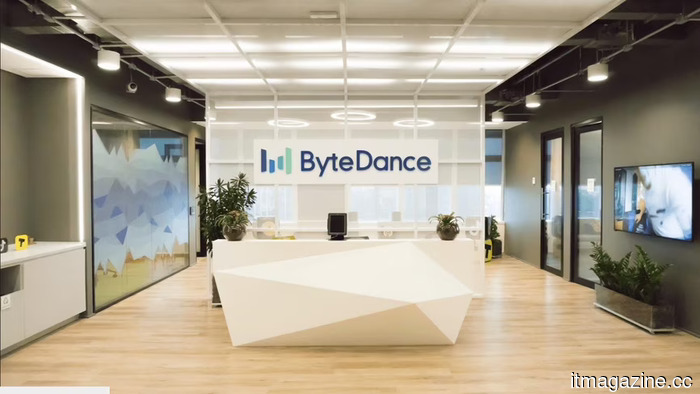
ByteDance is the largest AI client of Microsoft.
In recent years, ByteDance has emerged as Microsoft's largest AI customer and is projected to spend over $1 billion annually on Microsoft's AI and cloud offerings, according to Bloomberg.
What stands out is that the majority of ByteDance’s purchases are OpenAI models, which are offered through Microsoft’s Azure cloud, in a market that OpenAI itself does not directly serve. Both OpenAI and Anthropic have refused to sell their models to companies in China, citing concerns over intellectual property theft and potential misuse. However, Microsoft, through its unique partnership with OpenAI, has the ability to set its own policy in China and continues to offer the GPT series there. Microsoft provides other models as well, but not from Anthropic.
ByteDance is not the only company in this position; Ant Group, Meituan, and Tencent are also notable buyers of AI models through Azure, as reported by Bloomberg's sources.
This segment represents the fastest-growing AI market for Microsoft. Internally, the company views this as a victory rather than a setback. During a sales meeting in July 2025, former chief commercial officer Judson Althoff informed staff that Azure’s AI revenue in China was increasing more rapidly than in any other region, with a threefold increase in the financial year ending June 2025, following a 400 percent rise the previous year, as per a transcript reviewed by Bloomberg. "The world’s most elite AI solutions are being built on the western coast of the United States and the eastern coast of China," Althoff stated. "The one company bringing those two places together is Microsoft."
However, this business remains relatively small in the broader context. Brad Smith, president of Microsoft, mentioned to Congress that China represented about 1.5 percent of the company’s total revenue in 2024.
The sensitivity of this situation is notable. Sales to China clash with growing political concerns, as American executives and legislators consider China's AI advancements a potential existential threat to U.S. industries. Recently, Washington has tightened regulations on access to the most advanced American models. According to Bloomberg, OpenAI has privately expressed concerns that Microsoft isn't doing enough to prevent Chinese companies from replicating its models through a process known as distillation. Microsoft contends it employs automated monitoring and only sells to established firms, not individual developers, but Chinese clients do not face the same level of scrutiny, and preventing synthetic-data training poses challenges.
Microsoft does adhere to certain limitations. According to its agreements with OpenAI, it refrains from hosting models in its Chinese data centers near Beijing and Shanghai due to fears of intellectual property theft. Instead, users access these models online from data centers in other locations, such as Singapore.
While ByteDance acquires American models, it is also advancing its shift toward domestic chips for AI tasks, SCMP reports. The company is considering orders from a range of smaller Chinese suppliers, known as tier-two chipmakers, like Biren, MetaX, Iluvatar CoreX, Moore Threads, and Enflame, as Nvidia's access to China remains restricted by regulations.
This situation leaves ByteDance balancing both sides of the geopolitical AI rivalry: utilizing the best models from the West through Microsoft while simultaneously developing its hardware capabilities in China. The unresolved question for Microsoft is what its largest AI customer is ultimately training.
Other articles
 MIT developed a memory system enabling robots to recall the location of your keys.
MIT's DAAAM framework enables robots to possess long-term spatial memory by associating language descriptions with 3D maps. When you ask, "where's my wallet?", it searches through its memory.
MIT developed a memory system enabling robots to recall the location of your keys.
MIT's DAAAM framework enables robots to possess long-term spatial memory by associating language descriptions with 3D maps. When you ask, "where's my wallet?", it searches through its memory.
 MIT has developed a memory system that enables robots to recall the location of your keys.
MIT's DAAAM framework enables robots to have long-term spatial memory by linking language descriptions to 3D maps. When you ask, "Where's my wallet?" it can search through its memory for the answer.
MIT has developed a memory system that enables robots to recall the location of your keys.
MIT's DAAAM framework enables robots to have long-term spatial memory by linking language descriptions to 3D maps. When you ask, "Where's my wallet?" it can search through its memory for the answer.
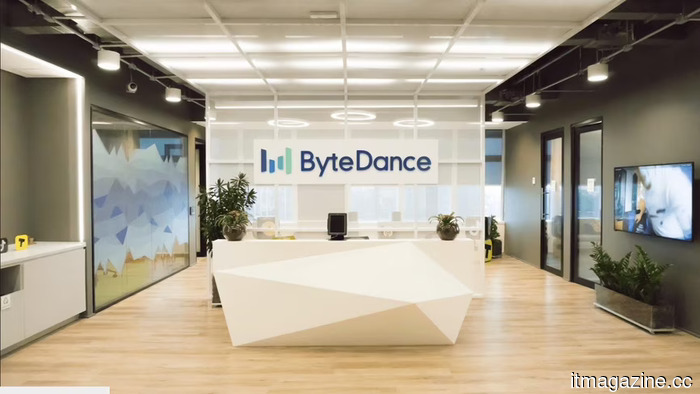 ByteDance is the largest AI client for Microsoft.
ByteDance is set to invest $1 billion annually with Microsoft, primarily focusing on OpenAI models, in a market that OpenAI and Anthropic are unwilling to directly engage with.
ByteDance is the largest AI client for Microsoft.
ByteDance is set to invest $1 billion annually with Microsoft, primarily focusing on OpenAI models, in a market that OpenAI and Anthropic are unwilling to directly engage with.
 Waymo has announced its sixth recall following incidents where robotaxis entered highway construction zones on 13 occasions.
Waymo recalled approximately 4,000 robotaxis following 13 reports of vehicles entering closed highway construction areas. A passenger who feared for their life received three complimentary rides.
Waymo has announced its sixth recall following incidents where robotaxis entered highway construction zones on 13 occasions.
Waymo recalled approximately 4,000 robotaxis following 13 reports of vehicles entering closed highway construction areas. A passenger who feared for their life received three complimentary rides.
 NASA selects Eric Schmidt's Relativity Space for a mission to Mars.
NASA has selected Eric Schmidt's Relativity Space for a Mars orbiter mission slated for 2028. The twist is that the company has yet to achieve a successful orbital launch, and the mission includes a data center intended for Mars orbit.
NASA selects Eric Schmidt's Relativity Space for a mission to Mars.
NASA has selected Eric Schmidt's Relativity Space for a Mars orbiter mission slated for 2028. The twist is that the company has yet to achieve a successful orbital launch, and the mission includes a data center intended for Mars orbit.
 NASA selects Eric Schmidt's Relativity Space for Mars missions.
NASA has selected Eric Schmidt's Relativity Space for a Mars orbiter mission scheduled for 2028. However, there is a twist: the company has yet to achieve orbit, and the mission includes a data center for Mars orbit.
NASA selects Eric Schmidt's Relativity Space for Mars missions.
NASA has selected Eric Schmidt's Relativity Space for a Mars orbiter mission scheduled for 2028. However, there is a twist: the company has yet to achieve orbit, and the mission includes a data center for Mars orbit.
ByteDance is the largest AI client of Microsoft.
ByteDance is set to invest $1 billion annually with Microsoft, primarily for OpenAI models, in a sector that both OpenAI and Anthropic choose not to directly engage with.