
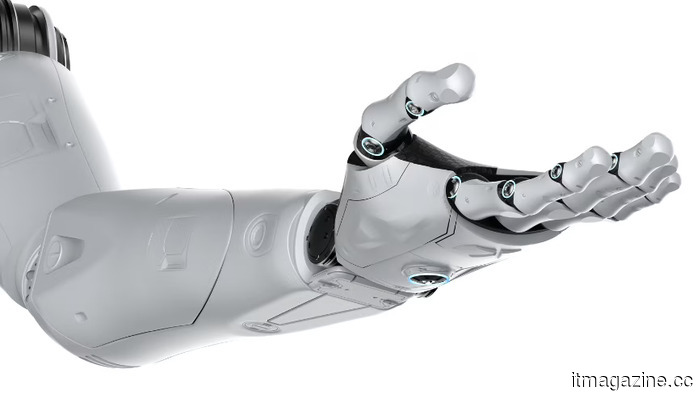
MIT has developed a memory system that enables robots to recall the location of your keys.
TL;DRMIT's DAAAM enables robots to develop long-term memory by linking language descriptions to 3D maps. This allows users to ask questions like "Where did I leave my wallet?" and the robot can respond accurately.
Robots still struggle with remembering object locations effectively. While you might recall that your keys were on the kitchen counter last night, a robot would have difficulty associating that object with its location. Researchers at MIT created a system named DAAAM to address this issue.
DAAAM stands for Describe Anything, Anywhere, Anytime, at Any Moment. It uses computer vision and 3D mapping to equip robots with long-term spatial memory. As a robot navigates an environment, it attaches detailed language descriptions to the visible objects and saves them within a spatial map. Rather than simply identifying an object at a coordinate, it retains specifics like "a red bicycle with a flat tire near a particular building."
Users can pose natural language inquiries such as, "Where did I leave my wallet?" or "Retrieve the component we began assembling last night." The robot retrieves the relevant object and its location from memory. The system operates quickly enough for real-time use by a mobile robot.
The researchers discovered that DAAAM outperformed existing methods for answering questions, depending on the type of query. This work was shared at the Conference on Computer Vision and Pattern Recognition (CVPR) and is accessible as a preprint on arXiv.
However, the system is not yet ready for consumer use. It serves as a research framework that illustrates the potential of integrating vision, language, and 3D spatial data into a durable memory system. The researchers continue to enhance the system’s confidence levels and its capacity to remember significant events rather than merely static object placements.
DAAAM addresses a fundamental gap in practical robotics. Physical AI systems must comprehend the real world, not just analyze text. A robot tasked with cleaning a house, organizing a warehouse, or assisting in a factory needs to retain knowledge of what it observed yesterday and where it is located now. Current robots typically either forget everything between tasks or necessitate expensive pre-mapping of their environments.
DAAAM's methodology is advantageous as it does not require prior environmental setup. The robot accumulates its memories on the go. This year, MIT has published several robotics advancements, including an ultrasound wristband for remote robot operation. DAAAM tackles the other side of the equation: not how to control a robot, but how to enable it to retain what it has observed. Intelligence devoid of memory is not true intelligence; it is merely reaction.
Other articles
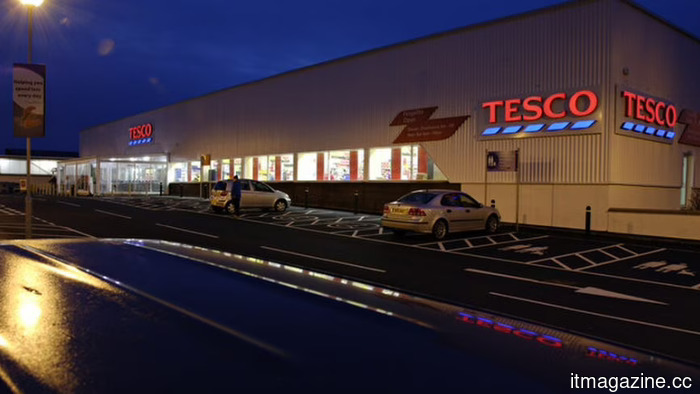 Tesco is shifting 40,000 servers from VMware and is taking legal action against Broadcom for more than GBP 100 million.
Tesco reports that Broadcom raised VMware prices by 175% and eliminated support for perpetual licenses. The company is transitioning 40,000 servers and is taking legal action for "abusive conduct."
Tesco is shifting 40,000 servers from VMware and is taking legal action against Broadcom for more than GBP 100 million.
Tesco reports that Broadcom raised VMware prices by 175% and eliminated support for perpetual licenses. The company is transitioning 40,000 servers and is taking legal action for "abusive conduct."
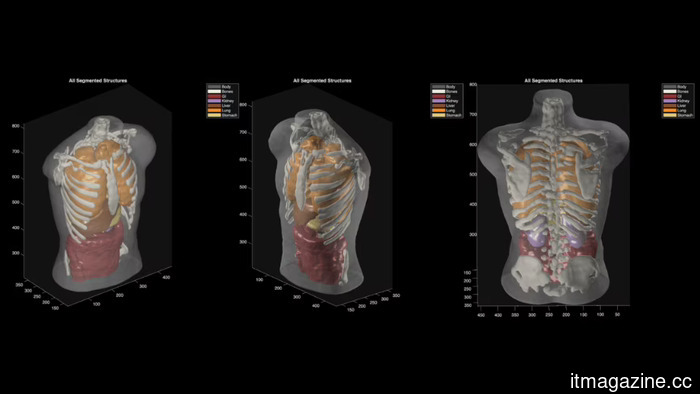 Midjourney's full-body scanner: significant promises, no proven history.
Midjourney has introduced a full-body ultrasound scanner, which its founder claims surpasses MRI technology. Additionally, the company has launched a Midjourney Medical division and a spa. However, the medical assertions have not been verified.
Midjourney's full-body scanner: significant promises, no proven history.
Midjourney has introduced a full-body ultrasound scanner, which its founder claims surpasses MRI technology. Additionally, the company has launched a Midjourney Medical division and a spa. However, the medical assertions have not been verified.
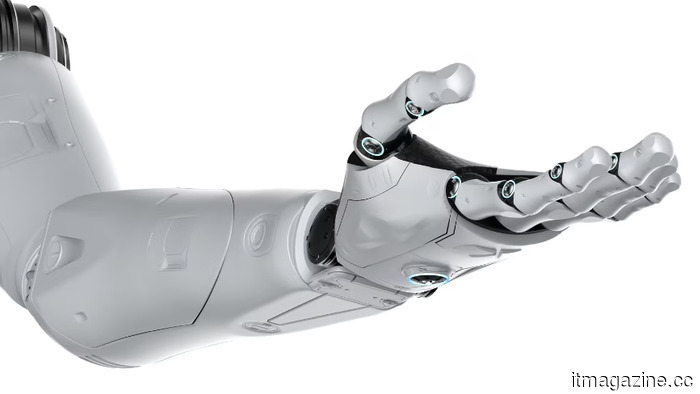 MIT developed a memory system enabling robots to recall the location of your keys.
MIT's DAAAM framework enables robots to possess long-term spatial memory by associating language descriptions with 3D maps. When you ask, "where's my wallet?", it searches through its memory.
MIT developed a memory system enabling robots to recall the location of your keys.
MIT's DAAAM framework enables robots to possess long-term spatial memory by associating language descriptions with 3D maps. When you ask, "where's my wallet?", it searches through its memory.
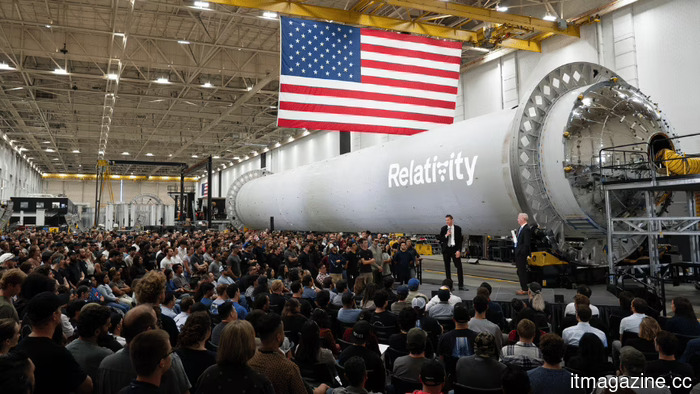 NASA selects Eric Schmidt's Relativity Space for a mission to Mars.
NASA has selected Eric Schmidt's Relativity Space for a Mars orbiter mission slated for 2028. The twist is that the company has yet to achieve a successful orbital launch, and the mission includes a data center intended for Mars orbit.
NASA selects Eric Schmidt's Relativity Space for a mission to Mars.
NASA has selected Eric Schmidt's Relativity Space for a Mars orbiter mission slated for 2028. The twist is that the company has yet to achieve a successful orbital launch, and the mission includes a data center intended for Mars orbit.
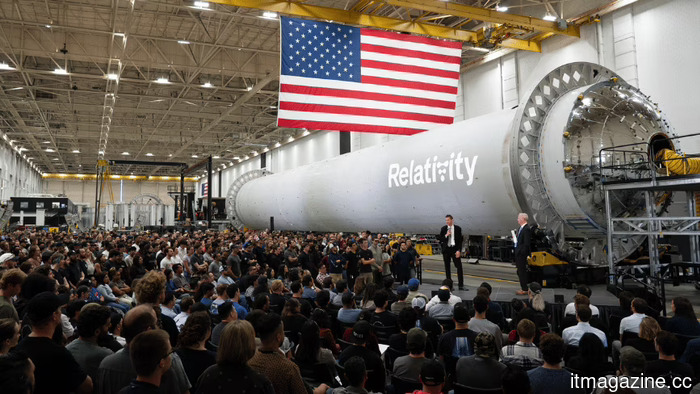 NASA selects Eric Schmidt's Relativity Space for Mars missions.
NASA has selected Eric Schmidt's Relativity Space for a Mars orbiter mission scheduled for 2028. However, there is a twist: the company has yet to achieve orbit, and the mission includes a data center for Mars orbit.
NASA selects Eric Schmidt's Relativity Space for Mars missions.
NASA has selected Eric Schmidt's Relativity Space for a Mars orbiter mission scheduled for 2028. However, there is a twist: the company has yet to achieve orbit, and the mission includes a data center for Mars orbit.
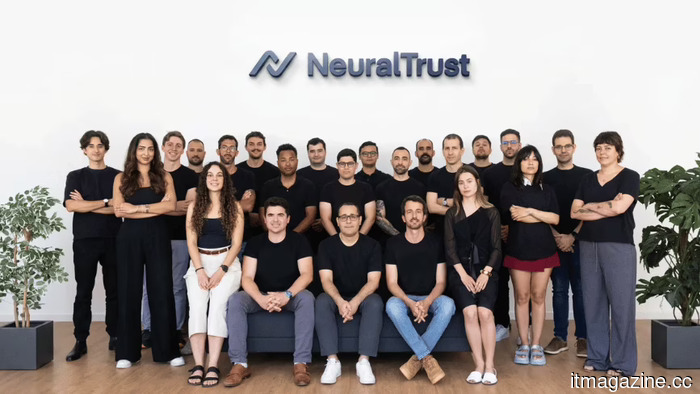 NeuralTrust secures $20 million to enhance the security of enterprise AI agents.
Barcelona's NeuralTrust secured a $20 million seed funding to monitor the proliferation of enterprise agents and to offer European banks and governments a security alternative that is not American.
NeuralTrust secures $20 million to enhance the security of enterprise AI agents.
Barcelona's NeuralTrust secured a $20 million seed funding to monitor the proliferation of enterprise agents and to offer European banks and governments a security alternative that is not American.
MIT has developed a memory system that enables robots to recall the location of your keys.
MIT's DAAAM framework enables robots to have long-term spatial memory by linking language descriptions to 3D maps. When you ask, "Where's my wallet?" it can search through its memory for the answer.