
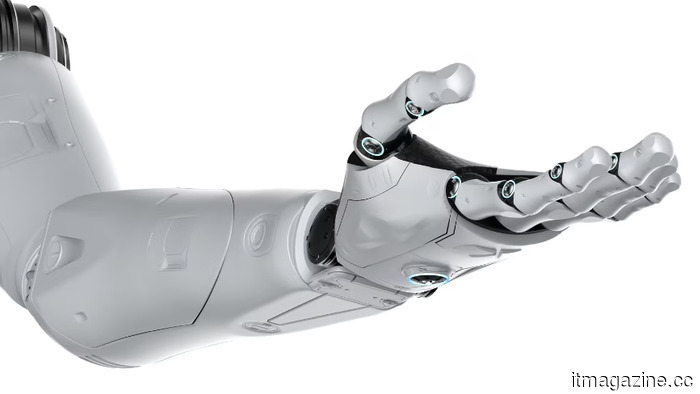
MIT developed a memory system enabling robots to recall the location of your keys.
MIT's DAAAM enables robots to have long-term memory by linking language descriptions to 3D maps, allowing them to answer questions like "Where did I leave my wallet?"
Despite advancements, robots still struggle with remembering object locations. While you might recall your keys were on the kitchen counter, a robot would find it challenging to associate that object with its location. To address this issue, MIT researchers created DAAAM.
DAAAM stands for Describe Anything, Anywhere, Anytime, at Any Moment. This system integrates computer vision and 3D mapping to provide robots with a long-term spatial memory. As robots navigate their surroundings, they attach descriptive language to the objects they encounter and store this information in a spatial framework. This means a robot doesn't just know there's an object at a specific coordinate; it can recall details like a red bicycle with a flat tire near a particular building.
Users can pose natural language questions like, "Where did I leave my wallet?" or "Go fetch the component we started assembling last night," and the robot can search its memory for the relevant object and location. The system operates quickly enough for real-time utilization by mobile robots.
The researchers discovered that DAAAM offered more accurate responses compared to existing methods, depending on the type of query. This work was showcased at the Conference on Computer Vision and Pattern Recognition (CVPR) and is available as a preprint on arXiv.
However, the system isn’t ready for consumer use yet; it serves as a research framework illustrating the possibilities when merging vision, language, and 3D spatial data into a lasting memory. Researchers are still enhancing the system's reliability and working on enabling it to remember important events beyond just static object placements.
DAAAM addresses a crucial gap for functional robotics. Physical AI systems must grasp the real world rather than merely processing text. For tasks like cleaning a house, managing a warehouse, or assisting in a factory, robots need to retain information about what they observed, not just their current view. Existing robots tend to either forget everything between tasks or need costly pre-mapping of each environment.
DAAAM's method is practical since it doesn’t require prior setup of the environment; the robot forms its memory as it navigates. MIT has been releasing a series of robotics innovations this year, including an ultrasound wristband for remote robot control. DAAAM focuses on enhancing memory in robots, highlighting that intelligence without memory isn't true intelligence; it’s merely reaction.
Other articles
 EU advises Big Tech to ensure AI data centers are in line with climate objectives.
Energy Commissioner Jorgensen states that businesses need to back clean energy and recycle waste heat. The introduction of a sustainability label has been postponed due to a disagreement concerning nuclear energy.
EU advises Big Tech to ensure AI data centers are in line with climate objectives.
Energy Commissioner Jorgensen states that businesses need to back clean energy and recycle waste heat. The introduction of a sustainability label has been postponed due to a disagreement concerning nuclear energy.
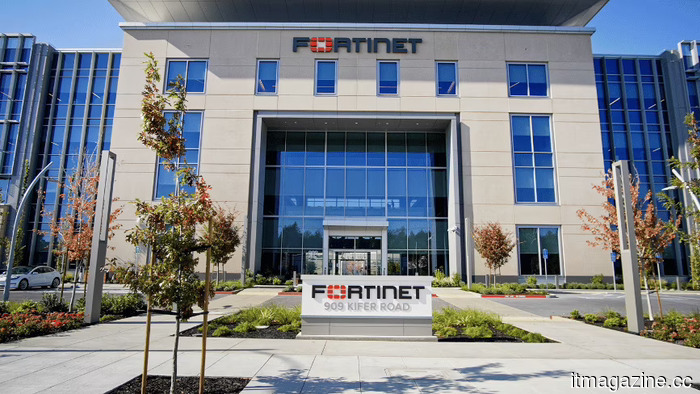 'FortiBleed': Credentials of 75,000 Fortinet firewalls compromised
A vulnerability known as FortiBleed revealed unencrypted credentials for approximately 75,000 Fortinet firewalls in 194 countries, affecting companies such as Samsung, Oracle, and Siemens. Here’s how it occurred.
'FortiBleed': Credentials of 75,000 Fortinet firewalls compromised
A vulnerability known as FortiBleed revealed unencrypted credentials for approximately 75,000 Fortinet firewalls in 194 countries, affecting companies such as Samsung, Oracle, and Siemens. Here’s how it occurred.
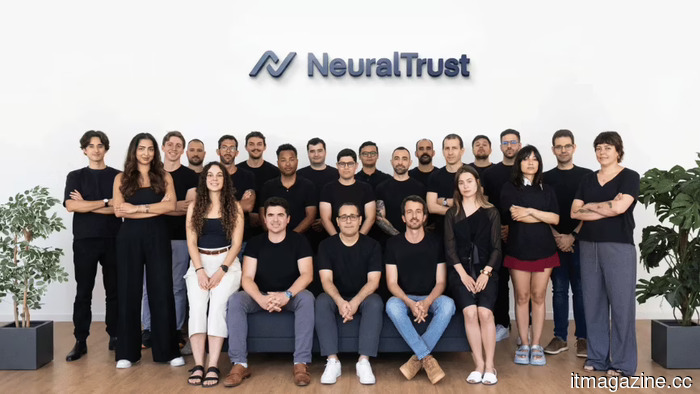 NeuralTrust secures $20 million to protect enterprise AI agents.
Barcelona's NeuralTrust secured $20 million in seed funding to manage enterprise 'agent sprawl' and to offer European banks and governments a security alternative that is not American.
NeuralTrust secures $20 million to protect enterprise AI agents.
Barcelona's NeuralTrust secured $20 million in seed funding to manage enterprise 'agent sprawl' and to offer European banks and governments a security alternative that is not American.
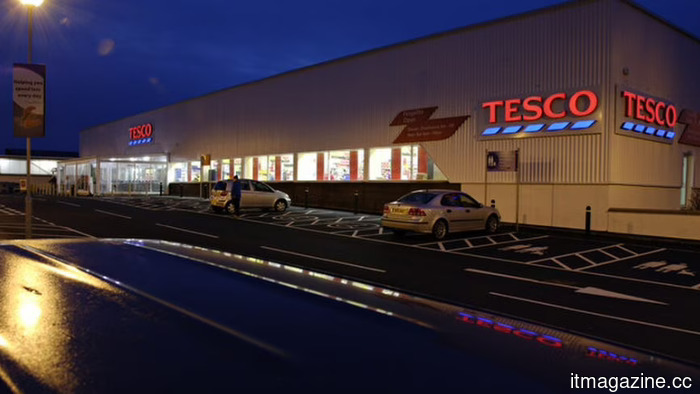 Tesco is shifting 40,000 servers from VMware and is taking legal action against Broadcom for more than GBP 100 million.
Tesco reports that Broadcom raised VMware prices by 175% and eliminated support for perpetual licenses. The company is transitioning 40,000 servers and is taking legal action for "abusive conduct."
Tesco is shifting 40,000 servers from VMware and is taking legal action against Broadcom for more than GBP 100 million.
Tesco reports that Broadcom raised VMware prices by 175% and eliminated support for perpetual licenses. The company is transitioning 40,000 servers and is taking legal action for "abusive conduct."
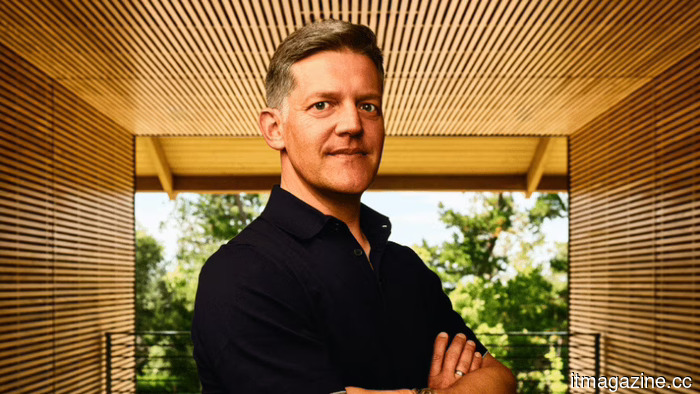 SpaceX has appointed Roelof Botha from Sequoia to its board.
SpaceX appointed Roelof Botha as an 'independent' director and a member of the audit committee just days following its record IPO. In a company ruled by Musk, this designation carries significant weight.
SpaceX has appointed Roelof Botha from Sequoia to its board.
SpaceX appointed Roelof Botha as an 'independent' director and a member of the audit committee just days following its record IPO. In a company ruled by Musk, this designation carries significant weight.
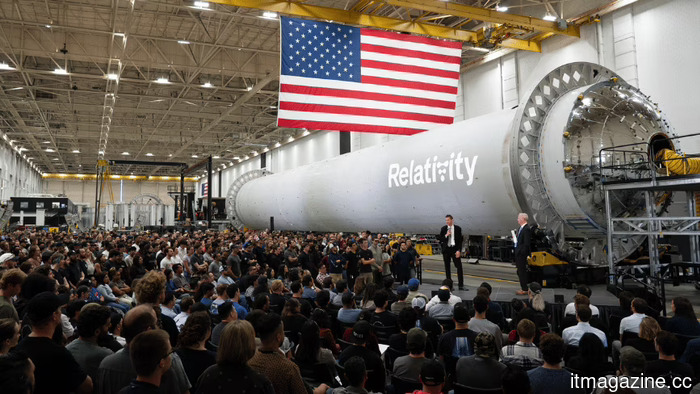 NASA selects Eric Schmidt's Relativity Space for Mars missions.
NASA has selected Eric Schmidt's Relativity Space for a Mars orbiter mission scheduled for 2028. However, there is a twist: the company has yet to achieve orbit, and the mission includes a data center for Mars orbit.
NASA selects Eric Schmidt's Relativity Space for Mars missions.
NASA has selected Eric Schmidt's Relativity Space for a Mars orbiter mission scheduled for 2028. However, there is a twist: the company has yet to achieve orbit, and the mission includes a data center for Mars orbit.
MIT developed a memory system enabling robots to recall the location of your keys.
MIT's DAAAM framework enables robots to possess long-term spatial memory by associating language descriptions with 3D maps. When you ask, "where's my wallet?", it searches through its memory.