
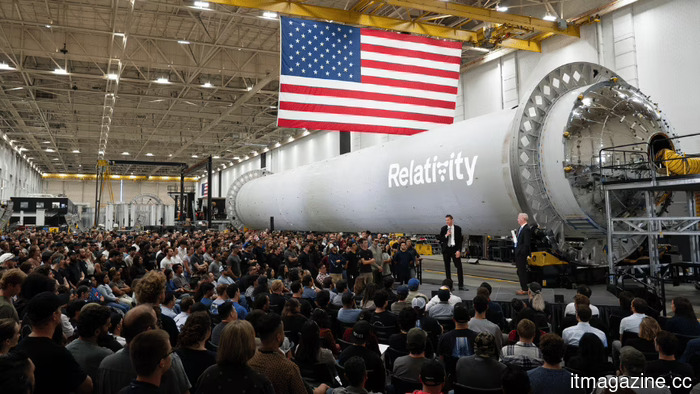
NASA selects Eric Schmidt's Relativity Space for a mission to Mars.
NASA has joined forces with Relativity Space, the rocket company headed by former Google CEO Eric Schmidt, to conduct a scientific mission to Mars.
This mission, named Aeolus, was announced on June 17 and marks the inaugural flight of Relativity’s new Interplanetary Sciences Program. Relativity will construct the spacecraft, utilize its Terran R rocket, and transport the scientific payloads to Mars, with the launch planned for 2028.
The agreement follows a familiar model: the public agency provides the scientific objectives while a private company offers cost-effective infrastructure, a similar approach that NASA used with SpaceX for cargo transport to the International Space Station and with Firefly for lunar landings.
The scientific goals of the mission are substantial. Aeolus will carry an atmospheric instrument suite developed by NASA’s Ames Research Center, along with a radar sounder to explore shallow subsurface ice and geological features. NASA anticipates obtaining the first daily global observations of Martian winds, temperatures, dust, and cloud cover, information intended to enhance the safety of future landings, whether crewed or unmanned.
However, the challenge lies in the reliability of the company NASA is investing in, as Relativity has yet to achieve orbit. Founded in 2015 by two former engineers from SpaceX and Blue Origin with a focus on 3D-printed rockets, its initial vehicle, Terran-1, failed during a flight test in 2023. The company then shifted to a larger rocket, the Terran R, but faced financial difficulties.
Schmidt intervened by acquiring a majority stake in 2025 and assuming the role of CEO. The Terran R has yet to launch, and Relativity has not revealed the specifics of the Aeolus spacecraft. The financial details of the mission have not been disclosed by either party.
NASA openly acknowledges the risks associated with such commercial partnerships. Some of the agency’s startup collaborators have gone bankrupt, while others experienced issues during lunar landings. Administrator Jared Isaacman stated, “By combining NASA’s top-tier instruments with commercial innovation and investment, we can achieve more science more frequently.”
A key aspect of Schmidt's interest lies in the fact that the 2028 mission goes beyond merely studying Mars. It will deploy what Relativity calls a “Relay Data Center,” which is server-class computing and mass storage positioned in Mars orbit. This setup could operate AI models on-site and transmit large quantities of data back to Earth through optical and radio connections.
This aligns with Schmidt’s expressed goal of launching data centers into orbit, making the company's first interplanetary mission, in part, a data center in space.
Moreover, Relativity has indicated that Aeolus will be conducted “for a philanthropic customer,” with NASA serving as a partner for building the atmospheric instruments, although the identity of the customer remains undisclosed. Since Schmidt owns the rocket company and funds scientific initiatives through his philanthropy, the arrangement is noteworthy.
Relativity has pledged to make all scientific data, algorithms, and automation insights from the mission available to the public.
This mission also presents an interesting rivalry. Schmidt and Elon Musk, who has long talked about colonizing Mars, frequently debate AI safety. Despite Musk’s ambitions, SpaceX has not yet launched a mission to Mars. Therefore, if Relativity successfully launches Aeolus on schedule—which remains uncertain—it could represent the first private mission to reach Mars, with Schmidt potentially beating Musk to the achievement. However, many conditions still hinge on a rocket that needs to demonstrate its capability to launch successfully.
Other articles
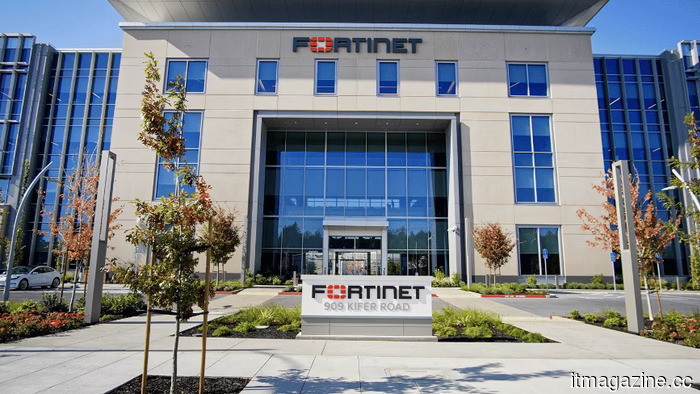 'FortiBleed': Credentials for 75,000 Fortinet firewalls compromised.
A vulnerability known as FortiBleed revealed unencrypted credentials for approximately 75,000 Fortinet firewalls in 194 nations, affecting companies like Samsung, Oracle, and Siemens. Here's the explanation.
'FortiBleed': Credentials for 75,000 Fortinet firewalls compromised.
A vulnerability known as FortiBleed revealed unencrypted credentials for approximately 75,000 Fortinet firewalls in 194 nations, affecting companies like Samsung, Oracle, and Siemens. Here's the explanation.
 Swiss startup Prem AI is seeking to raise $100 million to enable hedge funds and law firms to own their AI systems rather than merely renting them.
Prem AI creates AI products for companies that are unable to share data with OpenAI or Anthropic. It is seeking to raise $100 million at a valuation exceeding $500 million. "Enterprise intelligence needs to be owned."
Swiss startup Prem AI is seeking to raise $100 million to enable hedge funds and law firms to own their AI systems rather than merely renting them.
Prem AI creates AI products for companies that are unable to share data with OpenAI or Anthropic. It is seeking to raise $100 million at a valuation exceeding $500 million. "Enterprise intelligence needs to be owned."
 The portal itself is the product: it serves as the framework for transforming digital agencies' operational models.
Digital agencies are encountering a scaling barrier as AI takes over the responsibilities that previously warranted retainers. Those that are prospering offer productized services via client portals that integrate intake, billing, delivery, and reporting.
The portal itself is the product: it serves as the framework for transforming digital agencies' operational models.
Digital agencies are encountering a scaling barrier as AI takes over the responsibilities that previously warranted retainers. Those that are prospering offer productized services via client portals that integrate intake, billing, delivery, and reporting.
 EU urges Big Tech to ensure AI data centers are in accordance with climate objectives.
Energy Commissioner Jorgensen states that businesses need to back clean energy initiatives and make use of recycled waste heat. The introduction of a sustainability label has been postponed due to a disagreement related to nuclear energy.
EU urges Big Tech to ensure AI data centers are in accordance with climate objectives.
Energy Commissioner Jorgensen states that businesses need to back clean energy initiatives and make use of recycled waste heat. The introduction of a sustainability label has been postponed due to a disagreement related to nuclear energy.
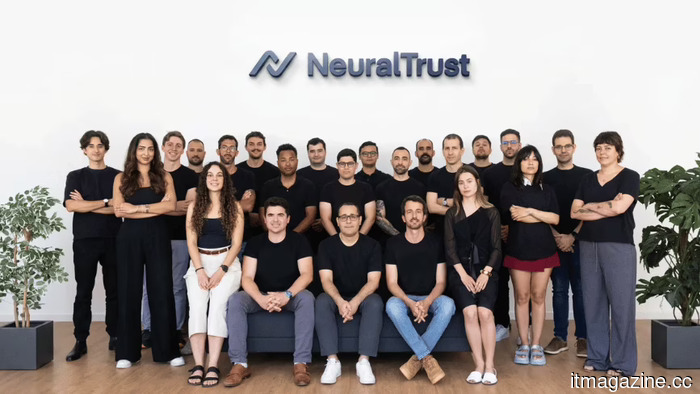 NeuralTrust secures $20 million to enhance the security of enterprise AI agents.
Barcelona's NeuralTrust secured a $20 million seed funding to monitor the proliferation of enterprise agents and to offer European banks and governments a security alternative that is not American.
NeuralTrust secures $20 million to enhance the security of enterprise AI agents.
Barcelona's NeuralTrust secured a $20 million seed funding to monitor the proliferation of enterprise agents and to offer European banks and governments a security alternative that is not American.
 EU advises Big Tech to ensure AI data centers are in line with climate objectives.
Energy Commissioner Jorgensen states that businesses need to back clean energy and recycle waste heat. The introduction of a sustainability label has been postponed due to a disagreement concerning nuclear energy.
EU advises Big Tech to ensure AI data centers are in line with climate objectives.
Energy Commissioner Jorgensen states that businesses need to back clean energy and recycle waste heat. The introduction of a sustainability label has been postponed due to a disagreement concerning nuclear energy.
NASA selects Eric Schmidt's Relativity Space for a mission to Mars.
NASA has selected Eric Schmidt's Relativity Space for a Mars orbiter mission slated for 2028. The twist is that the company has yet to achieve a successful orbital launch, and the mission includes a data center intended for Mars orbit.