
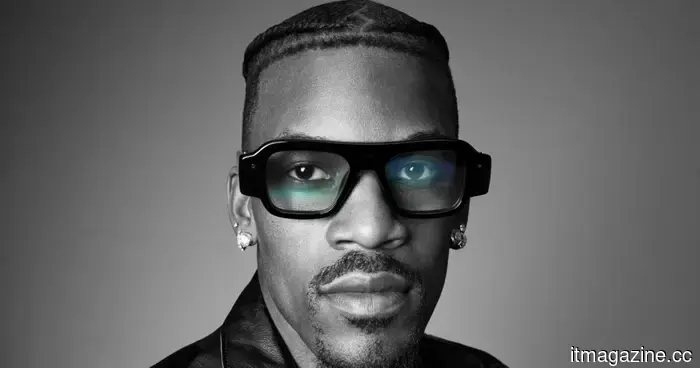
A US state is considering prohibiting smart glasses while driving, which may lead to a host of unforeseen issues.
Smart glasses are swiftly transitioning from specialized gadgets to widely adopted consumer technology. Products from manufacturers like Meta, Google, Apple, and Snap are becoming more adept at showing notifications, offering navigation, capturing video, and even operating AI-driven assistants within a user's visual field.
However, one U.S. state is raising a crucial question: Should drivers be permitted to wear them while driving?
Illinois lawmakers are contemplating a bill that would prevent drivers from wearing smart glasses while operating a vehicle. If enacted, this could make the state the first in the nation to introduce a law specifically targeting wearable augmented reality devices during driving.
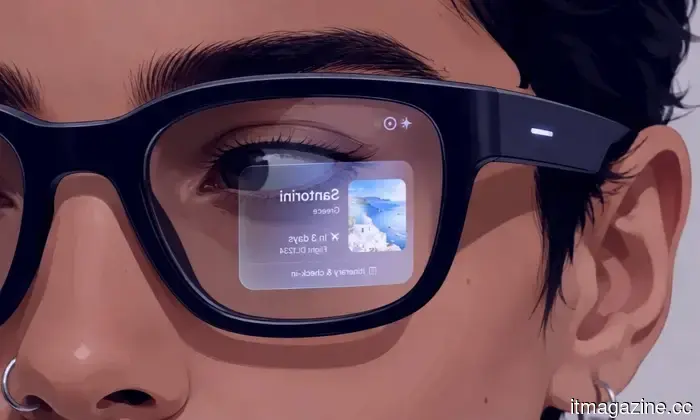
This proposal comes at a time when tech companies are heavily investing in smart glasses as the next significant computing platform. Although current models are still relatively basic, forthcoming devices are anticipated to present increasingly sophisticated digital information directly in users’ line of sight.
Proponents of the legislation contend that adding virtual content to a driver's visual field creates distractions that current traffic laws do not adequately address.
Legislators are concerned about distractions before the technology becomes mainstream
The Illinois bill intends to prohibit drivers from using smart glasses that project visual content while driving. The rationale is clear: even if the glasses are intended to assist users, they could also detract focus from the road.
Safety experts have long cautioned about the dangers of distracted driving associated with smartphones, infotainment systems, and navigation displays. Smart glasses pose a new challenge since the display moves with the user rather than being fixed to a dashboard or phone holder.
Critics of the technology argue that having notifications, messages, videos, advertisements, or AI-generated content in a driver's line of sight could heighten the risk of accidents.
The legislation mirrors a broader trend among regulators who are seeking to tackle emerging technologies before they become pervasive. Instead of waiting for incidents or legal issues to arise, lawmakers are keen to set bounds early on.
Technology companies, however, often claim that wearable displays can improve safety when used appropriately. Navigation instructions, hazard alerts, and hands-free access to information are frequently highlighted as advantages of augmented reality devices.
The discussion could extend beyond just smart glasses
The broader concern lies in what comes next.
Should Illinois proceed with a ban on smart glasses, it could create a legal precedent that other states might eventually adopt. More importantly, it raises critical questions about how governments will regulate future wearable technologies.
The complexity of regulation increases as artificial intelligence becomes a feature of smart glasses. Future models are expected to offer real-time translations, contextual insight, object recognition, and conversational AI assistance, complicating the definition of distraction further.
The proposal underscores a growing conflict between innovation and public safety. Regulators aim to curb hazardous behaviors, while technology companies seek the liberty to create entirely new device categories.
Currently, the Illinois legislation is still under review. Nevertheless, its implications stretch well beyond a single state.
As smart glasses gain capability and prevalence, lawmakers worldwide will likely encounter the same dilemma. If drivers can legally utilize a navigation display, voice assistant, or heads-up display today, where should regulators set the boundaries in the future?
Illinois may be the first state tackling this issue, but it will undoubtedly not be the last.

Other articles
 Google is enhancing Pixel Screenshots with cloud AI while ensuring your data remains private.
The latest update to Google's Pixel Screenshots app introduces cloud-based AI processing, enhancing its ability to search and analyze your screenshots while ensuring that data remains within a hardware-secured environment.
Google is enhancing Pixel Screenshots with cloud AI while ensuring your data remains private.
The latest update to Google's Pixel Screenshots app introduces cloud-based AI processing, enhancing its ability to search and analyze your screenshots while ensuring that data remains within a hardware-secured environment.
 Nvidia-supported Verse secures $54 million for AI data center energy.
Verse secured $54 million in a Series B funding round led by Bessemer, with Nvidia as one of the investors, to assist AI data centers in bypassing the grid queue by utilizing on-site batteries.
Nvidia-supported Verse secures $54 million for AI data center energy.
Verse secured $54 million in a Series B funding round led by Bessemer, with Nvidia as one of the investors, to assist AI data centers in bypassing the grid queue by utilizing on-site batteries.
 Accenture's stock fell by 20% while the company acquired $4.18 billion worth of cybersecurity.
Accenture's stock dropped an unprecedented 20% amid concerns that AI is impacting the consulting industry, despite the company's decision to acquire Dragos, runZero, and NetRise for $4.18 billion in the cybersecurity sector.
Accenture's stock fell by 20% while the company acquired $4.18 billion worth of cybersecurity.
Accenture's stock dropped an unprecedented 20% amid concerns that AI is impacting the consulting industry, despite the company's decision to acquire Dragos, runZero, and NetRise for $4.18 billion in the cybersecurity sector.
 The EU is set to designate AWS and Azure as gatekeepers under the Digital Markets Act.
Next week, the European Commission will present initial findings indicating that AWS and Azure satisfy the gatekeeper criteria of the DMA. This will be accompanied by measures to enhance interoperability and limit lock-in.
The EU is set to designate AWS and Azure as gatekeepers under the Digital Markets Act.
Next week, the European Commission will present initial findings indicating that AWS and Azure satisfy the gatekeeper criteria of the DMA. This will be accompanied by measures to enhance interoperability and limit lock-in.
 Verse, supported by Nvidia, has secured $54 million to enhance AI data center capabilities.
Verse secured $54 million in a Series B funding round led by Bessemer, with support from Nvidia, to assist AI data centers in bypassing the grid queue through the use of on-site batteries.
Verse, supported by Nvidia, has secured $54 million to enhance AI data center capabilities.
Verse secured $54 million in a Series B funding round led by Bessemer, with support from Nvidia, to assist AI data centers in bypassing the grid queue through the use of on-site batteries.
 An innocuous ChatGPT prompt led to the creation of shocking AI images.
Researchers indicate that ChatGPT produced violent and sexualized images after a seemingly innocuous prompt was modified, raising fresh concerns about OpenAI's safety measures and the ease with which AI image tools can circumvent filters.
An innocuous ChatGPT prompt led to the creation of shocking AI images.
Researchers indicate that ChatGPT produced violent and sexualized images after a seemingly innocuous prompt was modified, raising fresh concerns about OpenAI's safety measures and the ease with which AI image tools can circumvent filters.
A US state is considering prohibiting smart glasses while driving, which may lead to a host of unforeseen issues.
Smart glasses are swiftly transitioning from specialized devices to widely adopted consumer technology. Products from firms like Meta, Google, Apple, and Snap are becoming more proficient at showing notifications, offering navigation, capturing video, and even operating AI-driven assistants right within the user’s line of sight. However, one state in the U.S. is already posing a significant question: Should […]