
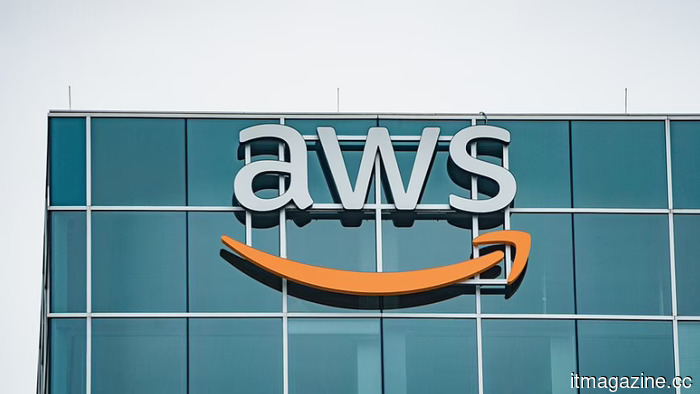
The EU is set to designate AWS and Azure as gatekeepers under the Digital Markets Act.
TL;DREU is preparing to determine whether AWS and Azure fulfill the gatekeeper criteria outlined by the DMA. Initial findings are anticipated next week, with a conclusive decision expected by the end of the year. The requirements concerning interoperability and measures against customer lock-in will also be included.
According to Bloomberg, the European Commission plans to release initial findings as soon as next week, suggesting that Amazon Web Services and Microsoft Azure likely meet the criteria for gatekeeper designation under the Digital Markets Act. A final ruling is likely by the end of 2026, though this timing may change.
If designated as gatekeepers, AWS and Azure would be subject to several obligations, such as interoperability guidelines, limits on customer lock-in, and prohibitions on self-preferencing. Failure to comply could lead to fines of up to 10% of global revenue, increasing to 20% for repeated violations.
The Commission initiated a formal market investigation in November after determining that Microsoft and Amazon hold very strong positions in the cloud sector. This investigation was prompted by notable outages that underscored the risks associated with concentrating vital infrastructure among a few providers. For instance, a 15-hour AWS outage affected operations at Apple, McDonald's, and Epic Games, while Azure issues disrupted check-ins for Alaska Airlines and halted voting in the Scottish Parliament.
The DMA currently applies to six designated gatekeepers: Alphabet, Amazon, Apple, ByteDance, Meta, and Microsoft, but those designations pertained to specific services like app stores and messaging rather than cloud infrastructure. The DMA has faced criticism for its sluggish pace regarding the specific services it aims to regulate. Extending it to encompass cloud services would mark a significant broadening of the law's scope.
The timing is politically sensitive, as the DMA has attracted criticism from the Trump administration, which has depicted EU tech regulations as attacks on American firms. Apple and Meta have already been fined EUR 500 million and EUR 200 million, respectively, for violations. Including cloud services within the scope would put the EU on a direct path to confrontation with Washington's two largest cloud providers at a time when trade discussions are already strained.
For European businesses, this has significant practical implications. Cloud lock-in, where changing providers requires costly and time-consuming migration, is one of the prevalent criticisms of AWS and Azure. Europe’s dependency on cloud services is not merely a technical issue but a political one, as TNW has highlighted. US hyperscalers control around 70% of the revenue from European cloud infrastructure. Interoperability mandates could lower the barriers for transferring workloads to European providers like OVHcloud, Hetzner, and Scaleway.
Microsoft and AWS did not comment or did not respond to inquiries. The Commission has not confirmed the timeline. However, if the preliminary results are published next week, the two leading players in the cloud market will spend the rest of 2026 negotiating terms for their operations in Europe under this significant tech regulation.
Other articles
 Google is enhancing Pixel Screenshots with cloud AI while ensuring your data remains private.
The latest update to Google's Pixel Screenshots app introduces cloud-based AI processing, enhancing its ability to search and analyze your screenshots while ensuring that data remains within a hardware-secured environment.
Google is enhancing Pixel Screenshots with cloud AI while ensuring your data remains private.
The latest update to Google's Pixel Screenshots app introduces cloud-based AI processing, enhancing its ability to search and analyze your screenshots while ensuring that data remains within a hardware-secured environment.
 California anticipated a significant tax windfall from AI IPOs. However, contemporary compensation models might reduce the expected gains.
SpaceX, OpenAI, and Anthropic have the potential to generate billions in tax revenue for California. However, strategies such as single-trigger RSUs, tender offers, and buy-borrow-die are constraining the overall amount collected.
California anticipated a significant tax windfall from AI IPOs. However, contemporary compensation models might reduce the expected gains.
SpaceX, OpenAI, and Anthropic have the potential to generate billions in tax revenue for California. However, strategies such as single-trigger RSUs, tender offers, and buy-borrow-die are constraining the overall amount collected.
 California had anticipated a significant tax windfall from AI IPOs, but contemporary compensation frameworks might reduce the expected gains.
SpaceX, OpenAI, and Anthropic have the potential to generate billions in tax revenue for California. However, approaches like single-trigger RSUs, tender offers, and buy-borrow-die strategies are restraining the overall contribution.
California had anticipated a significant tax windfall from AI IPOs, but contemporary compensation frameworks might reduce the expected gains.
SpaceX, OpenAI, and Anthropic have the potential to generate billions in tax revenue for California. However, approaches like single-trigger RSUs, tender offers, and buy-borrow-die strategies are restraining the overall contribution.
 AVP and Earlybird introduce a €500 million fund for European defense.
AVP and Earlybird have introduced E2D, a €500 million fund aimed at European defence and dual-use startups, while the US continues to dominate with 85% of NATO defence technology funding.
AVP and Earlybird introduce a €500 million fund for European defense.
AVP and Earlybird have introduced E2D, a €500 million fund aimed at European defence and dual-use startups, while the US continues to dominate with 85% of NATO defence technology funding.
 Google Photos' AI image editor is expanding to additional regions, but it is available exclusively for Android users.
Google has broadened the availability of Edit with Ask Photos, its AI-driven conversational editing feature, to five additional markets. The rollout for Android users is happening in Germany, the UK, France, Spain, and Italy; however, support for iOS in these new areas has yet to be confirmed.
Google Photos' AI image editor is expanding to additional regions, but it is available exclusively for Android users.
Google has broadened the availability of Edit with Ask Photos, its AI-driven conversational editing feature, to five additional markets. The rollout for Android users is happening in Germany, the UK, France, Spain, and Italy; however, support for iOS in these new areas has yet to be confirmed.
 Two of the most popular games in the Call of Duty franchise are set to be released on modern PlayStation consoles.
Treyarch has announced that Call of Duty: Black Ops and Black Ops 2 are being adapted for current PlayStation consoles by Iron Galaxy. These iconic shooters will feature campaign mode, multiplayer, and Zombies, providing PlayStation users the opportunity to return to two of the franchise’s most cherished titles.
Two of the most popular games in the Call of Duty franchise are set to be released on modern PlayStation consoles.
Treyarch has announced that Call of Duty: Black Ops and Black Ops 2 are being adapted for current PlayStation consoles by Iron Galaxy. These iconic shooters will feature campaign mode, multiplayer, and Zombies, providing PlayStation users the opportunity to return to two of the franchise’s most cherished titles.
The EU is set to designate AWS and Azure as gatekeepers under the Digital Markets Act.
Next week, the European Commission will present initial findings indicating that AWS and Azure satisfy the gatekeeper criteria of the DMA. This will be accompanied by measures to enhance interoperability and limit lock-in.