
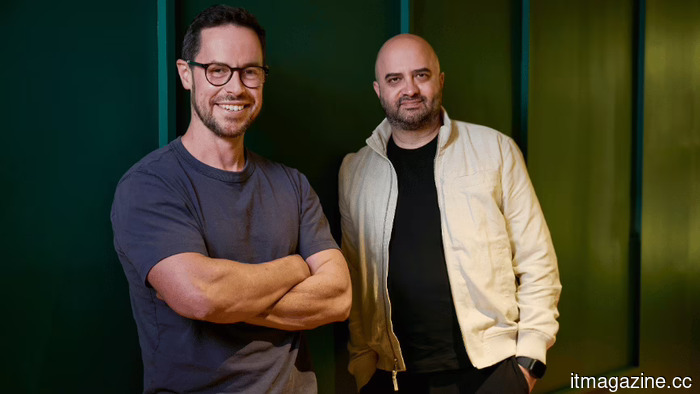
Verse, supported by Nvidia, has secured $54 million to enhance AI data center capabilities.
For years, the limited resource in AI was chips, but now it has shifted to power. Verse Enterprises aims to alleviate this bottleneck. The San Francisco startup has successfully raised an oversubscribed $54 million in its Series B round, with Bessemer Venture Partners leading the investment, and participation from GV, Nvidia, and Norrsken VC.
The competition in AI has transformed into a competition for power. Data centers are expanding at a pace quicker than what the power grids can accommodate. In many areas, developers are left waiting for years just to connect to the grid. Generation shortages, transmission bottlenecks, and lengthy interconnection queues all contribute to delays.
The pressure is evident everywhere. Denmark recently halted new grid connections due to AI data centers overwhelming its infrastructure. Additionally, the EU has requested households to reduce power consumption during peak hours. According to Verse, hundreds of data centers are stuck in utility queues, which they assert results in $500 billion of potential annual revenue being lost.
Bypassing the queue with batteries
The latest updates from the EU tech landscape, insights from our astute founder Boris, and some dubious AI-generated art. Get it for free, delivered to your inbox weekly. Sign up today! Verse’s solution is to bypass the waiting line. Their new product, Dispatch Intelligence, manages on-site batteries and solar power in real time. This approach makes the grid perceive a flexible load rather than a constant one, allowing data centers to maintain full computing capabilities without throttling.
For hardware, Verse has partnered with battery manufacturer Calibrant Energy, which supplies the on-site storage and solar, while Verse handles the software. This strategy employs the same behind-the-meter logic that is now driving investments into clean-energy-as-a-service startups. According to the company, their collaboration can expedite the addition of new capacity by up to three years.
“Clean energy is, in fact, the economically feasible solution due to its rapid deployment speed,” stated Seyed Madaeni, co-founder and CEO of Verse.
Will utility companies cooperate?
However, this model is not guaranteed to succeed. Allison Weis, the global head of storage at Wood Mackenzie, explains that while flexibility can reduce barriers to connectivity, it does not ensure success. Utility companies have yet to establish standards for how data centers can achieve faster online connectivity, nor have they confirmed that batteries or on-site power will be recognized.
“There’s no standardized framework,” Weis commented. This situation may soon change, as US federal regulators are expected to release guidance on expediting data-center connections. The key question remains: who bears the cost? Will it be hyperscalers through their own generation, or everyone else through upgrades to the grid?
What the funding will be used for
Verse is not the only contender in this sector. Nvidia is also supporting Emerald AI, which develops similar software, and Verse is integrating Dispatch Intelligence with Nvidia’s DSX AI Factory design intended for large-scale sites. Nvidia has a strong incentive to assist: each data center stuck in a queue is a potential customer unable to purchase its chips.
The startup intends to act swiftly, aiming to oversee more than 100 sites within a year. For Verse, clean power has shifted from being a sluggish option to becoming a quicker path forward.
Other articles
 Honor's latest Watch 6 offers battery life that Apple Watch users can only wish for.
The Honor Watch 6 is set to launch worldwide, boasting a battery life of 35 days, a vibrant display, wet touch controls, and specific tracking modes for football and badminton.
Honor's latest Watch 6 offers battery life that Apple Watch users can only wish for.
The Honor Watch 6 is set to launch worldwide, boasting a battery life of 35 days, a vibrant display, wet touch controls, and specific tracking modes for football and badminton.
 Google is enhancing Pixel Screenshots with cloud AI while ensuring your data remains private.
The latest update to Google's Pixel Screenshots app introduces cloud-based AI processing, enhancing its ability to search and analyze your screenshots while ensuring that data remains within a hardware-secured environment.
Google is enhancing Pixel Screenshots with cloud AI while ensuring your data remains private.
The latest update to Google's Pixel Screenshots app introduces cloud-based AI processing, enhancing its ability to search and analyze your screenshots while ensuring that data remains within a hardware-secured environment.
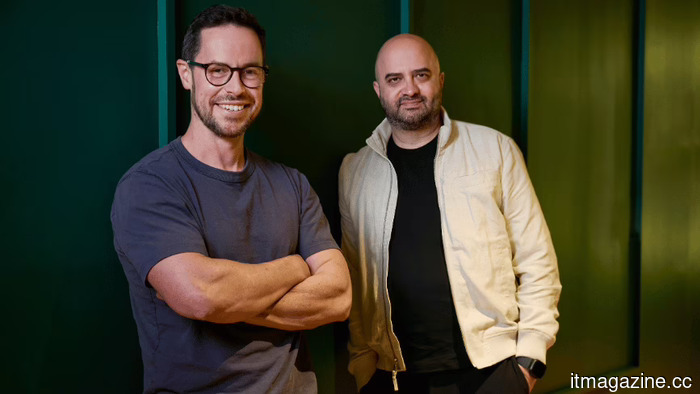 Nvidia-supported Verse secures $54 million for AI data center energy.
Verse secured $54 million in a Series B funding round led by Bessemer, with Nvidia as one of the investors, to assist AI data centers in bypassing the grid queue by utilizing on-site batteries.
Nvidia-supported Verse secures $54 million for AI data center energy.
Verse secured $54 million in a Series B funding round led by Bessemer, with Nvidia as one of the investors, to assist AI data centers in bypassing the grid queue by utilizing on-site batteries.
 An innocuous ChatGPT prompt led to the creation of shocking AI images.
Researchers indicate that ChatGPT produced violent and sexualized images after a seemingly innocuous prompt was modified, raising fresh concerns about OpenAI's safety measures and the ease with which AI image tools can circumvent filters.
An innocuous ChatGPT prompt led to the creation of shocking AI images.
Researchers indicate that ChatGPT produced violent and sexualized images after a seemingly innocuous prompt was modified, raising fresh concerns about OpenAI's safety measures and the ease with which AI image tools can circumvent filters.
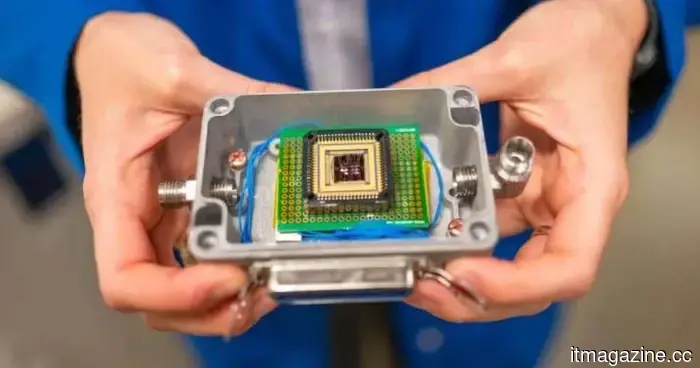 An unusual small electronic sensor could be the key component for smart refrigerators.
The electric nose developed by UC Berkeley employs a carbon nanotube gas sensor chip to identify spoiled food and allergens; however, the true challenge lies in navigating crowded refrigerators and the odors of mixed foods.
An unusual small electronic sensor could be the key component for smart refrigerators.
The electric nose developed by UC Berkeley employs a carbon nanotube gas sensor chip to identify spoiled food and allergens; however, the true challenge lies in navigating crowded refrigerators and the odors of mixed foods.
 A US state is considering prohibiting smart glasses while driving, which may lead to a host of unforeseen issues.
Smart glasses are swiftly transitioning from specialized devices to widely adopted consumer technology. Products from firms like Meta, Google, Apple, and Snap are becoming more proficient at showing notifications, offering navigation, capturing video, and even operating AI-driven assistants right within the user’s line of sight. However, one state in the U.S. is already posing a significant question: Should […]
A US state is considering prohibiting smart glasses while driving, which may lead to a host of unforeseen issues.
Smart glasses are swiftly transitioning from specialized devices to widely adopted consumer technology. Products from firms like Meta, Google, Apple, and Snap are becoming more proficient at showing notifications, offering navigation, capturing video, and even operating AI-driven assistants right within the user’s line of sight. However, one state in the U.S. is already posing a significant question: Should […]
Verse, supported by Nvidia, has secured $54 million to enhance AI data center capabilities.
Verse secured $54 million in a Series B funding round led by Bessemer, with support from Nvidia, to assist AI data centers in bypassing the grid queue through the use of on-site batteries.