

Google is enhancing Pixel Screenshots with cloud AI while ensuring your data remains private.
The update provides additional AI capabilities for searching within Pixel Screenshots, eliminating the need to transmit data through traditional cloud servers.
Google’s Pixel Screenshots app is introducing cloud-based AI processing in its latest update, moving away from the exclusively on-device method it has employed since its inception.
On-device AI now has a cloud counterpart
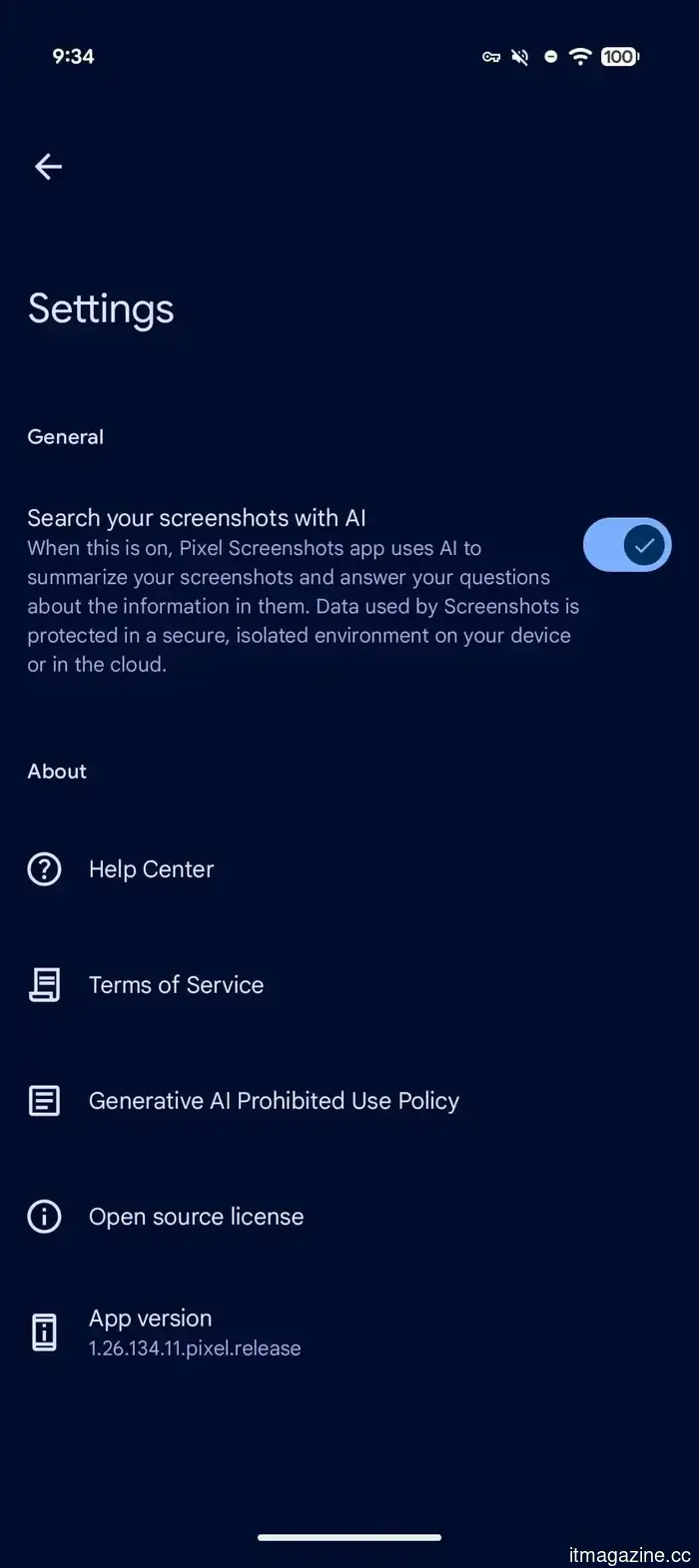
In version 1.26.134.11, the app's description has been changed from “Search your screenshots with on-device AI” to “Search your screenshots with AI.” This update indicates that processing can now occur both locally and via a "secure, isolated environment."
According to 9to5Google, the cloud aspect likely pertains to Google’s Private AI Compute framework, introduced last November. This framework relies on hardware-secured infrastructure, such as Tensor Processing Units and Titanium Intelligence Enclaves, and Google claims it cannot access any data that has been processed through it.
The purpose of this framework is to enable Google to enhance cloud AI capabilities for Pixel features without sending user data through standard servers, addressing significant privacy concerns linked to off-device processing. The connection between the phone and the cloud environment is secured through remote attestation and encryption, ensuring a protected data transfer from start to finish.
A trend among Pixel apps
This transition mirrors a similar approach Google adopted with Magic Cue and Recorder. Magic Cue enhanced its suggestions through cloud processing, while Recorder expanded its transcription capabilities to include more languages. The inclusion of Pixel Screenshots in this trend suggests Google is broadly moving its on-device AI features toward a hybrid model, utilizing Private AI Compute as a connection between local processing and more advanced capabilities available in the cloud.
While Google has not specifically detailed what advantages cloud processing will provide for Pixel Screenshots, it has mentioned that it will enhance user experience with the feature. On-device processing will still function without an internet connection, meaning the cloud component serves to complement rather than replace local AI functionality. The update is being rolled out gradually and may not be available to all users yet.





Other articles
 A US state is considering prohibiting smart glasses while driving, which may lead to a host of unforeseen issues.
Smart glasses are swiftly transitioning from specialized devices to widely adopted consumer technology. Products from firms like Meta, Google, Apple, and Snap are becoming more proficient at showing notifications, offering navigation, capturing video, and even operating AI-driven assistants right within the user’s line of sight. However, one state in the U.S. is already posing a significant question: Should […]
A US state is considering prohibiting smart glasses while driving, which may lead to a host of unforeseen issues.
Smart glasses are swiftly transitioning from specialized devices to widely adopted consumer technology. Products from firms like Meta, Google, Apple, and Snap are becoming more proficient at showing notifications, offering navigation, capturing video, and even operating AI-driven assistants right within the user’s line of sight. However, one state in the U.S. is already posing a significant question: Should […]
 The EU is set to designate AWS and Azure as gatekeepers under the Digital Markets Act.
Next week, the European Commission will present initial findings indicating that AWS and Azure satisfy the gatekeeper criteria of the DMA. This will be accompanied by measures to enhance interoperability and limit lock-in.
The EU is set to designate AWS and Azure as gatekeepers under the Digital Markets Act.
Next week, the European Commission will present initial findings indicating that AWS and Azure satisfy the gatekeeper criteria of the DMA. This will be accompanied by measures to enhance interoperability and limit lock-in.
 Within the uprising at Meta's Applied AI division
Meta's Applied AI unit, comprising 6,500 employees, is experiencing significant unrest, as top engineers are being assigned to data labeling tasks, and even the CTO has labeled the reorganization as 'atrocious'.
Within the uprising at Meta's Applied AI division
Meta's Applied AI unit, comprising 6,500 employees, is experiencing significant unrest, as top engineers are being assigned to data labeling tasks, and even the CTO has labeled the reorganization as 'atrocious'.
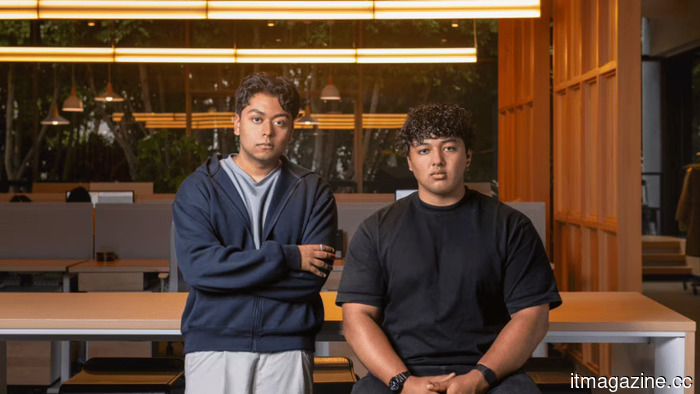 Architect Labs secures $24 million for the design of custom AI chips.
Architect Labs secured $24 million in seed funding led by Kindred Ventures to develop an AI that designs and validates custom chips, positioning itself against Broadcom and Marvell.
Architect Labs secures $24 million for the design of custom AI chips.
Architect Labs secured $24 million in seed funding led by Kindred Ventures to develop an AI that designs and validates custom chips, positioning itself against Broadcom and Marvell.
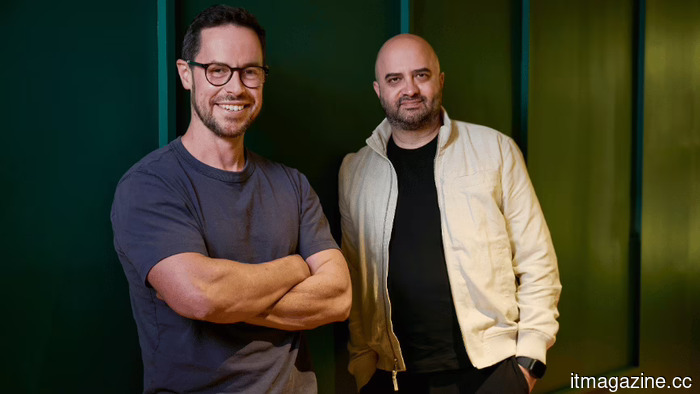 Verse, supported by Nvidia, has secured $54 million to enhance AI data center capabilities.
Verse secured $54 million in a Series B funding round led by Bessemer, with support from Nvidia, to assist AI data centers in bypassing the grid queue through the use of on-site batteries.
Verse, supported by Nvidia, has secured $54 million to enhance AI data center capabilities.
Verse secured $54 million in a Series B funding round led by Bessemer, with support from Nvidia, to assist AI data centers in bypassing the grid queue through the use of on-site batteries.
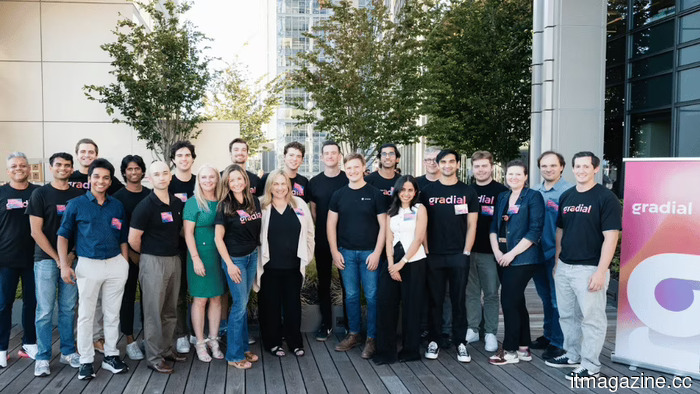 Gradial secures $65 million for agentic enterprise marketing.
Seattle's Gradial has secured $65 million in Series C funding, led by Insight Partners, with a valuation of $675 million, focusing on the implementation of AI agents in enterprise marketing tools.
Gradial secures $65 million for agentic enterprise marketing.
Seattle's Gradial has secured $65 million in Series C funding, led by Insight Partners, with a valuation of $675 million, focusing on the implementation of AI agents in enterprise marketing tools.
Google is enhancing Pixel Screenshots with cloud AI while ensuring your data remains private.
The latest update to Google's Pixel Screenshots app introduces cloud-based AI processing, enhancing its ability to search and analyze your screenshots while ensuring that data remains within a hardware-secured environment.