

A US judge has determined that the statements made by Huawei's CFO can be utilized as evidence against the company.
A statement signed by Meng Wanzhou to alleviate her own legal troubles can now be utilized against the company she helps manage. On Tuesday, a US judge in Brooklyn ruled that admissions made by Huawei’s chief financial officer as part of a 2021 agreement allowing her release are admissible in the criminal case against Huawei, which is set to go to trial in September.
The document central to this ruling is a four-page statement of facts in which Meng admitted to deceiving a financial institution regarding Huawei’s compliance with US sanctions and export-control laws. This admission relates to the bank-fraud allegations she faced regarding the company's dealings with Iran. She made this admission to secure a deferred-prosecution deal that concluded her personal case and ended her lengthy detention in Canada, making it a condition for her release. US District Judge Ann Donnelly determined that Huawei cannot separate itself from that statement in its upcoming trial.
“Huawei Tech should not be able to claim that admitting the statements of its senior executive regarding her conduct, which Huawei Tech accepted, violates its rights,” she wrote. The rationale behind this is that Meng was discussing her role at Huawei, and the firm cannot disavow her statements while still employing her at an executive level.
The implications of this ruling are substantial. Prosecutors can now present to a jury an admission from Huawei’s CFO that the company misled a bank about its adherence to sanctions. This evidence is notably different, coming from within the company itself, as it is included in a document signed by an executive of Huawei.
The case against Huawei represents a significant aspect of the prolonged US campaign against the company, which has been viewed as a national-security threat and has faced both export controls and criminal prosecution.
The allegations concerning Iran sanctions are part of an older, fraud-oriented focus of this campaign, preceding many recent restrictions related to chips but still crucial to the criminal liabilities Huawei confronts. Throughout this period, Huawei has aimed to withstand American pressure rather than capitulate, enhancing domestic technology to circumvent sanctions and disputing US measures wherever possible.
The Brooklyn ruling poses a challenge on a legal front rather than in supply chains, and it is a twist the company cannot maneuver around. The ruling hinges on corporate law as much as criminal procedure, with Donnelly asserting that a company retaining an executive in a senior position adopts her statements regarding her work, limiting Huawei's ability to dissociate from Meng’s statements.
Typically, companies argue that the admissions of an individual resolving their case should not bind the entire corporation. However, the judge concluded the connection between Meng and Huawei is too tight to allow for such a separation.
The stakes are significant given that the US regards Huawei as a strategic adversary rather than just a defendant. Repeated rounds of export controls have sought to restrict the company’s access to advanced chips and equipment, with the criminal case being the older, complementary track of that campaign, targeting conduct instead of capability. A conviction would provide Washington with legal substantiation of the security claims it has politically asserted for years.
The trial is scheduled for September, and this ruling does not determine its outcome but specifies what the jury may hear. It confirms that the admissions Meng made to secure her freedom in 2021 will be presented against the company in court. For Huawei, the acknowledgment that allowed its CFO to gain her freedom has now transformed into evidence it must address.
Other articles
 Epic Games has made a significant advancement in AI-generated games with Unreal Engine 5.8.
Unreal Engine 5.8 includes an experimental plugin that enables developers to link any LLM with the core engine systems, and Epic aims for even more extensive integration in Unreal Engine 6.
Epic Games has made a significant advancement in AI-generated games with Unreal Engine 5.8.
Unreal Engine 5.8 includes an experimental plugin that enables developers to link any LLM with the core engine systems, and Epic aims for even more extensive integration in Unreal Engine 6.
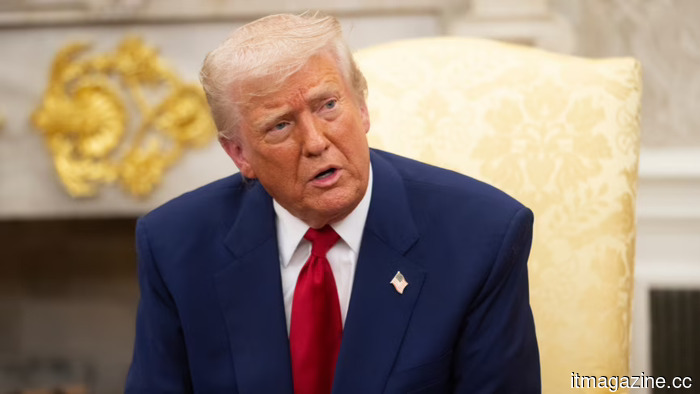 Trump states that Apple will manufacture chips in collaboration with Intel in the United States.
Trump states that Apple has committed to designing and manufacturing chips alongside Intel in the US, a year following Washington's investment in the chip company.
Trump states that Apple will manufacture chips in collaboration with Intel in the United States.
Trump states that Apple has committed to designing and manufacturing chips alongside Intel in the US, a year following Washington's investment in the chip company.
 Tim Cook states that price increases for Apple products are inevitable due to rising memory costs driven by AI advancements.
Apple has refrained from significant price increases even with rising costs for RAM and storage. However, Tim Cook indicates that the memory challenges driven by AI are making it harder to sustain this approach.
Tim Cook states that price increases for Apple products are inevitable due to rising memory costs driven by AI advancements.
Apple has refrained from significant price increases even with rising costs for RAM and storage. However, Tim Cook indicates that the memory challenges driven by AI are making it harder to sustain this approach.
 Google’s revised migration tool simplifies the process of switching from iPhone to Android.
Google's enhanced Android Switch tool now includes support for migrating app data, transferring iMessages, passkeys, eSIMs, and additional features as it becomes available for Android 17 devices.
Google’s revised migration tool simplifies the process of switching from iPhone to Android.
Google's enhanced Android Switch tool now includes support for migrating app data, transferring iMessages, passkeys, eSIMs, and additional features as it becomes available for Android 17 devices.
 The EU will not require publishers to maintain the playability of games, but the battle against game abandonment is far from finished.
The top Killing Games initiative has encountered a significant setback in Europe following the Commission's rejection of its proposal. According to campaign founder Ross Scott, upcoming legislation might still offer a potential way forward.
The EU will not require publishers to maintain the playability of games, but the battle against game abandonment is far from finished.
The top Killing Games initiative has encountered a significant setback in Europe following the Commission's rejection of its proposal. According to campaign founder Ross Scott, upcoming legislation might still offer a potential way forward.
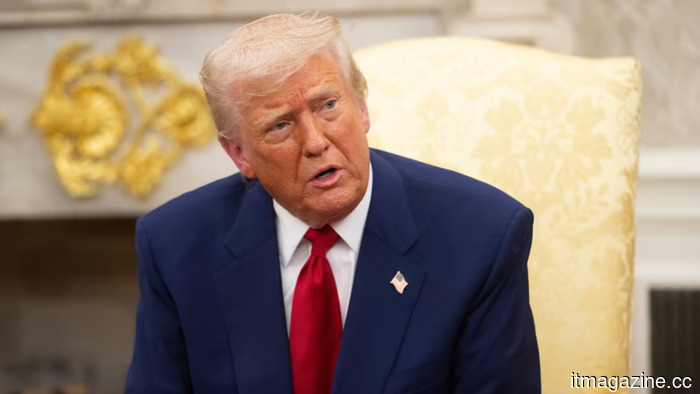 Trump announces that Apple will manufacture chips in collaboration with Intel in the United States.
Trump states that Apple has consented to collaborate with Intel in designing and manufacturing chips within the United States, following a year after Washington invested in the chipmaker.
Trump announces that Apple will manufacture chips in collaboration with Intel in the United States.
Trump states that Apple has consented to collaborate with Intel in designing and manufacturing chips within the United States, following a year after Washington invested in the chipmaker.
A US judge has determined that the statements made by Huawei's CFO can be utilized as evidence against the company.
A US judge has determined that Meng Wanzhou's statements regarding sanctions compliance from 2021 can be used as evidence against Huawei in its criminal trial set for September.