
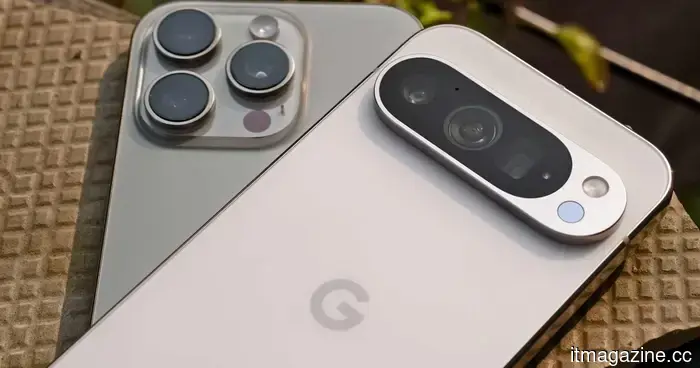
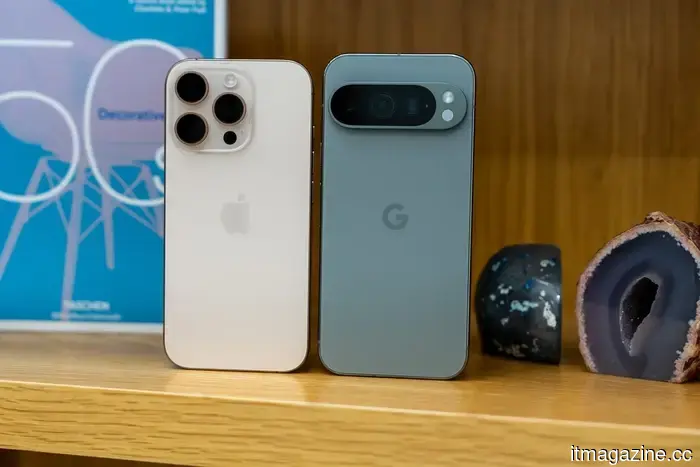
Google’s revised migration tool simplifies the process of switching from iPhone to Android.
Transferring from an iPhone to an Android device has historically been a challenging process. However, with the introduction of iOS 26.3, Apple improved the experience by allowing users to wirelessly transfer photos, messages, notes, contacts, passwords, and apps. Now, Google has entirely redesigned its Android Switch migration tool to facilitate a smoother transition for those moving from iOS to Android.
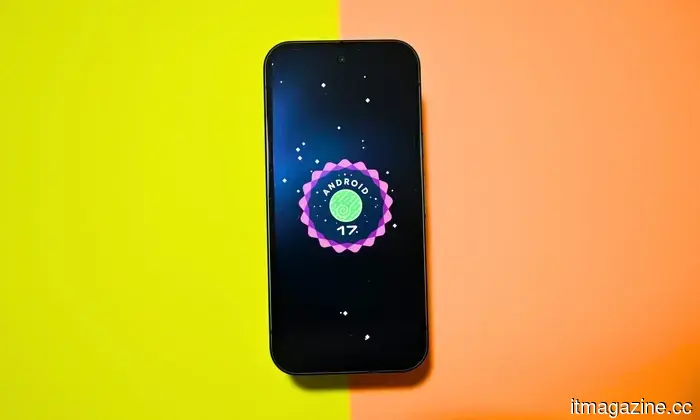
Paul Dunlop, Google's product lead for Onboarding, Settings, and Switching on Android, indicated that the company has collaborated closely with Apple to enhance the migration experience on Android 17 devices. The update features a wireless-first transfer process, broader data migration support, effortless transfers of Google Accounts and eSIM information, as well as new developer tools to maintain app data during platform switches. Here’s a summary of the new features being introduced to Android Switch.
No more cables, additional apps, or complex setups
One of the most significant improvements is the new wireless-first migration experience. While Android Switch still permits wired transfers, Google asserts that users are no longer required to use specific cables (like a USB-to-lightning cable) or adapters for data transfer from an iPhone. The wireless method now matches the capabilities of a wired transfer.
The company has also directly integrated Android Switch into the setup phase on both Android and iOS devices, eliminating the need for users to download separate migration applications or navigate through extra permission prompts before transferring their data.
A new feature is the ability to directly migrate Google Accounts. Users can now transfer their Google Account from an iPhone to a new Android device, allowing for automatic sign-in during setup. Additionally, Android Switch can now transfer eSIM information for compatible carriers, as well as wallpapers, home screen layouts, app arrangement, and accessibility settings.
Messages, passwords, and app data are now transferable too
The types of supported data have expanded significantly, now including passwords, passkeys, Wi-Fi credentials, alarms, call history, files and folders, calendar attachments, encrypted RCS messages, and attachments and labels from Apple Notes.
The company has also enhanced message transfers. SMS, MMS, RCS, and iMessage conversations are all now capable of being migrated, including large group chats, stickers, reactions, and entire conversation threads.
Google has collaborated with Apple to develop new migration APIs that enable developers to retain in-app data when users transition platforms. If this is supported, users can pick up where they left off instead of starting anew after reinstalling apps on Android.
This feature is currently available on a limited number of Android 17 devices, with plans for a broader rollout in the upcoming weeks and months. If Google's promises hold true in practical scenarios, switching from iPhone to Android could become considerably easier than in the past.
Other articles
 SK Hynix has delivered its initial samples of 12-layer HBM4E to AI customers.
SK Hynix announced that it has delivered samples of its 12-layer HBM4E to key customers, boasting a speed of 16Gbps per pin and more than a 20% improvement in efficiency.
SK Hynix has delivered its initial samples of 12-layer HBM4E to AI customers.
SK Hynix announced that it has delivered samples of its 12-layer HBM4E to key customers, boasting a speed of 16Gbps per pin and more than a 20% improvement in efficiency.
 Noam Shazeer, co-lead of Google's Gemini, is departing to join OpenAI.
Noam Shazeer, a co-lead at Gemini and co-inventor of the transformer, is departing from Google to join OpenAI, less than two years after a reported return of $2.7 billion.
Noam Shazeer, co-lead of Google's Gemini, is departing to join OpenAI.
Noam Shazeer, a co-lead at Gemini and co-inventor of the transformer, is departing from Google to join OpenAI, less than two years after a reported return of $2.7 billion.
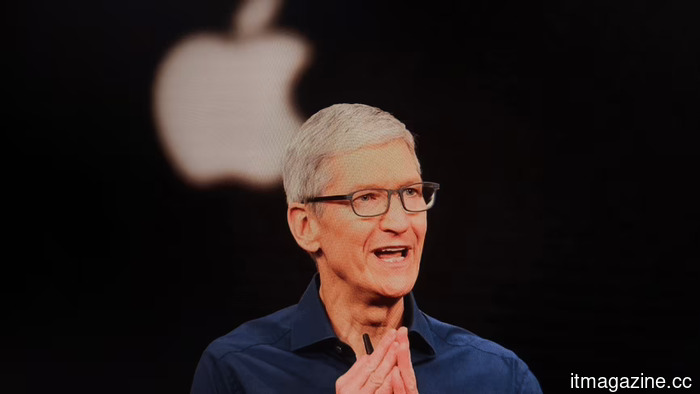 Apple plans to increase prices due to the impact of the memory chip shortage, according to Tim Cook.
Tim Cook informed the WSJ that price hikes at Apple are inevitable due to rising memory chip costs driven by demand for AI.
Apple plans to increase prices due to the impact of the memory chip shortage, according to Tim Cook.
Tim Cook informed the WSJ that price hikes at Apple are inevitable due to rising memory chip costs driven by demand for AI.
 Bosch to compensate $36 million for unauthorized shipments to Huawei.
Germany's Bosch will pay $36 million to the US to resolve allegations that its subsidiaries sent phone components to Huawei without the necessary licenses.
Bosch to compensate $36 million for unauthorized shipments to Huawei.
Germany's Bosch will pay $36 million to the US to resolve allegations that its subsidiaries sent phone components to Huawei without the necessary licenses.
 The EU cybersecurity agency is set to hold discussions with Anthropic under the framework of US export regulations.
According to the EU Commission, ENISA was scheduled to meet with Anthropic on Thursday regarding access to Mythos, a meeting that was arranged prior to a US export directive that complicated matters.
The EU cybersecurity agency is set to hold discussions with Anthropic under the framework of US export regulations.
According to the EU Commission, ENISA was scheduled to meet with Anthropic on Thursday regarding access to Mythos, a meeting that was arranged prior to a US export directive that complicated matters.
 Epic Games has made a significant advancement in AI-generated games with Unreal Engine 5.8.
Unreal Engine 5.8 includes an experimental plugin that enables developers to link any LLM with the core engine systems, and Epic aims for even more extensive integration in Unreal Engine 6.
Epic Games has made a significant advancement in AI-generated games with Unreal Engine 5.8.
Unreal Engine 5.8 includes an experimental plugin that enables developers to link any LLM with the core engine systems, and Epic aims for even more extensive integration in Unreal Engine 6.
Google’s revised migration tool simplifies the process of switching from iPhone to Android.
Google's enhanced Android Switch tool now includes support for migrating app data, transferring iMessages, passkeys, eSIMs, and additional features as it becomes available for Android 17 devices.