
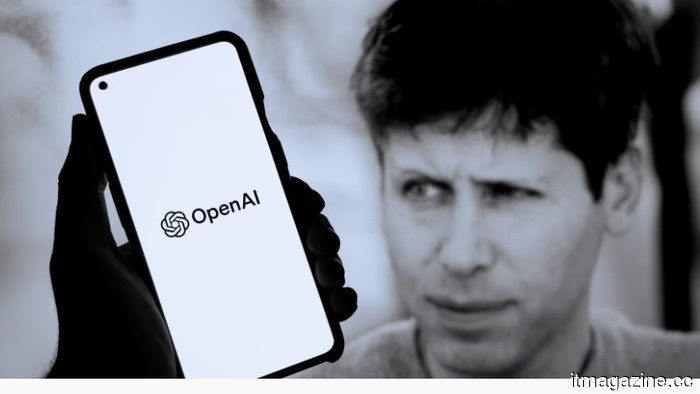
Marcus cautions that the OpenAI IPO might jeopardize the AI supply chain.
TL;DR Gary Marcus cautions that OpenAI’s difficulties with its IPO could trigger a ripple effect throughout the AI supply chain, affecting Nvidia, Oracle, and CoreWeave. With enterprise AI investment already declining and OpenAI losing $3.7 billion quarterly, the AI researcher perceives a credit event risk that hasn't been appropriately factored in.
Marcus has long been warning that the AI sector is built on unstable foundations. He now identifies a particular sequence of consequences: if OpenAI’s IPO performs poorly, it will impact much more than just one company. “The valuations of these companies depend heavily on the expectation that OpenAI will have a huge demand for chips and data centers,” Marcus told Business Insider. “They will likely face issues if they fail to secure public funding.”
The dependency chain
Marcus’s argument is based on the observation that Nvidia, Oracle, and CoreWeave have greatly benefited from OpenAI’s demand for computing power. Last year, OpenAI spent $34 billion and is projected to incur around $27 billion in losses by 2026, according to its financial reports.
CoreWeave, which has recently become a part of the Nasdaq-100, earns a substantial portion of its income from OpenAI workloads, mainly through Microsoft. If OpenAI were to reduce spending following a poor public offering, those providing its infrastructure would lose a key client.
OpenAI is currently contemplating significant price reductions to compete against Anthropic, which would further distance it from profitability. The company does not anticipate achieving positive cash flow until 2030.
The WeWork parallel
Marcus has frequently compared OpenAI to WeWork, the co-working firm that saw its stock plunge 99% before declaring bankruptcy in 2023. “WeWork was valued at an incomprehensible level in relation to its core metrics, seeming more focused on appearance than reality,” he commented.
“I often perceive OpenAI similarly, recognizing that they lack a substantial technical advantage, and as competitors close the gap, price wars will arise, making profitability difficult.” Anthropic’s confidential IPO filing at a $965 billion valuation, exceeding OpenAI’s own $852 billion, highlights the competitive pressures Marcus refers to.
The tokenmaxxing hangover
Marcus’s warning comes at a time when the AI investment surge is already revealing weaknesses. Companies like Uber, Meta, and Amazon have begun to restrict AI usage among employees after finding that high token usage failed to yield tangible returns.
“The decline of tokenmaxxing is forcing OpenAI to think seriously about slashing costs,” Marcus noted. “While this could help retain users, it drives them even further from profitability.” OpenAI’s revenue for Q1 2026 was $5.7 billion, yet it faced a cash burn of $3.7 billion. The company is also dealing with an investigation by 42 state attorneys general and a lawsuit from Florida, adding legal uncertainty to its pre-IPO situation.
The blast radius
What worries Marcus the most is the systemic risk involved. If OpenAI’s IPO struggles, lenders supporting AI infrastructure might start to question the creditworthiness of the entire asset class.
“Nobody really knows the extent of the impact, as we cannot ascertain how serious the consequences would be for lenders,” he said. For investors in Nvidia, Oracle, and CoreWeave, the pressing concern shifts from whether OpenAI will go public to what will happen to all related entities if the IPO underperforms.
Other articles
 Trump declines UK request for exemption from Anthropic AI ban.
Starmer's administration advocated for the UK to be exempt from the Anthropic export ban. Washington responded with "zero chance," highlighting Britain's reliance on AI.
Trump declines UK request for exemption from Anthropic AI ban.
Starmer's administration advocated for the UK to be exempt from the Anthropic export ban. Washington responded with "zero chance," highlighting Britain's reliance on AI.
 Marcus cautions that OpenAI's IPO might undermine the AI supply chain.
AI researcher Gary Marcus suggests that OpenAI's difficulties with its IPO would have a ripple effect on Nvidia, Oracle, and CoreWeave, especially as enterprise AI investments slow down and the rate of cash burn increases.
Marcus cautions that OpenAI's IPO might undermine the AI supply chain.
AI researcher Gary Marcus suggests that OpenAI's difficulties with its IPO would have a ripple effect on Nvidia, Oracle, and CoreWeave, especially as enterprise AI investments slow down and the rate of cash burn increases.
 Do you have a smartwatch? You can now participate in a study that examines how the football World Cup impacts your heart.
Bielefeld University is calling on smartwatch users to participate in a World Cup research project that monitors how football games influence fans' heart rates, stress levels, movement, and sleep patterns.
Do you have a smartwatch? You can now participate in a study that examines how the football World Cup impacts your heart.
Bielefeld University is calling on smartwatch users to participate in a World Cup research project that monitors how football games influence fans' heart rates, stress levels, movement, and sleep patterns.
 Critical Energy secures $22M for prefabricated geothermal systems.
Critical Energy, established by a former SpaceX employee, has secured $22 million to scale up the production of modular geothermal turbines, wagering that the growing demand for AI will require stable sources of clean energy promptly.
Critical Energy secures $22M for prefabricated geothermal systems.
Critical Energy, established by a former SpaceX employee, has secured $22 million to scale up the production of modular geothermal turbines, wagering that the growing demand for AI will require stable sources of clean energy promptly.
 SpaceX's rising stock price makes acquisitions more affordable.
SpaceX's $60 billion all-stock Cursor agreement results in less dilution as the stock rises 50% following its IPO. Ackman describes it as a strategic asset. Anthropic and OpenAI share similar ambitions.
SpaceX's rising stock price makes acquisitions more affordable.
SpaceX's $60 billion all-stock Cursor agreement results in less dilution as the stock rises 50% following its IPO. Ackman describes it as a strategic asset. Anthropic and OpenAI share similar ambitions.
 Reasons CMOs require a new framework for accountability.
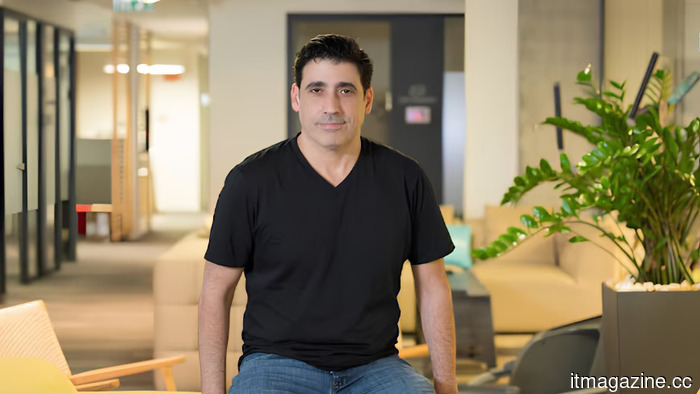
Perion CEO Tal Jacobson discusses how the accountability gap faced by CMOs is an issue of infrastructure rather than measurement, and how AI-driven execution is transforming the way marketing demonstrates its impact on business.
Reasons CMOs require a new framework for accountability.
Perion CEO Tal Jacobson discusses how the accountability gap faced by CMOs is an issue of infrastructure rather than measurement, and how AI-driven execution is transforming the way marketing demonstrates its impact on business.
Marcus cautions that the OpenAI IPO might jeopardize the AI supply chain.
AI researcher Gary Marcus states that OpenAI's issues with its IPO would have a ripple effect on Nvidia, Oracle, and CoreWeave, as spending on enterprise AI declines and cash burn increases.