
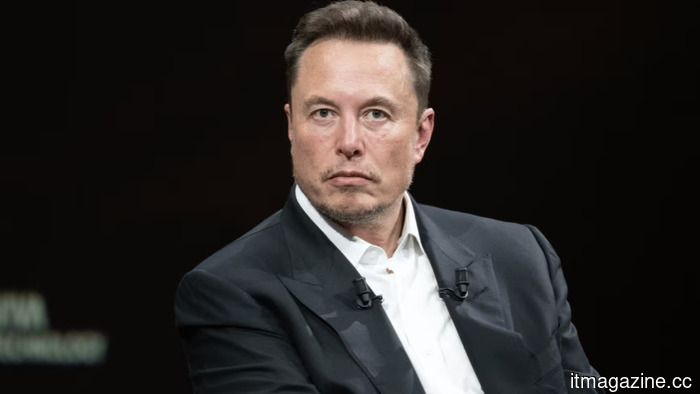
SpaceX's rising stock price makes acquisitions more affordable.
TL;DR: SpaceX's stock has jumped nearly 50% since its $135 IPO, making its $60 billion all-stock acquisition of Cursor cheaper in terms of dilution. Bill Ackman noted that this dynamic is a key factor in SpaceX’s value, as Anthropic and OpenAI are moving to replicate it by filing for their own IPOs.
SpaceX set its IPO at $135 per share on June 12. Just five days later, the stock rose by almost 50%, elevating SpaceX past Amazon to become the fifth most valuable public company worldwide at approximately $2.66 trillion.
This increase benefits shareholders and makes acquisitions more affordable.
The Cursor Deal
On Monday, SpaceX confirmed its acquisition of Cursor, an AI coding startup, for $60 billion in an all-stock deal. The agreement, made in April, allowed SpaceX 30 days post-IPO to finalize the terms. It took only three days. Since SpaceX is paying fully in stock, each percentage point increase in the share price decreases the number of shares needed for the deal.
The final share count will be determined just before closing, anticipated in the third quarter. If the stock remains at its current level, SpaceX will issue about one-third fewer shares than would have been needed at the IPO price.
Valuation as a Tool
Billionaire investor Bill Ackman quickly recognized this dynamic, stating that “the Cursor acquisition costs materially less in dilution because of SpaceX’s high valuation.” He emphasized that SpaceX’s capability to make “economically, strategically, and technologically accretive acquisitions” is a crucial aspect of its value.
This logic creates a positive feedback loop: A high stock price makes acquisitions cheaper in terms of dilution, enhancing the combined entity's value, which drives the stock higher and further reduces costs for subsequent deals.
Critics had questioned the justification of SpaceX’s valuation before its IPO. However, the counterargument asserts that significant size, especially with rising stock prices, serves as a strategic advantage.
What SpaceX is Acquiring
Cursor is a solid investment rather than a speculative gamble. The AI coding tool achieved $2 billion in annual recurring revenue in about three years, marking the fastest B2B scaling on record, and boasts over one million paying customers, with 70% of the Fortune 1,000 among its clients.
Founded by four MIT classmates, including 25-year-old CEO Michael Truell, Cursor is a pioneering force behind the “vibe coding” trend, wherein developers articulate their needs and AI agents generate the code. This acquisition will integrate into xAI, the artificial intelligence company SpaceX incorporated via a $1.25 trillion all-stock merger in February.
Following the Cursor announcement on Monday, SpaceX's stock increased, contrary to the typical decline expected for acquiring companies. The market seems to view the deal as accretive rather than dilutive.
The Race to Emulate
SpaceX is not the only company leveraging this strategy. Anthropic confidentially filed for an IPO on June 1 at a valuation nearing $965 billion, followed by OpenAI a week later.
Both companies enjoy substantial private valuations but lack the liquid stock necessary to execute acquisitions at SpaceX’s scale. Going public would change this scenario.
All-stock deals can have risks. If SpaceX's stock price falls, it would require issuing more shares for the same deal, further diluting existing shareholders, and companies led by Elon Musk are not immune to volatility.
However, at present, the market is providing SpaceX with an asset that appreciates even when utilized, presenting a formidable advantage over competitors still relying on private-market IOUs.
Other articles
 One million Dutch individuals depend solely on social media for their news.
The 2026 Digital News Report reveals that 7% of Dutch adults rely exclusively on social media for news, an increase from 2% in 2018, although trust and interest continue to decline.
One million Dutch individuals depend solely on social media for their news.
The 2026 Digital News Report reveals that 7% of Dutch adults rely exclusively on social media for news, an increase from 2% in 2018, although trust and interest continue to decline.
 Meloni states that children can easily evade social media restrictions.
Italy's Prime Minister stated at the G7 that prohibiting children from using social media is "easily bypassed" and that the responsibility should lie with the platforms, rather than parents.
Meloni states that children can easily evade social media restrictions.
Italy's Prime Minister stated at the G7 that prohibiting children from using social media is "easily bypassed" and that the responsibility should lie with the platforms, rather than parents.
 Henrique Schmaiske and the human effort involved in Meteor 3.0.
Meteor CTO Henrique Schmaiske spearheaded the framework's most significant release in more than ten years, eliminating Fibers and transitioning to async/await through 2,300 commits, all while ensuring stability for over 500,000 active installations.
Henrique Schmaiske and the human effort involved in Meteor 3.0.
Meteor CTO Henrique Schmaiske spearheaded the framework's most significant release in more than ten years, eliminating Fibers and transitioning to async/await through 2,300 commits, all while ensuring stability for over 500,000 active installations.
 Mastodon introduces email newsletters, allowing those who prefer not to have an account to still keep up with creators on the open social web.
Mastodon 4.6 allows creators to send posts to email subscribers who do not possess fediverse accounts. This feature is aimed at institutions and independent publishers.
Mastodon introduces email newsletters, allowing those who prefer not to have an account to still keep up with creators on the open social web.
Mastodon 4.6 allows creators to send posts to email subscribers who do not possess fediverse accounts. This feature is aimed at institutions and independent publishers.
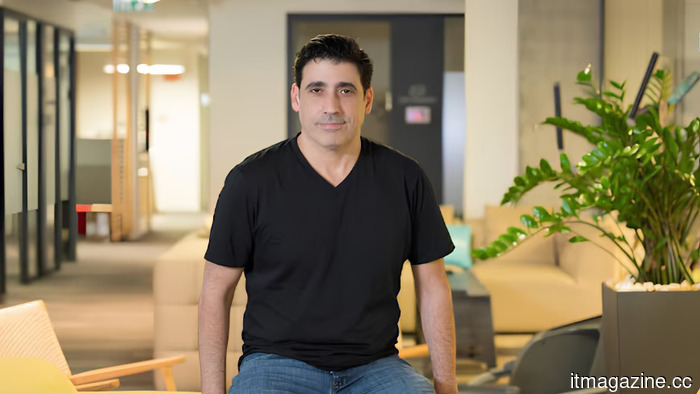 Reasons CMOs require a new framework for accountability.
Perion CEO Tal Jacobson discusses how the accountability gap faced by CMOs is an issue of infrastructure rather than measurement, and how AI-driven execution is transforming the way marketing demonstrates its impact on business.
Reasons CMOs require a new framework for accountability.
Perion CEO Tal Jacobson discusses how the accountability gap faced by CMOs is an issue of infrastructure rather than measurement, and how AI-driven execution is transforming the way marketing demonstrates its impact on business.
 Arcade.dev has secured $60 million to enhance its enterprise AI agents.
Arcade.dev secured a $60M Series A funding round led by SYN Ventures to regulate the actions AI agents can perform within company systems, effectively containing the agents within pilot programs.
Arcade.dev has secured $60 million to enhance its enterprise AI agents.
Arcade.dev secured a $60M Series A funding round led by SYN Ventures to regulate the actions AI agents can perform within company systems, effectively containing the agents within pilot programs.
SpaceX's rising stock price makes acquisitions more affordable.
SpaceX's $60 billion all-stock Cursor agreement results in less dilution as the stock rises 50% following its IPO. Ackman describes it as a strategic asset. Anthropic and OpenAI share similar ambitions.