

Marcus cautions that OpenAI's IPO might undermine the AI supply chain.
**TL;DR** Gary Marcus cautions that OpenAI's difficulties with its IPO may have a ripple effect throughout the AI supply chain, impacting Nvidia, Oracle, and CoreWeave. With corporate spending on AI already slowing and OpenAI incurring losses of $3.7 billion each quarter, the AI researcher identifies a credit event risk that has not been adequately accounted for.
Marcus has long warned that the foundations of the AI industry are unstable. He now sees a specific sequence of events: if OpenAI's IPO underdelivers, the consequences will extend beyond just one company.
“Their valuations heavily depend on the belief that OpenAI will generate substantial demand for chips and data centers,” Marcus stated to Business Insider. “They will likely face issues if they fail to attract public investment.”
**The Dependency Chain**
Marcus’s argument is based on a straightforward observation: Nvidia, Oracle, and CoreWeave have all greatly profited from OpenAI's demand for computing power. OpenAI spent $34 billion last year and is projected to spend around $27 billion in 2026, according to its financial statements.
CoreWeave, which has recently entered the Nasdaq-100, earns a significant portion of its revenue from workloads associated with OpenAI, largely funneled through Microsoft. If OpenAI reduces its spending after a lackluster public offering, the companies supplying its infrastructure would lose a crucial client.
OpenAI is already contemplating substantial price reductions to compete with Anthropic, which would further distance it from profitability. The company does not foresee positive cash flow until 2030.
**The WeWork Parallel**
Marcus has frequently compared OpenAI to WeWork, the co-working firm whose stock plummeted 99% before declaring bankruptcy in 2023. “WeWork was valued at an incomprehensible level compared to its fundamental metrics, seemingly prioritizing appearance over substance,” he remarked.
“I often view OpenAI similarly, and it has been clear to me that they lack a significant technical advantage, allowing others to catch up, which could lead to price competition and hinder profit generation.” Anthropic’s confidential IPO filing at an assessed value of $965 billion, surpassing OpenAI’s own $852 billion, exemplifies the competitive pressures Marcus highlights.
**The Tokenmaxxing Hangover**
Marcus’s warnings come at a time when the overall AI spending surge is displaying signs of strain. Companies such as Uber, Meta, and Amazon have started to limit employee AI usage after realizing that high token consumption was not yielding tangible benefits.
“The decline of tokenmaxxing is forcing OpenAI to think about significantly reducing expenses,” Marcus said. “That could aid in user retention, but it pushes them further away from profitability.”
OpenAI reported $5.7 billion in revenue for Q1 2026 but experienced a cash burn of $3.7 billion. The company is also facing scrutiny from 42 state attorneys general and a lawsuit from Florida, adding legal risks to its pre-IPO scenario.
**The Blast Radius**
What worries Marcus the most is the systemic risk. If OpenAI's IPO fails, lenders who have financed AI infrastructure might begin to doubt the creditworthiness of the entire sector.
“Nobody really understands what the extent of the impact could be because we don’t know how significant the issue would be for lenders,” he stated. For investors in Nvidia, Oracle, and CoreWeave, the crucial question is not just if OpenAI will go public, but what ramifications will arise for everything associated with it if the launch does not meet expectations.
Other articles
 Mastodon introduces email newsletters, allowing individuals without an account to follow creators on the open social web.
Mastodon 4.6 enables creators to send posts to email subscribers who lack fediverse accounts. This feature is designed for institutions and independent publishers.
Mastodon introduces email newsletters, allowing individuals without an account to follow creators on the open social web.
Mastodon 4.6 enables creators to send posts to email subscribers who lack fediverse accounts. This feature is designed for institutions and independent publishers.
 China has established new safety regulations for electric vehicles. The United States should take similar action.
China's updated safety regulations for electric vehicles implement stricter battery fire testing and require physical power shutoff mechanisms, setting a higher standard as the U.S. considers ways to enhance the safety of electric cars.
China has established new safety regulations for electric vehicles. The United States should take similar action.
China's updated safety regulations for electric vehicles implement stricter battery fire testing and require physical power shutoff mechanisms, setting a higher standard as the U.S. considers ways to enhance the safety of electric cars.
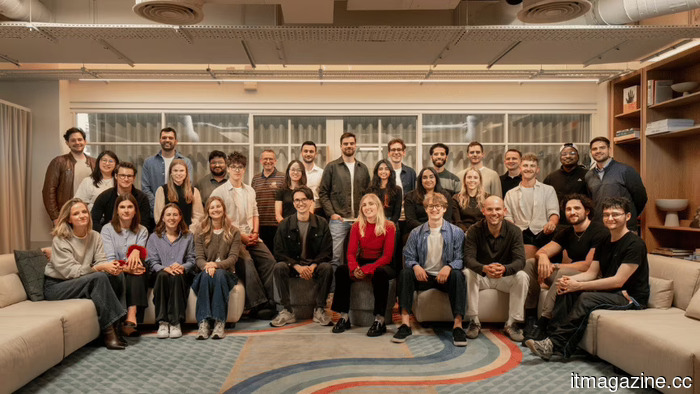 Conduct has secured $60 million in a Series A funding round from Index, ICONIQ, and SAP.
Conduct, a London-based startup established by former Palantir engineers, has secured $60 million in Series A funding from Index, ICONIQ, and SAP to address the complexities of outdated code within large corporations.
Conduct has secured $60 million in a Series A funding round from Index, ICONIQ, and SAP.
Conduct, a London-based startup established by former Palantir engineers, has secured $60 million in Series A funding from Index, ICONIQ, and SAP to address the complexities of outdated code within large corporations.
 Do you have a smartwatch? You can now participate in a study that examines how the football World Cup impacts your heart.
Bielefeld University is calling on smartwatch users to participate in a World Cup research project that monitors how football games influence fans' heart rates, stress levels, movement, and sleep patterns.
Do you have a smartwatch? You can now participate in a study that examines how the football World Cup impacts your heart.
Bielefeld University is calling on smartwatch users to participate in a World Cup research project that monitors how football games influence fans' heart rates, stress levels, movement, and sleep patterns.
 Currently, 50% of Americans utilize AI chatbots; however, 40% believe that AI will negatively impact society, and two-thirds express distrust in the government's ability to regulate it.
A survey conducted by Pew Research involving 5,119 adults in the US revealed that 49% utilize AI chatbots, while 40% believe AI will negatively impact society, and 67% express minimal confidence in government regulation.
Currently, 50% of Americans utilize AI chatbots; however, 40% believe that AI will negatively impact society, and two-thirds express distrust in the government's ability to regulate it.
A survey conducted by Pew Research involving 5,119 adults in the US revealed that 49% utilize AI chatbots, while 40% believe AI will negatively impact society, and 67% express minimal confidence in government regulation.
 Meloni states that kids can easily circumvent social media bans.
Italy's Prime Minister stated at the G7 that prohibiting children from social media is "easily bypassed" and that it is the platforms, rather than parents, who should be held accountable.
Meloni states that kids can easily circumvent social media bans.
Italy's Prime Minister stated at the G7 that prohibiting children from social media is "easily bypassed" and that it is the platforms, rather than parents, who should be held accountable.
Marcus cautions that OpenAI's IPO might undermine the AI supply chain.
AI researcher Gary Marcus suggests that OpenAI's difficulties with its IPO would have a ripple effect on Nvidia, Oracle, and CoreWeave, especially as enterprise AI investments slow down and the rate of cash burn increases.