
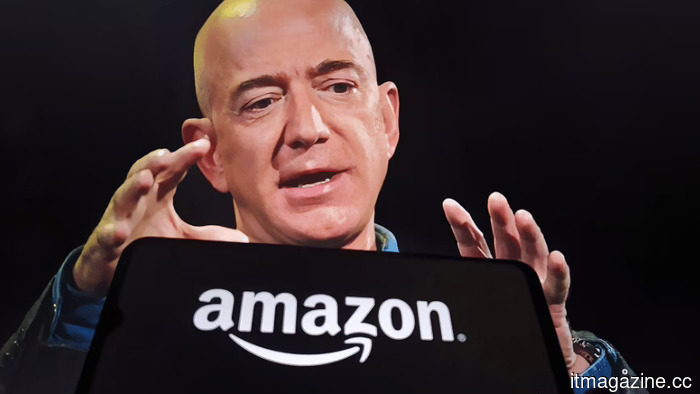
Amazon's AI leader acknowledges that their models are behind those of OpenAI and Anthropic.
TL;DR: Peter DeSantis, Amazon’s AI chief, acknowledged that the company's AI models “haven’t been at the very frontier” and expressed hope of catching up within a year. This admission coincides with Amazon's investment of $33 billion in Anthropic while simultaneously developing its own competing models. DeSantis remarked that Amazon's models have not met the demands of the largest workloads and aims to be part of the conversation regarding leading models in the next year. The effort will leverage custom silicon, proprietary data, and Amazon's extensive cloud infrastructure.
Amazon is pursuing two AI strategies simultaneously. Its model marketplace, Bedrock, allows cloud customers to access models from various providers, generating revenue regardless of who leads in model performance. Nova2, Amazon’s in-house model launched in December, has around 50,000 customers but has yet to match the capabilities of Anthropic’s Claude or OpenAI’s GPT-5.5 for the most demanding workloads, hence DeSantis's honesty about their situation.
In a significant move, Amazon has committed up to $33 billion to Anthropic, including a $25 billion deal from April that provides Anthropic access to considerable computing power on Amazon’s Trainium chips, with Anthropic agreeing to spend over $100 billion on AWS in the next decade. This partnership allows Amazon to benefit from both its equity stake in Anthropic and the cloud revenue generated by Anthropic’s operations, contributing to a $16.8 billion gain in Amazon's Q1 2026 earnings, despite a 95% decline in free cash flow.
The competitive landscape is intense, with Google also committing up to $40 billion to Anthropic, making it a highly sought-after startup in Silicon Valley. Additionally, Amazon CEO Andy Jassy reportedly initiated the US government investigation that recently impacted Anthropic’s Fable 5 and Mythos 5, raising questions about how Amazon balances being Anthropic's major investor while also competing with them.
DeSantis’s strategy for narrowing the gap relies on custom AI chips, proprietary training data from Amazon’s retail and logistics operations, and the engineering capability of a team focused on frontier models, silicon design, and quantum research. Amazon's Trainium chips currently support most inference workloads for Bedrock. The upcoming Trainium3 is expected to deliver four times the performance of its predecessor. Furthermore, Jeff Bezos’s separate AI initiative, Project Prometheus, is aiming to raise up to $10 billion, indicating that Amazon's AI ambitions go beyond just cloud computing.
Whether custom chips and proprietary data can close the multiple-year advantage of labs that have invested heavily in training frontier models remains uncertain. DeSantis has suggested this could happen within "the coming year," though no specific benchmarks were provided for assessment.
Other articles
 Mastodon introduces email newsletters, allowing individuals without an account to follow creators on the open social web.
Mastodon 4.6 enables creators to send posts to email subscribers who lack fediverse accounts. This feature is designed for institutions and independent publishers.
Mastodon introduces email newsletters, allowing individuals without an account to follow creators on the open social web.
Mastodon 4.6 enables creators to send posts to email subscribers who lack fediverse accounts. This feature is designed for institutions and independent publishers.
 China's five-year plan focuses on the effects of AI on employment.
The employment plan from China's State Council for 2026–2030 mandates that the government monitors the impact of AI on job creation and loss, serving as a political safeguard for its own AI development.
China's five-year plan focuses on the effects of AI on employment.
The employment plan from China's State Council for 2026–2030 mandates that the government monitors the impact of AI on job creation and loss, serving as a political safeguard for its own AI development.
 Fifty percent of Americans currently utilize AI chatbots, yet 40% believe that AI will have a negative impact on society, and two-thirds lack confidence in the government's ability to regulate it.
A survey conducted by Pew Research involving 5,119 adults in the US revealed that 49% utilize AI chatbots, while 40% anticipate that AI will have a negative impact on society, and 67% express low confidence in the government's ability to provide oversight.
Fifty percent of Americans currently utilize AI chatbots, yet 40% believe that AI will have a negative impact on society, and two-thirds lack confidence in the government's ability to regulate it.
A survey conducted by Pew Research involving 5,119 adults in the US revealed that 49% utilize AI chatbots, while 40% anticipate that AI will have a negative impact on society, and 67% express low confidence in the government's ability to provide oversight.
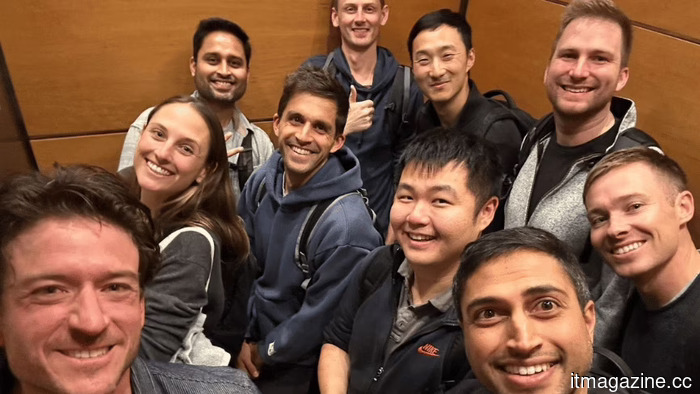 Convey secures $38 million from a16z for AI 'team members.'
Convey has secured $38 million in a Series A funding round led by a16z to develop AI "teammates" that handle back-office tasks, believing that the term 'teammate' will resonate better than 'agent' in a competitive enterprise sector.
Convey secures $38 million from a16z for AI 'team members.'
Convey has secured $38 million in a Series A funding round led by a16z to develop AI "teammates" that handle back-office tasks, believing that the term 'teammate' will resonate better than 'agent' in a competitive enterprise sector.
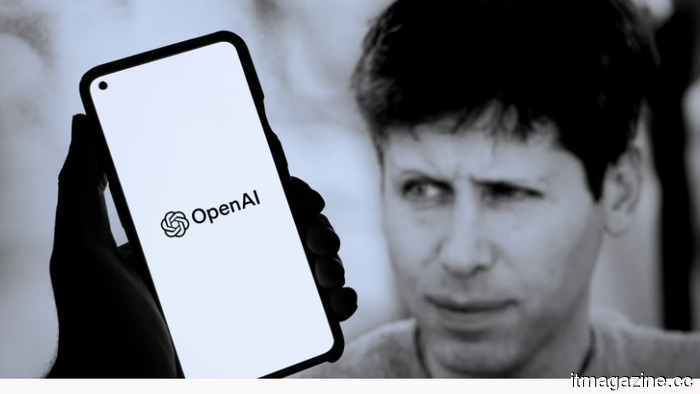 Marcus cautions that OpenAI's IPO might undermine the AI supply chain.
AI researcher Gary Marcus suggests that OpenAI's difficulties with its IPO would have a ripple effect on Nvidia, Oracle, and CoreWeave, especially as enterprise AI investments slow down and the rate of cash burn increases.
Marcus cautions that OpenAI's IPO might undermine the AI supply chain.
AI researcher Gary Marcus suggests that OpenAI's difficulties with its IPO would have a ripple effect on Nvidia, Oracle, and CoreWeave, especially as enterprise AI investments slow down and the rate of cash burn increases.
 A 21-year-old Stanford graduate has successfully secured $11.6 million to develop a wearable hormone monitoring device that does not require blood samples.
Clair Health secured an $11.6 million seed funding round led by Khosla Ventures for a wrist-mounted device that monitors estrogen and progesterone levels without the use of needles. The product is set to be shipped in November.
A 21-year-old Stanford graduate has successfully secured $11.6 million to develop a wearable hormone monitoring device that does not require blood samples.
Clair Health secured an $11.6 million seed funding round led by Khosla Ventures for a wrist-mounted device that monitors estrogen and progesterone levels without the use of needles. The product is set to be shipped in November.
Amazon's AI leader acknowledges that their models are behind those of OpenAI and Anthropic.
Peter DeSantis states that Amazon's AI models "haven't been at the forefront" and expresses a desire to bridge the gap within a year, utilizing custom chips and proprietary data.