
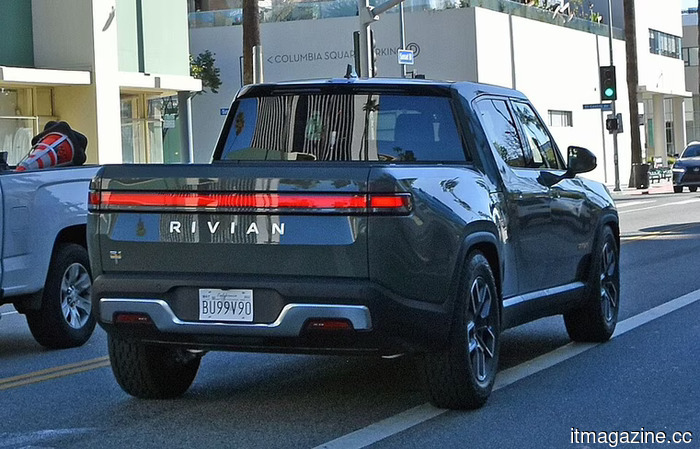
Rivian terminates hundreds of employees just a week after commencing R2 deliveries as it aims for its first profitability.
Rivian laid off hundreds of employees, representing less than 2% of its workforce, just a week after the launch of R2 deliveries. The company has yet to achieve profitability. On Tuesday, Rivian announced the layoffs affecting service and customer teams, according to a spokesperson. At the end of 2025, Rivian had a total of 15,232 employees in North America and Europe.
“We recently restructured several teams within Rivian as part of our effort to scale our business profitably,” stated the company. This phrasing closely mirrors a previous announcement from October when Rivian cut over 600 jobs, approximately 4.5% of its workforce then, impacting marketing, vehicle operations, and sales teams.
The timing is significant as Rivian launched R2 deliveries on June 9, shortly before the layoffs were revealed. The R2, with a starting price of $45,000 for the base model expected in late 2027 and $57,990 for the currently available Performance Launch edition, is intended by Rivian to transition the company from a niche luxury EV maker to a mainstream contender against Tesla. Rivian aims for 20,000 to 25,000 R2 deliveries this year within a broader goal of 62,000 to 67,000 vehicle deliveries.
Rivian has not recorded an annual profit, losing $3.63 billion in 2025 while delivering only 42,247 vehicles, an 18% drop from the previous year attributed in part to the removal of the $7,500 federal EV tax credit after September. In the first quarter of 2026, Rivian's automotive segment reported a loss of about $6,000 per vehicle delivered, with gross profit shifting from $92 million in profit the previous year to a $62 million loss due to a $100 million decrease in regulatory credit sales.
The broader electric vehicle market has also posed challenges for Rivian. The elimination of federal purchase incentives by the Trump administration, along with 25% import tariffs on vehicles, has reduced demand industry-wide. Although Rivian manufactures its vehicles domestically in Normal, Illinois, making it less affected by tariffs, the loss of the tax credit increases the effective price of all EVs, including those from Rivian.
Despite the job cuts, Rivian has aggressively hired in other areas, bringing on approximately 1,800 new employees in the first five months of 2026 to support R2 production and its expanding autonomy program. Overall, the June layoffs represent a slight decrease in workforce amidst a much larger hiring spree earlier in the year.
The autonomy program is vital for Rivian's long-term financial strategy. CEO RJ Scaringe recently indicated that supervised self-driving capabilities would be introduced in all second-generation vehicles and the R2 later this year, with plans for unsupervised driving by 2027. A $1.25 billion agreement with Uber signed in March includes commitments for 10,000 fully autonomous R2 robotaxis, with commercial launches planned in San Francisco and Miami by 2028.
The key issue is whether Rivian can reduce costs sufficiently to bridge the gap between the R2’s launch and when it can achieve positive margins at scale. The company recorded its first full-year positive gross profit in 2025 at $144 million, which was lost in Q1 2026 as regulatory credit revenue declined. Balancing the sale of more R2s at lower margins while continuing to invest in autonomy technology presents a financial challenge that has stymied other EV startups. Rivian’s advantage lies in having a desirable vehicle, a functioning production line, and a partner in Uber willing to invest over a billion dollars in the viability of its autonomy vision.
Other articles
 Google launches Android 17 featuring Gemini Intelligence, a foldable gaming mode, and enhanced privacy controls.
Android 17 begins its rollout to Pixel phones today, featuring Bubbles multitasking, gaming on foldables, Gemini Intelligence, and updated security defaults.
Google launches Android 17 featuring Gemini Intelligence, a foldable gaming mode, and enhanced privacy controls.
Android 17 begins its rollout to Pixel phones today, featuring Bubbles multitasking, gaming on foldables, Gemini Intelligence, and updated security defaults.
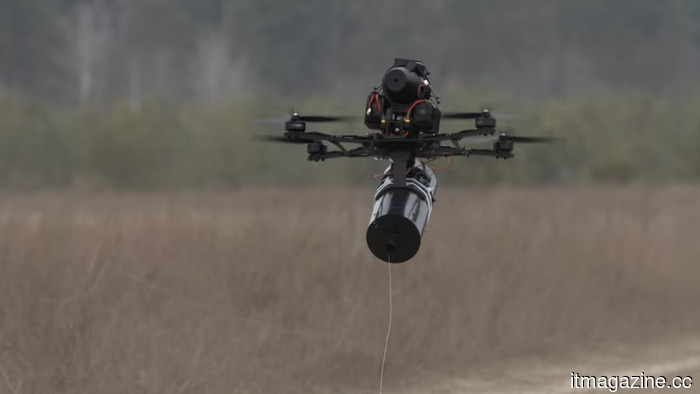 A Czech AI startup claims it can identify drones through sound for €150 per sensor, and it aims to connect power grids initially.
Neuron Soundware's Sound Shield utilizes AI-enabled microphones, priced between €100 and €150 each, to detect drones through audio, offering a more affordable option compared to radar.
A Czech AI startup claims it can identify drones through sound for €150 per sensor, and it aims to connect power grids initially.
Neuron Soundware's Sound Shield utilizes AI-enabled microphones, priced between €100 and €150 each, to detect drones through audio, offering a more affordable option compared to radar.
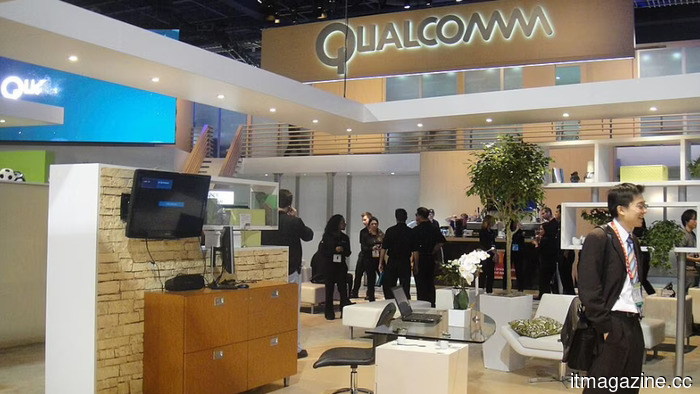 Qualcomm introduces Snapdragon Reality Elite along with a white-label toolkit for AI glasses, predicting that the future platform will not be a smartphone.
Snapdragon Reality Elite, START, smart eyewear, AI-enabled wearables, XREAL, Project Aura, Play for Dream, Inspecs, mixed reality, XR, NPU, Cristiano Amon, white label, AR1+.
Qualcomm introduces Snapdragon Reality Elite along with a white-label toolkit for AI glasses, predicting that the future platform will not be a smartphone.
Snapdragon Reality Elite, START, smart eyewear, AI-enabled wearables, XREAL, Project Aura, Play for Dream, Inspecs, mixed reality, XR, NPU, Cristiano Amon, white label, AR1+.
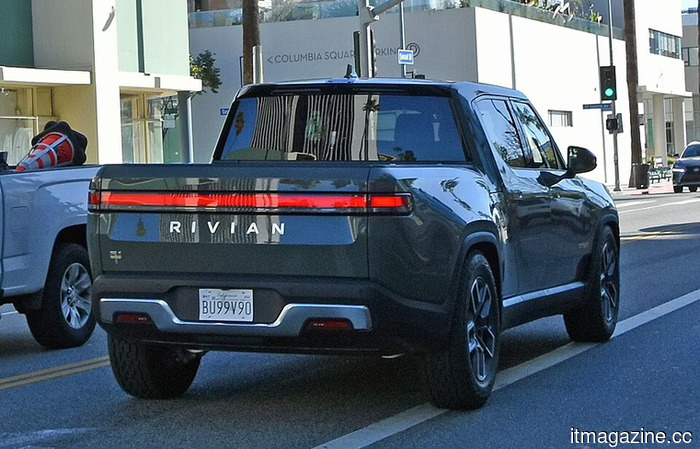 Rivian has terminated hundreds of employees just a week after initiating R2 deliveries in its pursuit of achieving its first profitability.
Rivian reduced its workforce in service and customer teams by just under 2%, a week following the commencement of R2 deliveries. The company incurred a loss of $3.6 billion in 2025, having delivered 42,247 vehicles.
Rivian has terminated hundreds of employees just a week after initiating R2 deliveries in its pursuit of achieving its first profitability.
Rivian reduced its workforce in service and customer teams by just under 2%, a week following the commencement of R2 deliveries. The company incurred a loss of $3.6 billion in 2025, having delivered 42,247 vehicles.
 Aiper IrriSense 2 review: An intelligent sprinkler for compact gardens
The world’s first 4-in-1 multi-zone smart irrigation system simplifies lawn care and makes it enjoyable for individuals who enjoy experimenting with data and technology.
Aiper IrriSense 2 review: An intelligent sprinkler for compact gardens
The world’s first 4-in-1 multi-zone smart irrigation system simplifies lawn care and makes it enjoyable for individuals who enjoy experimenting with data and technology.
 According to reports, Apple plans to include AirPods with an integrated camera in their 2027 roadmap.
Apple's long-speculated AirPods with cameras might debut in 2027, enabling Siri to comprehend a user's environment and respond to inquiries about their surroundings.
According to reports, Apple plans to include AirPods with an integrated camera in their 2027 roadmap.
Apple's long-speculated AirPods with cameras might debut in 2027, enabling Siri to comprehend a user's environment and respond to inquiries about their surroundings.
Rivian terminates hundreds of employees just a week after commencing R2 deliveries as it aims for its first profitability.
Rivian reduced its workforce in service and customer teams by under 2%, just a week after the start of R2 deliveries. In 2025, the company incurred a loss of $3.6 billion while delivering 42,247 vehicles.