
Google launches Android 17 featuring Gemini Intelligence, a foldable gaming mode, and enhanced privacy controls.
TL;DR: Android 17 launches for Pixel devices today, introducing Bubbles multitasking, a dedicated foldable gaming mode, enhanced privacy controls, and Gemini Intelligence set to arrive this summer.
Google is beginning the rollout of Android 17 for Pixel devices today, bringing multitasking features, a specialized foldable gaming mode, and new privacy settings that limit data collection by default for apps. The update will first be available on Pixel phones before being extended to devices from Samsung, OnePlus, and other brands throughout 2026. A separate feature, Gemini Intelligence, which integrates Google’s AI more extensively into the OS, is expected on select flagship devices this summer.
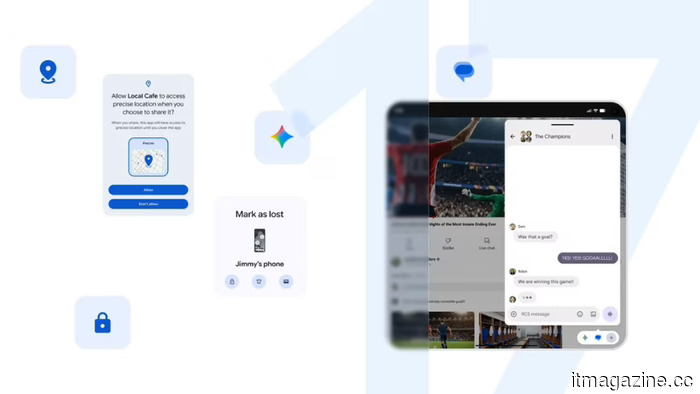
The standout new feature is Bubbles, a system that provides floating windows for any app. By long-pressing an app icon, users can now open it as a resizable overlay that appears above other content, enabling any app to function in a picture-in-picture format instead of being restricted to messaging apps only. On foldable devices like the Galaxy Fold and Pixel 10 Pro Fold, a bubble bar remains accessible at the bottom of the screen for easy use.
Screen Reactions employs the selfie camera during screen recording to capture the user's face alongside the on-screen content, merging both visual feeds into a single video. This feature targets content creators making walkthroughs, gameplay commentary, or tutorials, removing the need for third-party apps to overlay a webcam feed onto recordings.
For foldable phones, there's a specific gaming layout that divides the inner screen into equal halves, with the game displayed on the top and a virtual gamepad at the bottom. The system allows users to remap controller buttons according to their preference without depending on game developers for this feature. Google indicates improvements in memory management for high-definition gaming, though specific performance metrics have not been released.
The updates to privacy are subtle yet significant. Apps can now request temporary location access that lasts only for a single session, moving away from the previous options of "always," "while using," and "never." Users can now share particular contacts with an app instead of providing access to their entire contact list. A new Mark as Lost feature in Find Hub enables biometric locks on lost devices, while enhanced Live Threat Detection continuously monitors in the background for any suspicious app activity.
Google has also tightened security by reducing the number of attempts allowed for PIN entry before implementing progressively longer wait times, making brute-force attacks on locked devices slower. However, the company has not revealed the new limits, nor has it published the exact schedule for these waiting periods.
Gemini Intelligence, which was previewed at Google I/O in May, is set to roll out separately this summer to the Samsung Galaxy S26 and Google’s Pixel 10 line. This feature represents a deeper integration of Gemini into Android's core functionalities, but Google has yet to clarify which specific attributes will be available at launch versus in future updates. This distinction is significant because Android 17 itself is a broader platform update applicable to many devices, while Gemini Intelligence is limited to hardware labeled as “select advanced devices” by Google.
The June Pixel Drop, accompanying Android 17, adds features exclusive to Google devices. Conversational editing in Google Photos allows users of the Pixel 10 Pro, XL, Fold, and 10a to describe image edits using natural language, initially available in Germany, the UK, France, Spain, and Italy. Voice Translate is introduced on the Pixel 10a, and compatibility for Quick Share file transfers, akin to AirDrop, is expanded to the Pixel 9a and 8a, which were previously limited to the Pixel 10 line.
The Pixel Watch is enhanced with Emergency Sharing that integrates with existing detection features such as Car Crash, Fall, and Loss of Pulse, automatically notifying emergency contacts when activated. Wear OS 7 is also being rolled out to Pixel Watches along with the Android 17 update.
This rollout occurs as the European Commission is set to enforce regulations compelling Google to make Android more open to competing AI assistants under the Digital Markets Act, with a decision expected by July. The extent to which Google can deeply integrate Gemini into Android without provoking regulatory backlash in its largest international market is still uncertain. Additionally, Google is transitioning ChromeOS to Android-powered Googlebook laptops, pushing Gemini further into the operating system, making the implications of the EU's interoperability ruling much more significant than a single phone update.
Android 17 serves as a refinement upgrade rather than a complete overhaul, lacking a redesigned interface or new visual style. The new foldable gaming mode and Bubbles multitasking cater to hardware segments that have significantly expanded since Android 16, while the privacy updates aim to bring Android closer to the detailed permission controls that iOS has provided for several years. The impact of Gemini Intelligence upon its release this summer will depend on specifics that Google has yet to share.
Other articles
 A brain implant developed at UC Davis enables an ALS patient to communicate with 99% accuracy and maintain full-time employment, all without the need for researchers.
Researchers at UC Davis published a study in Nature Medicine indicating that a BCI implant enabled an ALS patient to achieve 99% accurate speech over two years of independent daily usage.
A brain implant developed at UC Davis enables an ALS patient to communicate with 99% accuracy and maintain full-time employment, all without the need for researchers.
Researchers at UC Davis published a study in Nature Medicine indicating that a BCI implant enabled an ALS patient to achieve 99% accurate speech over two years of independent daily usage.
 The Momcozy Baby Monitor Without Contact Eliminates Uncertainty in Nursery Safety.
Welcoming a newborn can transform sleep into a series of worry-filled moments. For first-time parents, finding peace of mind can be challenging. The Momcozy BM08 contact-free smart baby monitor offers an intelligent solution to keep you connected to the nursery, now available with special Prime Day discounts.
The Momcozy Baby Monitor Without Contact Eliminates Uncertainty in Nursery Safety.
Welcoming a newborn can transform sleep into a series of worry-filled moments. For first-time parents, finding peace of mind can be challenging. The Momcozy BM08 contact-free smart baby monitor offers an intelligent solution to keep you connected to the nursery, now available with special Prime Day discounts.
 Qualcomm introduces Snapdragon Reality Elite along with a white-label toolkit for AI glasses, predicting that the future platform will not be a smartphone.
Snapdragon Reality Elite, START, smart eyewear, AI-enabled wearables, XREAL, Project Aura, Play for Dream, Inspecs, mixed reality, XR, NPU, Cristiano Amon, white label, AR1+.
Qualcomm introduces Snapdragon Reality Elite along with a white-label toolkit for AI glasses, predicting that the future platform will not be a smartphone.
Snapdragon Reality Elite, START, smart eyewear, AI-enabled wearables, XREAL, Project Aura, Play for Dream, Inspecs, mixed reality, XR, NPU, Cristiano Amon, white label, AR1+.
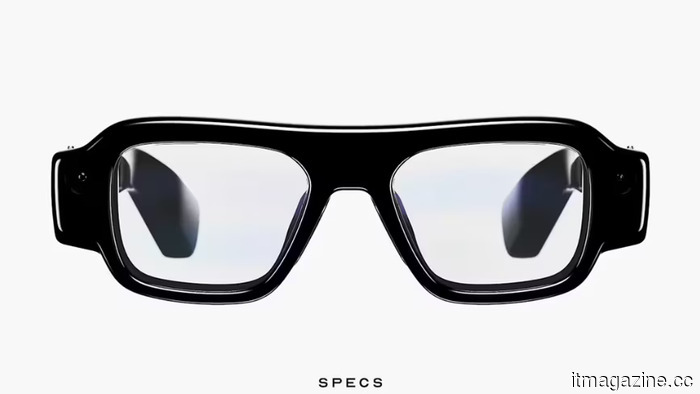 Snap has introduced its AR glasses priced at $2,195 as a consumer product, placing the company's bets on augmented reality.
Snap's Specs AR glasses are priced at $2,195 and will be shipped this fall. They feature a 4-hour battery life, a 51° field of view, and AI technology from OpenAI and Google. Preorders are available with a $200 deposit.
Snap has introduced its AR glasses priced at $2,195 as a consumer product, placing the company's bets on augmented reality.
Snap's Specs AR glasses are priced at $2,195 and will be shipped this fall. They feature a 4-hour battery life, a 51° field of view, and AI technology from OpenAI and Google. Preorders are available with a $200 deposit.
 UC Davis brain implant enables ALS patient to communicate with 99% accuracy and maintain full-time employment, without requiring researchers' involvement.
Researchers at UC Davis published a study in Nature Medicine demonstrating that a BCI implant provided an ALS patient with 99% accurate speech after two years of independent daily use.
UC Davis brain implant enables ALS patient to communicate with 99% accuracy and maintain full-time employment, without requiring researchers' involvement.
Researchers at UC Davis published a study in Nature Medicine demonstrating that a BCI implant provided an ALS patient with 99% accurate speech after two years of independent daily use.
 Android 17 is set to enhance the gaming experience on foldable devices significantly.
Android 17 is reinforcing its commitment to mobile gaming by introducing a new layout that is compatible with foldable devices, options for customizable controller configurations, and enhancements designed to minimize stuttering.
Android 17 is set to enhance the gaming experience on foldable devices significantly.
Android 17 is reinforcing its commitment to mobile gaming by introducing a new layout that is compatible with foldable devices, options for customizable controller configurations, and enhancements designed to minimize stuttering.
Google launches Android 17 featuring Gemini Intelligence, a foldable gaming mode, and enhanced privacy controls.
Android 17 begins its rollout to Pixel phones today, featuring Bubbles multitasking, gaming on foldables, Gemini Intelligence, and updated security defaults.