
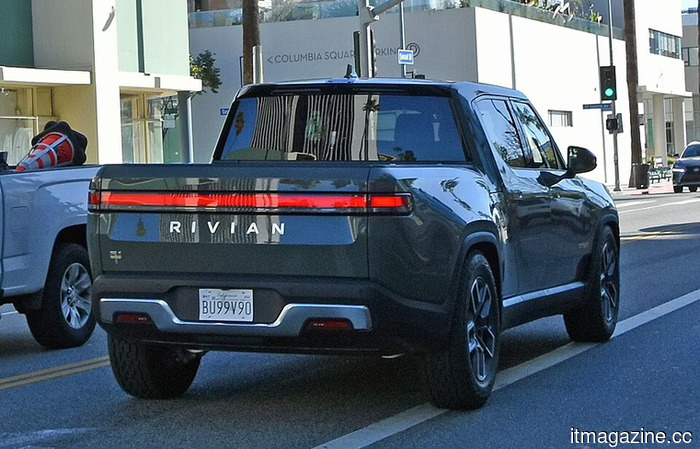
Rivian has terminated hundreds of employees just a week after initiating R2 deliveries in its pursuit of achieving its first profitability.
TL;DR: Rivian has laid off hundreds of service and customer personnel, which constitutes less than 2% of its total workforce, shortly after initiating R2 deliveries. The company has yet to achieve profitability.
On Tuesday, Rivian announced it had cut hundreds of jobs, accounting for less than 2% of its workforce, as the electric vehicle manufacturer strives to reduce its ongoing losses as a public entity. According to a company spokesperson, these layoffs impacted staff in service and customer support. By the end of 2025, Rivian employed 15,232 individuals across North America and Europe.
In a statement, the company noted, “We recently restructured a handful of teams within Rivian as we work to profitably scale our business.” This phrasing mirrors that used when Rivian laid off over 600 employees in October, which was about 4.5% of its workforce at that time, affecting teams in marketing, vehicle operations, and sales during a similar restructuring.
The timing is significant, as Rivian began R2 deliveries on June 9, just a week prior to the layoffs announcement. The R2, priced starting at $45,000 for the base model expected in late 2027 and at $57,990 for the Performance Launch edition currently available, is intended to shift Rivian from a niche luxury EV manufacturer to a mainstream competitor against Tesla. The company aims for 20,000 to 25,000 R2 deliveries this year as part of a broader target of 62,000 to 67,000 vehicles.
Rivian has not posted an annual profit to date. In 2025, the company incurred a loss of $3.63 billion while delivering only 42,247 vehicles—a decrease of 18% from the previous year, partially due to the removal of the $7,500 federal EV tax credit after September. In the first quarter of 2026, Rivian's automotive segment lost around $6,000 for each vehicle delivered, experiencing a shift from a $92 million profit the previous year to a $62 million loss in gross profit due to a $100 million drop in regulatory credit sales.
The overall electric vehicle market presents challenges for Rivian. The elimination of federal purchase incentives during the Trump administration, along with 25% import tariffs on vehicles, has reduced demand across the sector. Since Rivian manufactures its vehicles in Normal, Illinois, the tariffs do not directly impact its production costs. However, the loss of the tax credit raises the effective consumer price for all EVs, including Rivian's.
Despite the layoffs, Rivian has been actively hiring in other sectors. In the first five months of 2026, the company added about 1,800 employees, primarily to support R2 production increase and its expanding autonomy program. The net result of the June layoffs is a slight reduction in headcount compared to a significant expansion earlier in the year.
This autonomy program is vital to Rivian's long-term financial strategy. Last week, CEO RJ Scaringe indicated that supervised point-to-point self-driving technology will be introduced in all second-generation vehicles and the R2 later this year, with plans for unsupervised driving in 2027. The company signed a $1.25 billion agreement with Uber in March, committing to 10,000 fully autonomous R2 robotaxis, with commercial operations aimed for San Francisco and Miami by 2028.
The key issue remains whether Rivian can effectively reduce costs to bridge the gap between the R2’s launch and the point at which it starts producing positive margins at scale. The company recorded its first full-year positive gross profit of $144 million in 2025, a milestone that vanished in Q1 2026 when revenue from regulatory credits declined. Selling more R2s at lower margins while investing in the development of autonomy hardware and software is a financial balancing act that has led to the downfall of other EV startups. Rivian’s advantage lies in having a desirable vehicle, a functioning production line, and a partnership with Uber that is willing to invest over a billion dollars in its autonomy vision.
Other articles
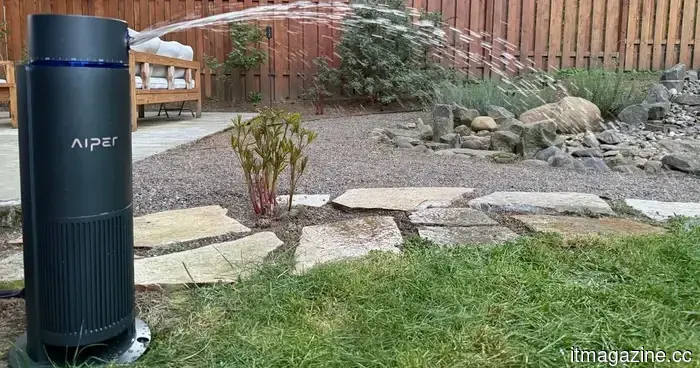 Aiper IrriSense 2 review: An intelligent sprinkler for compact lawns
The world's first 4-in-1 multi-zone smart irrigation system simplifies lawn maintenance and adds an element of enjoyment for those who enjoy working with data and technology.
Aiper IrriSense 2 review: An intelligent sprinkler for compact lawns
The world's first 4-in-1 multi-zone smart irrigation system simplifies lawn maintenance and adds an element of enjoyment for those who enjoy working with data and technology.
 Microsoft's latest Surface Pro 12 is the finest 2-in-1 PC it has produced so far, though it also comes with the highest price tag.
The 13-inch Surface Pro 12th Edition is the finest 2-in-1 device created by Microsoft, and its price reflects that.
Microsoft's latest Surface Pro 12 is the finest 2-in-1 PC it has produced so far, though it also comes with the highest price tag.
The 13-inch Surface Pro 12th Edition is the finest 2-in-1 device created by Microsoft, and its price reflects that.
 According to reports, Apple plans to include AirPods with an integrated camera in their 2027 roadmap.
Apple's long-speculated AirPods with cameras might debut in 2027, enabling Siri to comprehend a user's environment and respond to inquiries about their surroundings.
According to reports, Apple plans to include AirPods with an integrated camera in their 2027 roadmap.
Apple's long-speculated AirPods with cameras might debut in 2027, enabling Siri to comprehend a user's environment and respond to inquiries about their surroundings.
 A brain implant developed at UC Davis enables an ALS patient to communicate with 99% accuracy and maintain full-time employment, all without the need for researchers.
Researchers at UC Davis published a study in Nature Medicine indicating that a BCI implant enabled an ALS patient to achieve 99% accurate speech over two years of independent daily usage.
A brain implant developed at UC Davis enables an ALS patient to communicate with 99% accuracy and maintain full-time employment, all without the need for researchers.
Researchers at UC Davis published a study in Nature Medicine indicating that a BCI implant enabled an ALS patient to achieve 99% accurate speech over two years of independent daily usage.
 Alipay launches Abao, an AI-driven feature, giving it a head start in the competitive landscape of super app AI in China.
Alipay, the top mobile payments and super app platform in China, has introduced its AI-driven assistant Abao and has started invitation-only testing for users.
Alipay launches Abao, an AI-driven feature, giving it a head start in the competitive landscape of super app AI in China.
Alipay, the top mobile payments and super app platform in China, has introduced its AI-driven assistant Abao and has started invitation-only testing for users.
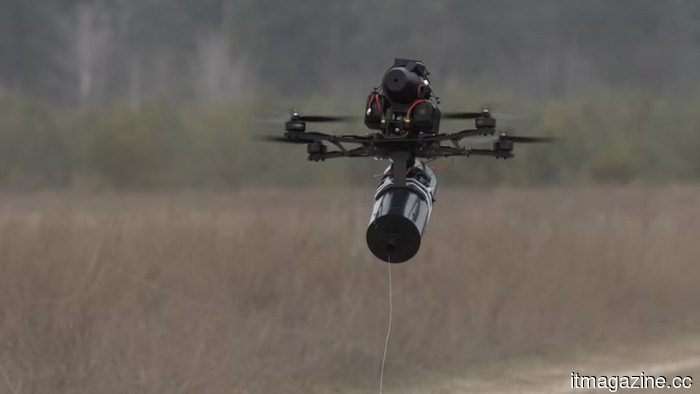 A Czech AI startup claims it can identify drones through sound for €150 per sensor and intends to prioritize wiring up power grids.
Neuron Soundware's Sound Shield employs AI-driven microphones priced between €100 and €150 each to identify drones through sound, presenting an affordable substitute for radar technology.
A Czech AI startup claims it can identify drones through sound for €150 per sensor and intends to prioritize wiring up power grids.
Neuron Soundware's Sound Shield employs AI-driven microphones priced between €100 and €150 each to identify drones through sound, presenting an affordable substitute for radar technology.
Rivian has terminated hundreds of employees just a week after initiating R2 deliveries in its pursuit of achieving its first profitability.
Rivian reduced its workforce in service and customer teams by just under 2%, a week following the commencement of R2 deliveries. The company incurred a loss of $3.6 billion in 2025, having delivered 42,247 vehicles.