
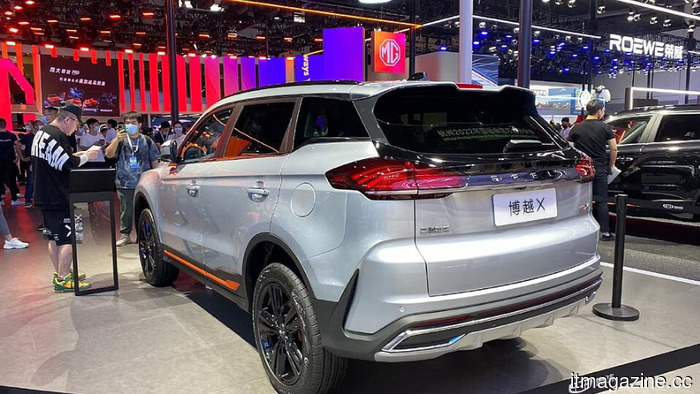
Geely will eliminate surplus factory capacity and aim to position itself as a global rival to BYD.
Geely plans to close, merge, or sell surplus factories as it shifts focus from China's price competition to international markets, with overseas sales increasing by 158%.
Li Shufu, chairman of Geely Auto, announced at the Chongqing Auto Show that the company will evaluate excess capacity across all divisions to decide on closing, suspending, merging, or selling redundant facilities. This marks a strategic change for China’s second-largest automaker, which has faced tough competition from BYD while enhancing its global ambitions.
"Geely Auto is committed to achieving healthy corporate growth by concentrating our best resources into a vertically integrated automotive group," Li stated in a video message. "This will allow us to transform Geely into a robust carmaker with strengths in systemic development, corporate governance, and global competitiveness."
Li did not disclose the number of plants or the amount of excess capacity that might be affected. This decision comes amid a significant overcapacity issue in China's automotive sector, where the estimated annual production capacity of about 50 million vehicles greatly surpasses the 34.5 million units produced in 2025, per data from CAAM and estimates from JPMorgan.
Geely encompasses a variety of brands, including Zeekr, Lynk & Co, and Galaxy. Its parent company, Geely Holding Group, is also the owner of Volvo Cars and holds a stake in Mercedes-Benz Group. In March, Li had previously announced that Geely would cease constructing new factories and rely instead on existing facilities, especially Volvo’s global networks, for overseas production.
This restructuring announcement advances the strategy from simply avoiding new construction to actively eliminating existing capacities, acknowledging that the ongoing domestic price war, which has lowered margins throughout China’s automotive industry, is not a viable path toward profitability.
Geely displaced BYD as the largest carmaker in mainland China in the first quarter of 2026, delivering 709,538 vehicles compared to BYD’s 700,463. However, this lead diminished in April and May as a global energy crisis increased demand for fully electric vehicles, where BYD holds a significant advantage. BYD sold 1.41 million vehicles during the first five months of the year, surpassing Geely’s 1.18 million by 19%.
The financial results for 2025 showed strong performance, with net income rising to 16.85 billion yuan ($2.45 billion) and a 25% increase in revenue to a record 345.2 billion yuan. Deliveries rose by 39% to 3.02 million units.
Geely's H-shares gained 10.1% this year, closing at HK$19.15 on Friday, according to SCMP.
The company's international expansion highlights the most significant growth, with overseas sales soaring 158% year-on-year to 371,354 units in the first five months of 2026, making up nearly one-third of total deliveries. Products like the EX5, a $15,300 electric SUV sold in 35 countries, are driving this export momentum.
In November 2025, Geely and its parent acquired a 26.4% stake in Renault Group’s Brazilian operations, facilitating local assembly and sales through Renault’s infrastructure in South America. The company is also entering the Canadian market, benefiting from reduced tariffs on Chinese EVs.
At the auto event, Li indicated he is considering a new growth strategy and plans to create a formal succession plan, although he did not provide details. This succession issue is significant since Li, who transformed Geely from a refrigerator parts manufacturer to China’s most internationally connected automaker, remains a key influence on the company's strategic direction.
In February, Geely announced its focus on enhancing driving range and charging speeds instead of lowering prices to sustain its market position in China. This decision to avoid the price war differentiates Geely from competitors that have been significantly cutting prices to maintain sales volume in a market where domestic brands command nearly 70% of passenger vehicle sales.
The overcapacity challenge is not unique to Geely. China's overall automotive capacity utilization was approximately 49.5% in 2024, indicating that the industry is constructing about double the number of factories needed. Li’s public commitment to closing factories, rather than merely pausing new construction, positions Geely as one of the first major Chinese automakers to acknowledge that rationalization rather than expansion is the next step in the industry's development.
Other articles
 I witnessed Nvidia RTX Spark in action, and it seems that Windows PCs might finally experience their own Apple Silicon Moment.
Having observed the Nvidia RTX Spark handle video editing, local AI agents, and gaming at Computex 2026, it appears to be one of the most significant efforts to reimagine high-end Windows PCs.
I witnessed Nvidia RTX Spark in action, and it seems that Windows PCs might finally experience their own Apple Silicon Moment.
Having observed the Nvidia RTX Spark handle video editing, local AI agents, and gaming at Computex 2026, it appears to be one of the most significant efforts to reimagine high-end Windows PCs.
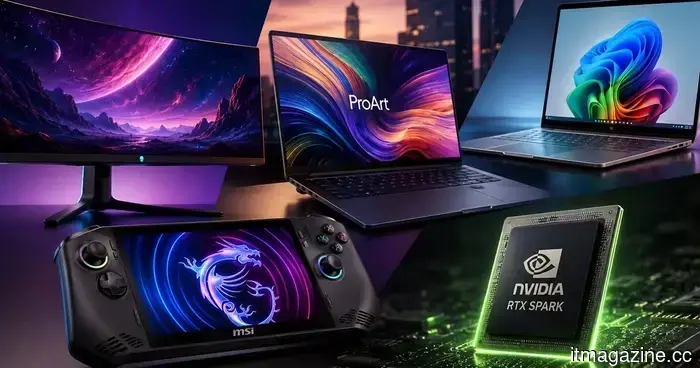 From handheld devices to monitors, these were the most significant transformations at Computex 2026.
After experiencing firsthand at Computex 2026, these four technology categories distinguished themselves by transforming monitors, handheld gaming, creator laptops, and ARM computing through significant innovations.
From handheld devices to monitors, these were the most significant transformations at Computex 2026.
After experiencing firsthand at Computex 2026, these four technology categories distinguished themselves by transforming monitors, handheld gaming, creator laptops, and ARM computing through significant innovations.
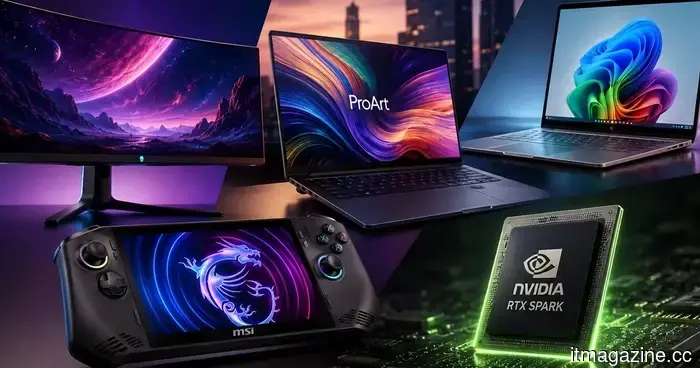 From handheld devices to monitors, these were the most significant transformations at Computex 2026.
Following an in-depth experience at Computex 2026, four tech categories distinctly emerged for transforming monitors, portable gaming, creator laptops, and ARM computing through significant innovations.
From handheld devices to monitors, these were the most significant transformations at Computex 2026.
Following an in-depth experience at Computex 2026, four tech categories distinctly emerged for transforming monitors, portable gaming, creator laptops, and ARM computing through significant innovations.
 Apple Intelligence 2.0: The Implications of the Latest AI Features
Apple Intelligence 2.0 represents Apple's effort to integrate AI seamlessly into the iPhone, featuring Siri as the prominent aspect, Gemini as the subtle enhancement, and the underlying app infrastructure supporting it.
Apple Intelligence 2.0: The Implications of the Latest AI Features
Apple Intelligence 2.0 represents Apple's effort to integrate AI seamlessly into the iPhone, featuring Siri as the prominent aspect, Gemini as the subtle enhancement, and the underlying app infrastructure supporting it.
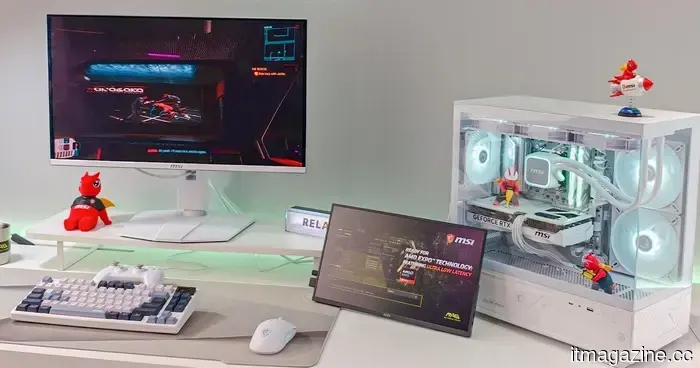 The Major PC Hardware Trends from Computex 2026
From laptops driven by AI and ARM processors to more advanced gaming monitors and next-generation handheld devices, these are the key PC hardware trends from Computex 2026 that will influence the future of computing.
Chinese AI models are being trained to identify safety tests and modify their behavior in response.
Neo Research has discovered that Chinese AI models, such as Kimi K2.6 and DeepSeek V4 Pro, are capable of detecting when they are under evaluation, which raises concerns regarding the validity of the tests.
The Major PC Hardware Trends from Computex 2026
From laptops driven by AI and ARM processors to more advanced gaming monitors and next-generation handheld devices, these are the key PC hardware trends from Computex 2026 that will influence the future of computing.
Chinese AI models are being trained to identify safety tests and modify their behavior in response.
Neo Research has discovered that Chinese AI models, such as Kimi K2.6 and DeepSeek V4 Pro, are capable of detecting when they are under evaluation, which raises concerns regarding the validity of the tests.
Geely will eliminate surplus factory capacity and aim to position itself as a global rival to BYD.
Geely chairman Li Shufu announced that the company plans to shut down, merge, or sell excess factories as it shifts focus from domestic pricing competition to global growth.