
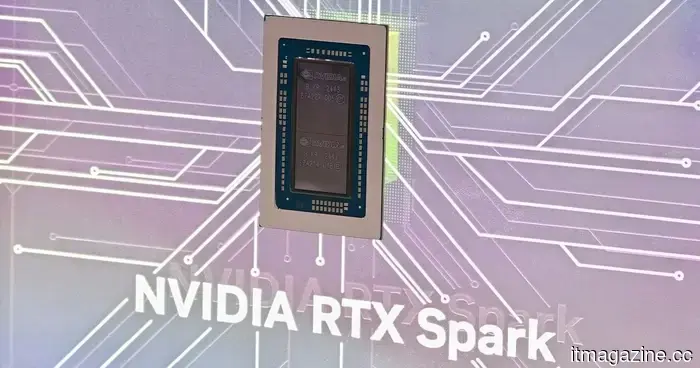
I witnessed Nvidia RTX Spark in action, and it seems that Windows PCs might finally experience their own Apple Silicon Moment.
Windows laptops have been striving to emulate the success Apple achieved years ago with its M-series chips. In 2020, Apple introduced a new series of MacBooks powered by silicon that appeared to be significantly advanced in terms of efficiency, integration, and performance. This system was designed around the hardware, rather than simply functioning on top of it.
At Computex 2026, Nvidia's RTX Spark emerged as one of the most compelling responses Windows has produced in years. I had the opportunity to explore Nvidia’s exhibit at the event, and Spark was undoubtedly one of the highlights. During the demonstration, I got a detailed look at the RTX Spark as it managed video editing, local AI tasks, gaming, and other intensive workflows. It quickly became clear that this was more than just another laptop chip announcement.
Beyond just an AI PC label
Varun Mirchandani / Digital Trends
The term AI PC has been so overused that it has begun to sound like an internet cliche. Every "next-gen" laptop seems to feature an NPU to promote AI, which appears more like a marketing gimmick than something practical for many users. In contrast, Spark is approaching things differently, focusing on the kinds of workloads that are integral to Nvidia’s ecosystem. Consequently, CUDA, RTX, DLSS, G-Sync, local AI processing, and GPU-driven creative work have taken precedence.
Examining the specifications, RTX Spark is impressive. It boasts a 20-core Grace CPU paired with a Blackwell RTX GPU, 6,144 CUDA cores, up to 128GB of unified memory, and up to 1 petaflop of AI performance. This configuration translates to a single processor capable of handling a wide range of tasks.
The comparison to Apple Silicon is clear
When Apple transitioned its Macs to its own silicon, the significant boosts in performance and efficiency were remarkable, but regaining control over the entire system was an even larger achievement. Apple integrated the CPU, GPU, memory architecture, operating system, and software stack to work cohesively. The ecosystem became more unified, no longer reliant on Intel.
Vikhyaat Vivek / Digital Trends
The switch to M1 sparked a new race among PCs. MacBooks not only became more powerful but also excelled in power efficiency. This is an area where Windows laptops found it challenging to compete. While they had plenty of raw power and, in some respects, greater flexibility than Macs, they often appeared disjointed. Chip manufacturers, laptop makers, and software developers were all separate entities. Even the best chips could lead to a poor user experience if the platform was not well-optimized.
Additionally, performance often varied widely based on thermal designs, drivers, battery settings, and, crucially, vendor tuning. While Nvidia cannot exert the same control over Windows as Apple does with macOS, it has partnered with Microsoft to create a true flagship Windows device, the Microsoft Surface Laptop Ultra. This collaboration allows Nvidia to build a high-performance platform with a more reliable foundation.
Nvidia’s RTX Spark Showcase
Vikhyaat Vivek / Digital Trends
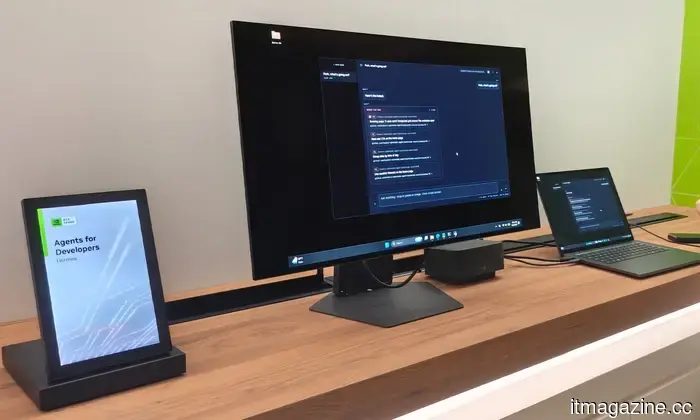
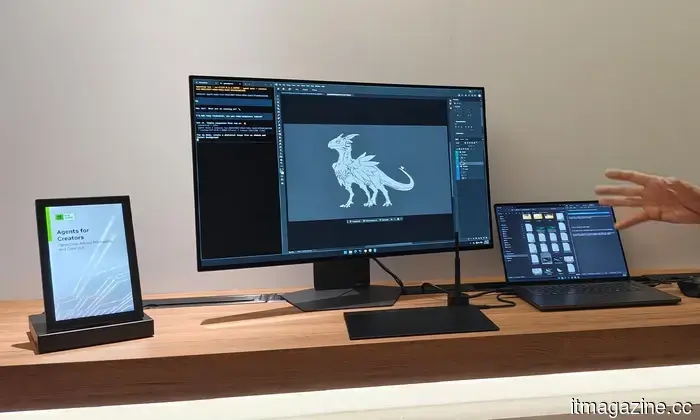
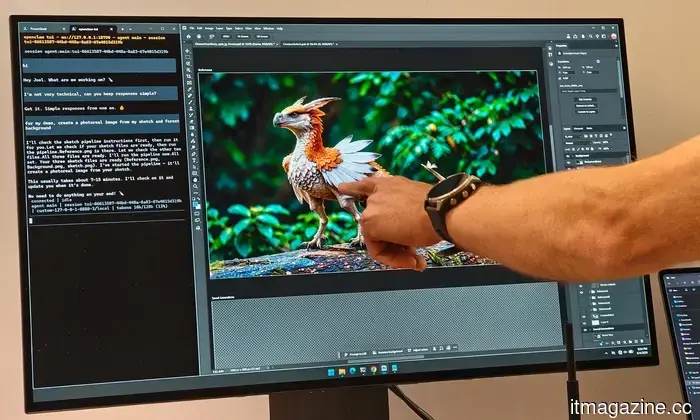
From the beginning, Nvidia was keen to highlight the effort behind this “superchip.” The showcase encompassed nearly every conceivable use case. Nvidia demonstrated the chip managing creative workflows, local AI agents, intensive AAA gaming, and much more. The video editing demonstration was particularly telling, featuring Spark utilizing generative AI tools within a video workflow, enabling editors to make changes using natural language prompts rather than navigating through complex timelines and menus.
The goal was to automate some repetitive tasks that can slow down the editing process. For those who spend considerable time cutting footage, organizing clips, and making minor modifications, this stood out as one of the most practical AI demonstrations at Computex. A significant part of the effectiveness stems from the hardware itself. Spark's combination of Blackwell graphics, expansive unified memory, and local AI processing allows these tools to operate directly on the machine, reducing dependence on cloud services.
Vikhyaat Vivek / Digital Trends
The focus on local AI agents was another key aspect. Nvidia showcased systems capable of running advanced AI models on the device, performing tasks that would typically require remote servers. If AI is to become a tool for everyday workflows, local performance like this could prove just as crucial as raw benchmark scores.
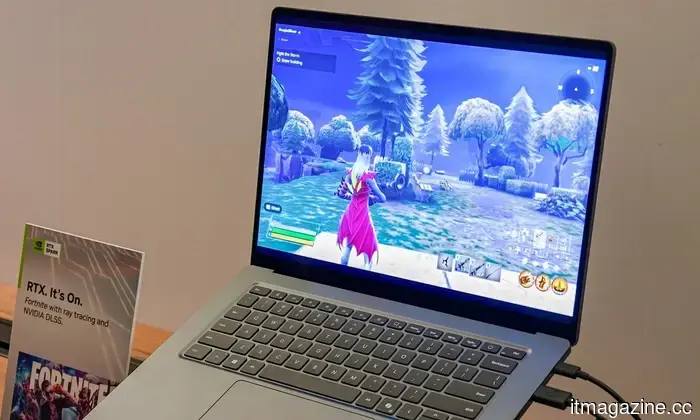
Gaming, unsurprisingly, was another focal point. Nvidia maintains an ecosystem advantage that Apple has struggled to match, thanks to RTX technologies, DLSS, Reflex, and strong support across the PC gaming market. Both native games and those running through emulation demonstrated smooth performance. Actual performance metrics remain undefined, but the presentation appeared encouraging.
Windows must align with Nvidia's efforts
Fortnite on NVIDIA RTX Spark Laptop Varun Mirchandani / Digital Trends
Spark is promising, but it's not a guarantee of an Apple Silicon-like success solely because the hardware looks impressive. Apple’s significant advantage came from its control over the entire stack. For Spark to truly shine

Other articles
 Designed to aid rather than substitute: exploring Intercall’s real-time AI for professional interpreters.
Intercall displays live transcription and translation on the screen in both languages while interpreters are at work, capturing names, numbers, and terms that may be missed under cognitive pressure. It is utilized by over 3,000 interpreters across 18 countries.
Designed to aid rather than substitute: exploring Intercall’s real-time AI for professional interpreters.
Intercall displays live transcription and translation on the screen in both languages while interpreters are at work, capturing names, numbers, and terms that may be missed under cognitive pressure. It is utilized by over 3,000 interpreters across 18 countries.
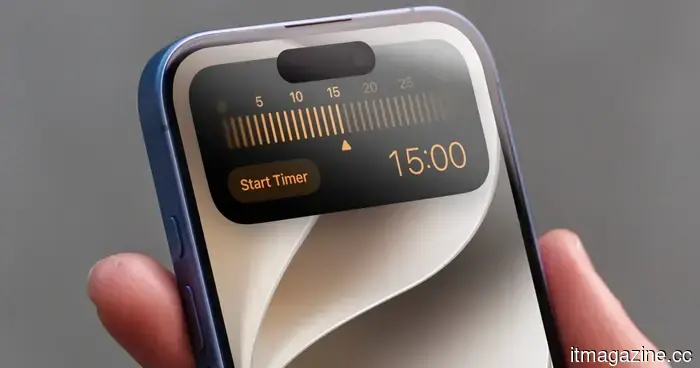 These 7 concealed features of iOS 27 have subtly enhanced my iPhone experience.
While the prominent features of iOS 27 receive most of the spotlight, it's the seven subtle changes that are gradually enhancing my iPhone experience each day.
These 7 concealed features of iOS 27 have subtly enhanced my iPhone experience.
While the prominent features of iOS 27 receive most of the spotlight, it's the seven subtle changes that are gradually enhancing my iPhone experience each day.
 Canada's Carney likens the closure of Anthropic to the 2008 financial crisis, cautioning about the implications of AI.
PM Carney stated that the shutdown of Fable 5 and Mythos 5 illustrates the risks associated with over-dependence on a limited number of AI models, likening it to the systemic threats seen in 2008.
Canada's Carney likens the closure of Anthropic to the 2008 financial crisis, cautioning about the implications of AI.
PM Carney stated that the shutdown of Fable 5 and Mythos 5 illustrates the risks associated with over-dependence on a limited number of AI models, likening it to the systemic threats seen in 2008.
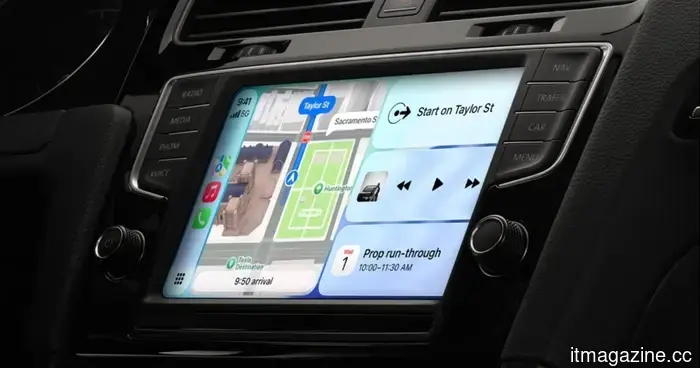 All the new features arriving in CarPlay with iOS 17.
CarPlay is receiving its most significant update in years with iOS 27, and the most notable improvements aren't the ones that stand out the most.
All the new features arriving in CarPlay with iOS 17.
CarPlay is receiving its most significant update in years with iOS 27, and the most notable improvements aren't the ones that stand out the most.
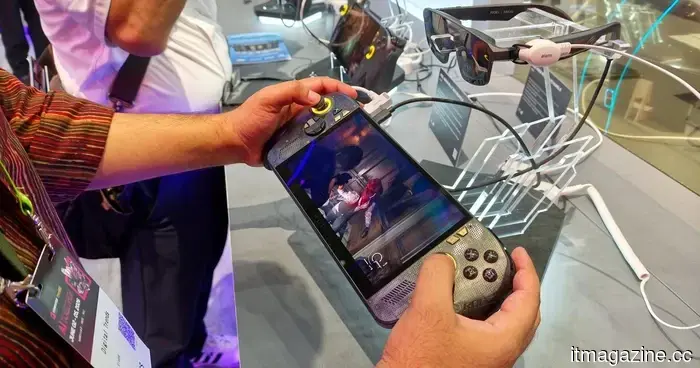 I tested the ASUS ROG Xbox Ally X20, and the 171-inch display makes a significant difference.
The OLED enhancement of the ROG Xbox Ally X20 is impressive, but after experiencing the included AR glasses, I found myself constantly considering the larger display.
I tested the ASUS ROG Xbox Ally X20, and the 171-inch display makes a significant difference.
The OLED enhancement of the ROG Xbox Ally X20 is impressive, but after experiencing the included AR glasses, I found myself constantly considering the larger display.
 Apple Intelligence 2.0: The Implications of the New AI Features
Apple Intelligence 2.0 represents Apple's effort to integrate AI seamlessly into the iPhone experience, with Siri as the prominent feature, Gemini serving as the subtle innovation, and underlying app infrastructure supporting it all.
Apple Intelligence 2.0: The Implications of the New AI Features
Apple Intelligence 2.0 represents Apple's effort to integrate AI seamlessly into the iPhone experience, with Siri as the prominent feature, Gemini serving as the subtle innovation, and underlying app infrastructure supporting it all.
I witnessed Nvidia RTX Spark in action, and it seems that Windows PCs might finally experience their own Apple Silicon Moment.
Having observed the Nvidia RTX Spark handle video editing, local AI agents, and gaming at Computex 2026, it appears to be one of the most significant efforts to reimagine high-end Windows PCs.