
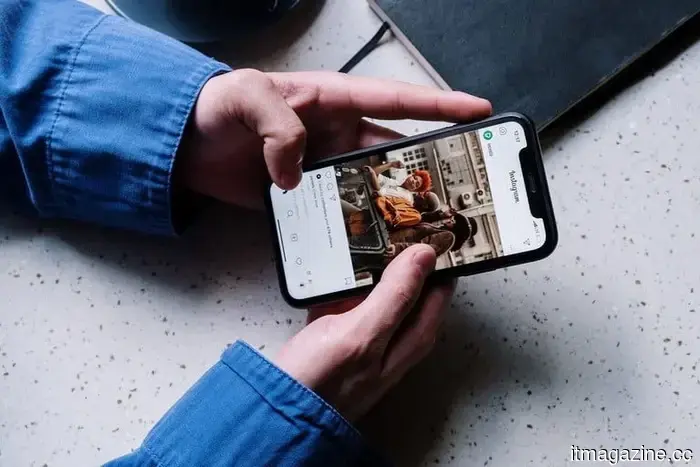
The habit of scrolling through social media is more detrimental than you might realize, particularly for adolescents.
A decade-long study highlights the potential mental health risks associated with excessive social media use by teenagers.
A recent study from Australia strengthens the case against social media, particularly regarding its impact on teenagers. Conducted by the Murdoch Children’s Research Institute, the research indicates that adolescents who spend over two hours daily on social media are more likely to report depressive symptoms and reduced wellbeing a year later compared to those who engage with social platforms for under an hour each day.
While the study does not establish a direct cause-and-effect relationship between social media use and mental health issues, the connection is significant due to the longitudinal nature of the research, rather than relying solely on short-term data.
Critical period identified in early adolescence
The research tracked nearly 1,200 children in Melbourne, from ages nine to 19, as part of the Child to Adult Transition Study. Researchers gathered yearly data on social media usage and mental health outcomes, including depression, anxiety, and self-harm. The most pronounced association was seen in girls aged 12 to 13, a crucial time for potential intervention. Dr. Nandi Vijayakumar of MCRI and Deakin University noted that early adolescence appears to be a time when increased social media use correlates with a heightened risk of mental health issues a year later.
Ages 12 and 13 often see the convergence of phones, social apps, peer pressure, and other influences. Thus, even a slight increase in risk can be significant when millions of young people are engaging with the same platforms daily.
Why simply removing apps isn’t a solution
The researchers emphasized the complexity of the issue, noting that social media can provide valuable support for some teenagers, fostering a sense of belonging, self-expression, and friendship networks—essential for those who struggle to find such connections offline. However, high usage can also lead to greater exposure to cyberbullying, harmful content, and comparisons that negatively impact sleep and contribute to the pressure to remain constantly connected.
Professor Susan Sawyer from MCRI stated that while the results do not indicate that social media is inherently harmful, they do support the need for age-specific limits, improved digital literacy, and clearer guidance for parents.
These findings come at a time when governments are deliberating on age restrictions and regulations for young social media users. Australia has already implemented pioneering age restrictions for social media, and MCRI along with Deakin University is simultaneously researching the impact of these changes on teenagers’ smartphone usage and mental health.



Other articles
 Telegram has discreetly made its comeback on WearOS smartwatches, and it appears quite stylish.
Telegram has made a comeback to Wear OS after removing its previous app years ago, providing Android smartwatch users with a more streamlined method to handle chats from their wrist.
Telegram has discreetly made its comeback on WearOS smartwatches, and it appears quite stylish.
Telegram has made a comeback to Wear OS after removing its previous app years ago, providing Android smartwatch users with a more streamlined method to handle chats from their wrist.
 A Meta outage affected Facebook, Instagram, and WhatsApp.
A significant outage at Meta affected Facebook, Instagram, WhatsApp, and Messenger on a global scale. Down Detector recorded over 130,000 reports before services started to be restored.
A Meta outage affected Facebook, Instagram, and WhatsApp.
A significant outage at Meta affected Facebook, Instagram, WhatsApp, and Messenger on a global scale. Down Detector recorded over 130,000 reports before services started to be restored.
 Apple has made it clear that Siri AI will not serve as a romantic partner. The answer is a definite No.
Apple states that Siri AI is created to assist users in accomplishing tasks, rather than serving as an AI girlfriend, boyfriend, therapist, or engagement tool.
Apple has made it clear that Siri AI will not serve as a romantic partner. The answer is a definite No.
Apple states that Siri AI is created to assist users in accomplishing tasks, rather than serving as an AI girlfriend, boyfriend, therapist, or engagement tool.
 Apple has made it clear that Siri AI will not function as your romantic partner. The answer is a definite No.
Apple states that Siri AI is intended to assist users in completing tasks, rather than serving as a romantic partner, therapist, or means of engagement.
Apple has made it clear that Siri AI will not function as your romantic partner. The answer is a definite No.
Apple states that Siri AI is intended to assist users in completing tasks, rather than serving as a romantic partner, therapist, or means of engagement.
 The latest iPhone update for WhatsApp simplifies the process of managing two accounts considerably.
WhatsApp is introducing the option for multiple accounts on iPhone, allowing users to add a second number within the main app while keeping chats, calls, notifications, and settings distinct.
The latest iPhone update for WhatsApp simplifies the process of managing two accounts considerably.
WhatsApp is introducing the option for multiple accounts on iPhone, allowing users to add a second number within the main app while keeping chats, calls, notifications, and settings distinct.
 The head of the IMF cautions about advanced AI systems such as Mythos.
IMF chief Georgieva stated that Mythos is "only the start" and cautioned that the surge in AI could lead to a downturn. She emphasized the need for immediate global collaboration on cybersecurity.
The head of the IMF cautions about advanced AI systems such as Mythos.
IMF chief Georgieva stated that Mythos is "only the start" and cautioned that the surge in AI could lead to a downturn. She emphasized the need for immediate global collaboration on cybersecurity.
The habit of scrolling through social media is more detrimental than you might realize, particularly for adolescents.
A recent study from Australia associates the use of social media for two or more hours each day during early adolescence with worse mental health outcomes a year later.