
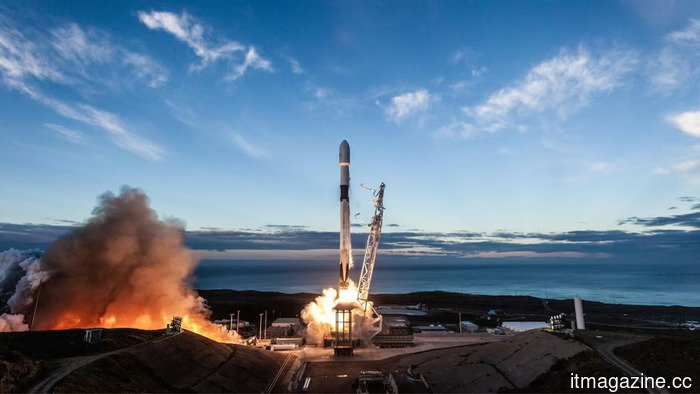
SpaceX's IPO: the true challenge lies with OpenAI and Anthropic.
The SpaceX IPO is poised to become the largest stock market debut in history this week, anticipated to raise approximately $75 billion with a valuation nearing $1.75 trillion, with shares set to begin trading on Nasdaq from Friday. However, the most significant aspect of Elon Musk’s rocket company's public offering may not directly relate to rockets or Musk himself, but rather its impact on the broader landscape.
For the venture-capital sector, SpaceX signifies a thawing after a prolonged period of stagnation. Only 23 venture-backed tech companies went public in the US in 2025, a stark decline from 77 just four years prior, while the capital locked in private investments has had few options for liquidity.
SpaceX’s oversubscribed debut, nearly four times over, provides the ecosystem with its first major payout in years: early investors, such as Antonio Gracias’s Valor Equity Partners, who hold approximately a 4 percent stake valued at nearly $70 billion at a price of $135 per share, along with Peter Thiel’s Founders Fund and Sequoia, are positioned to return tens of billions to their investors, which will likely fund the next wave of startups.
The public offering will also create thousands of employee millionaires. The latest updates from the EU tech landscape, insights from our founder Boris, and some dubious AI art, are available for free every week in your inbox—sign up now!
The implications for companies like OpenAI and Anthropic are significant. Both organizations have confidentially filed to go public, and along with SpaceX, they contribute to an IPO pipeline that could potentially introduce $3.6 trillion of new stock to public markets.
How SpaceX performs in its initial weeks will set the standard for how investors value the two AI labs and gauge the market's willingness to absorb such a large influx of equity at once. Wall Street has already identified a concern: an excess of shares compared to buyers.
This situation transforms the debut into a genuine stress test rather than a celebratory moment. SpaceX aims for revenue multiples that exceed those of Palantir, which, as PitchBook’s Franco Granda noted, leaves "virtually no margin for error." Proponents highlight actual revenues, citing approximately $920 million a month from Google for Starlink capacity and about $1.25 billion a month from Anthropic for AI infrastructure.
Skeptics recall Facebook's 2012 IPO, which faltered post-listing and stymied the new-issue market for over a year. A downturn now could affect OpenAI and Anthropic even before they set their prices.
Structural concerns persist. Musk retains about 79 percent of the voting rights while owning roughly 42 percent of the equity due to a dual-class structure, which prompted one Danish pension fund to exclude the deal from its portfolio. Additionally, an array of opaque special-purpose vehicles has emerged to offer SpaceX exposure to investors unable to participate directly.
This situation has not diminished demand. However, a more profound question posed by Caplight’s Javier Avalos is whether any company can "remain private for over 20 years, raise billions privately, and still have vitality once they go public." SpaceX is about to provide an answer, with OpenAI and Anthropic watching intently.
Other articles
 Google supports 300,000 skilled trades workers essential for the AI industry.
Google is investing $50 million to train 300,000 workers in skilled trades, addressing the shortage of electricians and welders needed for constructing data centers amid the expansion of AI.
Google supports 300,000 skilled trades workers essential for the AI industry.
Google is investing $50 million to train 300,000 workers in skilled trades, addressing the shortage of electricians and welders needed for constructing data centers amid the expansion of AI.
 Concerns over an AI bubble amplify as SpaceX readies itself for a landmark IPO.
Software is on a downturn, China is divesting assets, and Apollo and KKR are signaling alarms. Concerns about an AI bubble are growing, coinciding with SpaceX's preparations for a record IPO.
Concerns over an AI bubble amplify as SpaceX readies itself for a landmark IPO.
Software is on a downturn, China is divesting assets, and Apollo and KKR are signaling alarms. Concerns about an AI bubble are growing, coinciding with SpaceX's preparations for a record IPO.
 Coram secures $35 million to transform cameras into AI investigators.
Coram secured $35 million in a Series B funding round, co-led by Ansa Capital and Battery, aimed at transforming standard security cameras into self-sufficient AI agents capable of conducting their own investigations.
Coram secures $35 million to transform cameras into AI investigators.
Coram secured $35 million in a Series B funding round, co-led by Ansa Capital and Battery, aimed at transforming standard security cameras into self-sufficient AI agents capable of conducting their own investigations.
 Deezer's complimentary feature analyzes your playlists to identify AI-generated music.
Deezer introduced a free tool that analyzes your playlists from Spotify, Apple Music, or Tidal for tracks generated by AI, noting that AI accounts for 44% of daily uploads.
Deezer's complimentary feature analyzes your playlists to identify AI-generated music.
Deezer introduced a free tool that analyzes your playlists from Spotify, Apple Music, or Tidal for tracks generated by AI, noting that AI accounts for 44% of daily uploads.
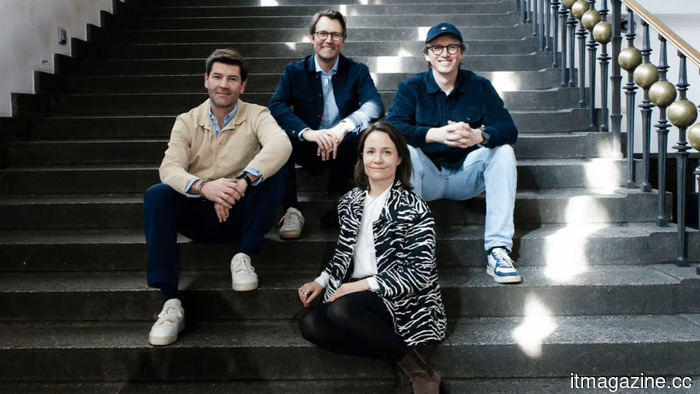 Vsquared expands its deep-tech investments to London.
Germany's Vsquared Ventures has launched an office in London to compete with Atomico and Balderton, wagering that a deep-tech expert can succeed in the giants' territory.
Vsquared expands its deep-tech investments to London.
Germany's Vsquared Ventures has launched an office in London to compete with Atomico and Balderton, wagering that a deep-tech expert can succeed in the giants' territory.
 Canada's prohibition on social media also targets AI chatbots.
Canada's new Digital Safety Act aims to prohibit individuals under 16 from using social media and impose regulations on AI chatbots, taking stricter measures than Australia. However, the challenge lies in enforcement.
Canada's prohibition on social media also targets AI chatbots.
Canada's new Digital Safety Act aims to prohibit individuals under 16 from using social media and impose regulations on AI chatbots, taking stricter measures than Australia. However, the challenge lies in enforcement.
SpaceX's IPO: the true challenge lies with OpenAI and Anthropic.
The SpaceX IPO, a historic $75 billion transaction, is set to price this week. Its trading performance will establish the standard for the upcoming listings of OpenAI and Anthropic that are following it.