
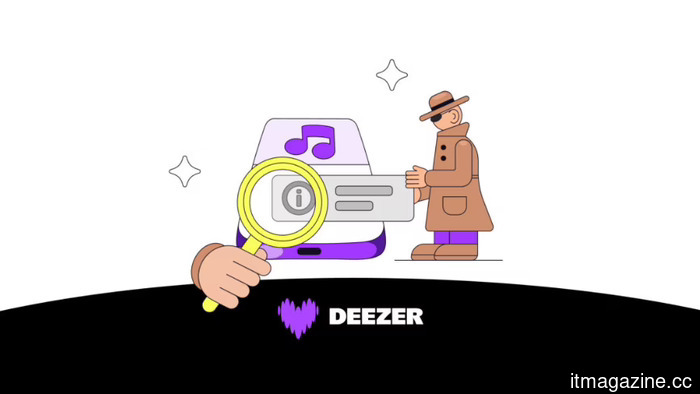
Deezer's complimentary feature analyzes your playlists to identify AI-generated music.
Deezer has developed a free tool that reveals how much of your music is AI-generated, even if you're streaming from other platforms. The French service has launched its AI-music detector to the public, allowing anyone to scan their playlists on Spotify, Apple Music, and about 20 other services for tracks produced by AI.
According to Deezer, 43 percent of users who transition from competitors already have AI-generated songs in their collections.
The tool functions as a quick audit. You visit Deezer’s detector page, connect your streaming account, allow it to scan your playlists, and then view or share the results. The tool operates in 27 languages and utilizes the detection technology that Deezer has employed internally since early 2025, capable of identifying fully AI-generated tracks from popular tools like Suno and Udio.
“A significant majority of individuals want to know if AI music is being suggested to them,” stated CEO Alexis Lanternier, who anticipates the tool will provide “an eye-opening experience for listeners globally.”
44% of uploads, a small portion of listening
The 💜 of EU tech: The latest updates from the EU tech landscape, insights from our wise founder Boris, and some dubious AI art. It’s free, delivered weekly to your inbox. Sign up now! The statistic under the tool is particularly revealing. Deezer claims it currently receives nearly 75,000 fully AI-generated tracks daily, making up over 44 percent of all uploads, and has marked more than 13.4 million AI tracks throughout 2025. However, the actual percentage of fully AI-generated music in listener streams is only between 1 and 3 percent.
This disparity is significant. Deezer reports that as much as 85 percent of the streams from AI-generated tracks last year were fraudulent, attributed to bots and stream farms uploading synthetic music to capture royalties. Consequently, the platform removes identified AI tracks from its recommendations and editorial playlists and excludes fraudulent streams from artist earnings.
The free detector also serves as a competitive strategy. By examining rivals' libraries, Deezer positions itself as the transparent choice in a market where Spotify has faced backlash over AI “artists” and questionable content, and where viral incidents, such as an AI band gaining streams before audiences realized they were not real, have unnerved listeners.
Deezer was the first platform to label AI music in June 2025 and is now licensing its detection technology to the wider industry. Its argument is supported by a survey it commissioned from Ipsos: 80 percent of 9,000 respondents across eight countries stated that fully AI-generated music should be clearly labeled, while 97 percent could not distinguish an AI track from a human-produced one in a blind test.
There are limitations. The tool identifies tracks that are completely AI-generated, not songs where AI is one instrument among others, and the reported figures are specific to Deezer. However, the trend is hard to question, and the potential consequences are significant: a CISAC study referenced by Deezer estimates that around a quarter of creators’ income, totaling up to €4 billion, could be jeopardized by 2028.
Music produced by software has now become commonplace on streaming services. The open question remains whether listeners will care once they are able to recognize it.
Other articles
 Google supports 300,000 trades workers essential for the AI surge.
Google is investing $50 million to train 300,000 skilled trades workers, addressing the shortage of electricians and welders needed for the construction of data centers during the AI expansion.
Google supports 300,000 trades workers essential for the AI surge.
Google is investing $50 million to train 300,000 skilled trades workers, addressing the shortage of electricians and welders needed for the construction of data centers during the AI expansion.
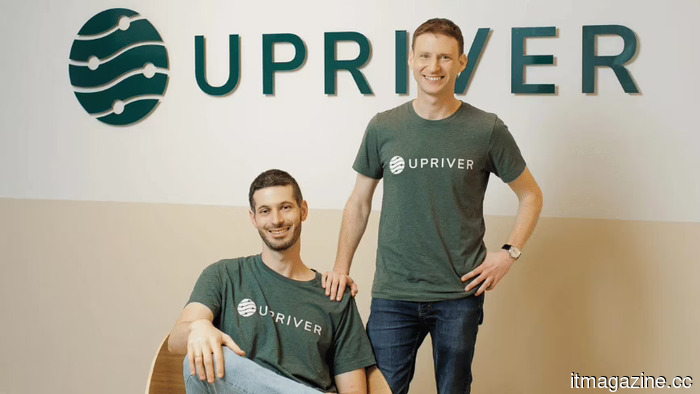 Upriver secures $14 million to address the enterprise data issue in AI.
Upriver secured $14 million in seed funding to automate the data engineering processes that AI depends on, emphasizing that clean data is the crucial factor for success or failure in enterprise AI.
Upriver secures $14 million to address the enterprise data issue in AI.
Upriver secured $14 million in seed funding to automate the data engineering processes that AI depends on, emphasizing that clean data is the crucial factor for success or failure in enterprise AI.
 Vsquared is making its deep-tech investment move to London.
Germany's Vsquared Ventures has established a London office to compete with Atomico and Balderton, believing that a specialist in deep tech can succeed in the giants' own territory.
Vsquared is making its deep-tech investment move to London.
Germany's Vsquared Ventures has established a London office to compete with Atomico and Balderton, believing that a specialist in deep tech can succeed in the giants' own territory.
 Vsquared expands its deep-tech investments to London.
Germany's Vsquared Ventures has launched an office in London to compete with Atomico and Balderton, wagering that a deep-tech expert can succeed in the giants' territory.
Vsquared expands its deep-tech investments to London.
Germany's Vsquared Ventures has launched an office in London to compete with Atomico and Balderton, wagering that a deep-tech expert can succeed in the giants' territory.
 CameraMatics secures nearly €49M to compete with Samsara.
Irish AI fleet safety company CameraMatics has secured up to €49 million in funding, with Blume Equity at the helm and backed by ISIF and AIB, to grow its presence in North America and compete with Samsara and Lytx.
CameraMatics secures nearly €49M to compete with Samsara.
Irish AI fleet safety company CameraMatics has secured up to €49 million in funding, with Blume Equity at the helm and backed by ISIF and AIB, to grow its presence in North America and compete with Samsara and Lytx.
 Canada's social media restriction also targets AI chatbots.
Canada's new Digital Safety Act would prohibit individuals under 16 from using social media and impose regulations on AI chatbots, taking a more robust approach than Australia; however, the challenge lies in enforcement.
Canada's social media restriction also targets AI chatbots.
Canada's new Digital Safety Act would prohibit individuals under 16 from using social media and impose regulations on AI chatbots, taking a more robust approach than Australia; however, the challenge lies in enforcement.
Deezer's complimentary feature analyzes your playlists to identify AI-generated music.
Deezer introduced a free tool that analyzes your playlists from Spotify, Apple Music, or Tidal for tracks generated by AI, noting that AI accounts for 44% of daily uploads.