

Google supports 300,000 skilled trades workers essential for the AI industry.
The AI surge faces a challenge that no amount of funding can address alone: there aren’t enough electricians, welders, and pipefitters to construct it. In response, Google plans to finance their training.
Through its philanthropic division, Google.org, the company announced it will allocate $50 million to train over 300,000 skilled-trade workers in more than 20 U.S. states, distributing the funds through 14 labor unions and four trade associations.
Google is transparent about its reasoning. The tasks it is funding are described as “the kind of work that goes into building and maintaining data centres”: this includes electricians and fiber technicians who develop “advanced network grids,” as well as welders and pipefitters who install the “complex cooling systems” essential for preventing AI servers from overheating.
Numerous such positions remain unfilled nationwide, and industry forecasts mentioned by Google suggest that 2.1 million skilled-trade jobs may go unfulfilled by 2030.
The constraint hindering expansion
The heart of EU tech
Current updates from the EU tech sector, insights from our seasoned founder Boris, and some dubious AI-generated art. It’s free and delivered weekly to your inbox. Sign up now!
Google is not acting alone, which is the more significant aspect. Major tech companies are investing hundreds of billions into data centres, like Meta’s $200 billion campus in Louisiana and the $1.4 trillion utilities initiative to supply them, only to encounter a shortage of construction workers.
In the last week, Meta unveiled a $115 million skilled-trades training initiative, while Anthropic announced a $150 million fellowship; OpenAI has also collaborated with trade unions for its data centres. Labor, rather than chips or financial resources, is becoming the limiting factor that could impede overall growth.
Google’s funding, sourced from its AI Opportunity Fund, supports programs managed by the electrical workers’ etA, the building trades’ TradesFutures, the training fund for plumbers and pipefitters, and sheet-metal workers, all of which are modernizing apprenticeships and integrating AI tools into their training.
This announcement coincides with eight workforce-development policy proposals that Google claims to endorse. Since 2022, the company states it has invested over $1 billion in global skill development.
There is an evident self-serving aspect to this: the companies exerting pressure on the labor market are now the ones providing funding, and a $50 million grant is negligible compared to the hundreds of billions being directed towards data centres. The shortage also has a political aspect that Google’s announcement overlooks; the decline in trade workers has intensified due to immigration restrictions during the Trump administration, which have affected the construction industry more than any other sector.
Nonetheless, this shift is significant. After two years of framing AI as a narrative focused on chips, models, and capital, the industry is beginning to acknowledge that the real limitation might be a more traditional one: whether there are sufficient people trained to wire a building.
Other articles
 Google supports 300,000 trades workers essential for the AI surge.
Google is investing $50 million to train 300,000 skilled trades workers, addressing the shortage of electricians and welders needed for the construction of data centers during the AI expansion.
Google supports 300,000 trades workers essential for the AI surge.
Google is investing $50 million to train 300,000 skilled trades workers, addressing the shortage of electricians and welders needed for the construction of data centers during the AI expansion.
 Concerns about an AI bubble grow as SpaceX gets ready for a record-setting IPO.
Software is declining, China is disposing of assets, and Apollo and KKR are signaling alarms. Concerns over an AI bubble are rising just as SpaceX gets ready for a record-breaking IPO.
Concerns about an AI bubble grow as SpaceX gets ready for a record-setting IPO.
Software is declining, China is disposing of assets, and Apollo and KKR are signaling alarms. Concerns over an AI bubble are rising just as SpaceX gets ready for a record-breaking IPO.
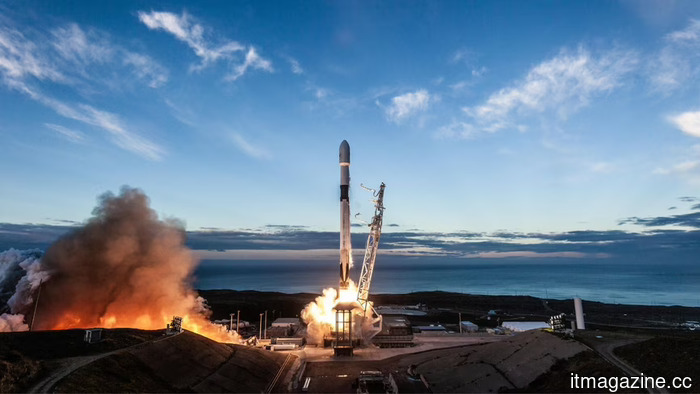 SpaceX's initial public offering: the true challenge lies with OpenAI and Anthropic.
The SpaceX IPO, a historic $75 billion deal, is priced this week. Its trading performance will establish the standard for the upcoming listings of OpenAI and Anthropic that are in the pipeline.
SpaceX's initial public offering: the true challenge lies with OpenAI and Anthropic.
The SpaceX IPO, a historic $75 billion deal, is priced this week. Its trading performance will establish the standard for the upcoming listings of OpenAI and Anthropic that are in the pipeline.
 Vsquared expands its deep-tech investments to London.
Germany's Vsquared Ventures has launched an office in London to compete with Atomico and Balderton, wagering that a deep-tech expert can succeed in the giants' territory.
Vsquared expands its deep-tech investments to London.
Germany's Vsquared Ventures has launched an office in London to compete with Atomico and Balderton, wagering that a deep-tech expert can succeed in the giants' territory.
 Concerns over an AI bubble amplify as SpaceX readies itself for a landmark IPO.
Software is on a downturn, China is divesting assets, and Apollo and KKR are signaling alarms. Concerns about an AI bubble are growing, coinciding with SpaceX's preparations for a record IPO.
Concerns over an AI bubble amplify as SpaceX readies itself for a landmark IPO.
Software is on a downturn, China is divesting assets, and Apollo and KKR are signaling alarms. Concerns about an AI bubble are growing, coinciding with SpaceX's preparations for a record IPO.
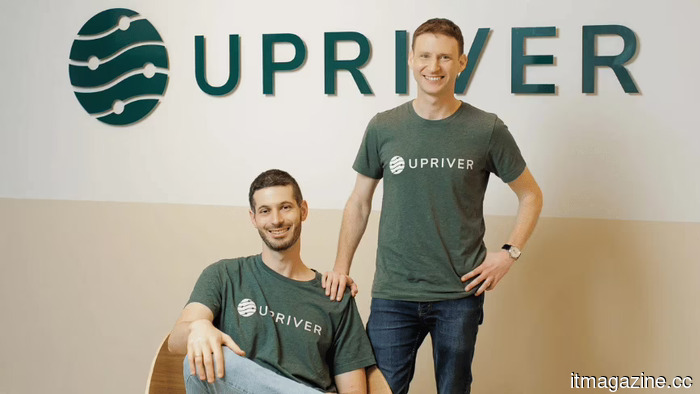 Upriver secures $14 million to address the enterprise data challenges in AI.
Upriver secured $14 million in seed funding to automate the data engineering that AI depends on, believing that the quality of data will determine the success or failure of enterprise AI.
Upriver secures $14 million to address the enterprise data challenges in AI.
Upriver secured $14 million in seed funding to automate the data engineering that AI depends on, believing that the quality of data will determine the success or failure of enterprise AI.
Google supports 300,000 skilled trades workers essential for the AI industry.
Google is investing $50 million to train 300,000 workers in skilled trades, addressing the shortage of electricians and welders needed for constructing data centers amid the expansion of AI.