
Concerns over an AI bubble amplify as SpaceX readies itself for a landmark IPO.
On the day SpaceX marks the largest stock-market launch in history, there is noticeable anxiety in the markets. The concern isn’t related to rockets, but rather to AI.
Multiple warning signals are active simultaneously, representing the initial significant challenge to a trade that has driven global markets over the past two years.
The most evident indication comes from the software sector. Wall Street has spent 2026 dealing with what traders at Jefferies call the ‘SaaSpocalypse,’ a gradual selloff that has reportedly wiped out about $2 trillion from the S&P software index since its peak in late 2025.
The apprehension is quite specific. If AI agents can perform the tasks of a sales team, companies will require far fewer software licenses, thereby threatening the per-seat licensing model that has supported modern software.
The private-equity firm Apollo has responded to this concern by implementing policies to mitigate risk from AI displacement. It now evaluates software deals based on this risk, maintains no private-equity exposure to software, and limits software investments to under 2 percent of its portfolio.
Apollo’s rationale stems from the concentrated nature of software investments, which jumped from about 10 percent of global buyout volume to approximately 40 percent at its peak—an indication they regard as a significant warning sign.
The unease is growing.
It is no longer confined to software alone. On Wednesday, shares in Hong Kong and mainland China declined, with technology stocks experiencing some of the steepest losses as fears of an AI bubble coincided with a drop on Wall Street.
In Washington, Senator Elizabeth Warren presented a bill titled the AI Bubble Transparency Act, which would compel banks to reveal their exposure to debt and equity in chipmakers, data centers, and hyperscalers, framing the concentration as a systemic threat.
Additionally, KKR’s chief macro strategist, Henry McVey, advised clients that the current boom is genuine but could lead to an economy that is "more extreme than anything we have encountered since the onset of the second industrial revolution" in the 1870s.
He noted that some sectors are struggling while others, particularly technology, high-end services, and government, are thriving. KKR believes that defense and energy sectors are likely to emerge as long-term victors.
At the heart of this situation lies capital expenditures. Spending on infrastructure by hyperscalers is nearing $660 billion this year, marking the largest corporate investment program in history outside of wartime, and this growth is increasingly supported by debt.
Amazon’s debts have surpassed $225 billion, and Oracle has exceeded its own capital expenditure guidance, with additional billions expected to follow.
The bearish perspective is straightforward. Such vast spending can only be justified if AI advances from ‘copilot’ functionalities to fully autonomous agents, which would rationalize the next significant leap in computing power. Should adoption stagnate, the return from the $660 billion annual expenditure could fall below capital costs.
Conversely, the bullish outlook is equally valid. This situation is not reminiscent of 2000.
As TNW has previously pointed out, valuations and concentrations are above the peaks seen during the dot-com bubble regarding certain metrics, with the CAPE ratio around 38. However, unlike the dot-com favorites, today's leaders are highly profitable, and the capex cycle is just beginning to yield results.
The candid answer to the question of whether this is a bubble is that no one can definitively say until the spending either pays off or does not. What has shifted this week is that the market has begun to openly pose this question, after two years of avoidance.
SpaceX is not an AI firm, yet its launch, alongside the upcoming listings of OpenAI and Anthropic, will serve as a near real-time assessment of investor confidence. Even those market analysts who believe the listing will not disrupt the bull market, as CNBC noted, are feeling apprehensive about the subsequent developments.
A shakeup is not equivalent to a collapse. But, for the first time in a while, those financing the investments are visibly considering the question that the boom has previously ignored: what exactly will this yield?
Other articles
 Deezer's complimentary feature analyzes your playlists to identify AI-generated music.
Deezer introduced a free tool that analyzes your playlists from Spotify, Apple Music, or Tidal for tracks generated by AI, noting that AI accounts for 44% of daily uploads.
Deezer's complimentary feature analyzes your playlists to identify AI-generated music.
Deezer introduced a free tool that analyzes your playlists from Spotify, Apple Music, or Tidal for tracks generated by AI, noting that AI accounts for 44% of daily uploads.
 Canada's social media restriction also targets AI chatbots.
Canada's new Digital Safety Act would prohibit individuals under 16 from using social media and impose regulations on AI chatbots, taking a more robust approach than Australia; however, the challenge lies in enforcement.
Canada's social media restriction also targets AI chatbots.
Canada's new Digital Safety Act would prohibit individuals under 16 from using social media and impose regulations on AI chatbots, taking a more robust approach than Australia; however, the challenge lies in enforcement.
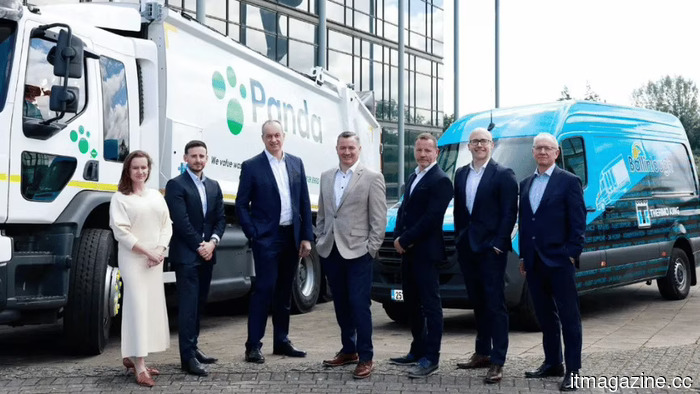 CameraMatics secures nearly €49M to compete with Samsara.
Irish AI fleet safety company CameraMatics has secured up to €49 million in funding, with Blume Equity at the helm and backed by ISIF and AIB, to grow its presence in North America and compete with Samsara and Lytx.
CameraMatics secures nearly €49M to compete with Samsara.
Irish AI fleet safety company CameraMatics has secured up to €49 million in funding, with Blume Equity at the helm and backed by ISIF and AIB, to grow its presence in North America and compete with Samsara and Lytx.
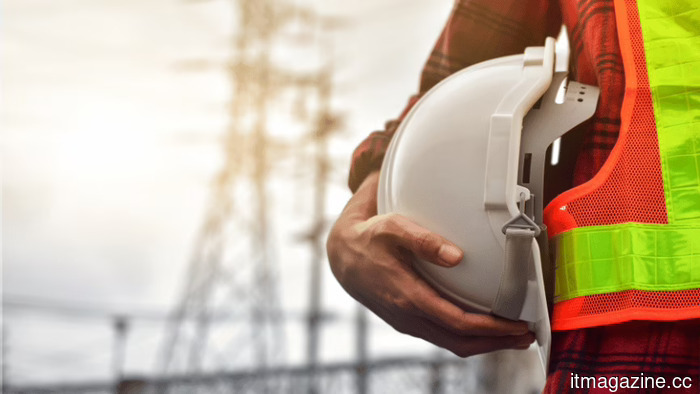 Google supports 300,000 trades workers essential for the AI surge.
Google is investing $50 million to train 300,000 skilled trades workers, addressing the shortage of electricians and welders needed for the construction of data centers during the AI expansion.
Google supports 300,000 trades workers essential for the AI surge.
Google is investing $50 million to train 300,000 skilled trades workers, addressing the shortage of electricians and welders needed for the construction of data centers during the AI expansion.
 Are you anticipating your Framework Laptop 13 Pro? You'll need to wait a little longer.
Framework has postponed the release of the Laptop 13 Pro by approximately a month due to problems identified with the haptic touchpad and display. Here's what your customers should be aware of.
Are you anticipating your Framework Laptop 13 Pro? You'll need to wait a little longer.
Framework has postponed the release of the Laptop 13 Pro by approximately a month due to problems identified with the haptic touchpad and display. Here's what your customers should be aware of.
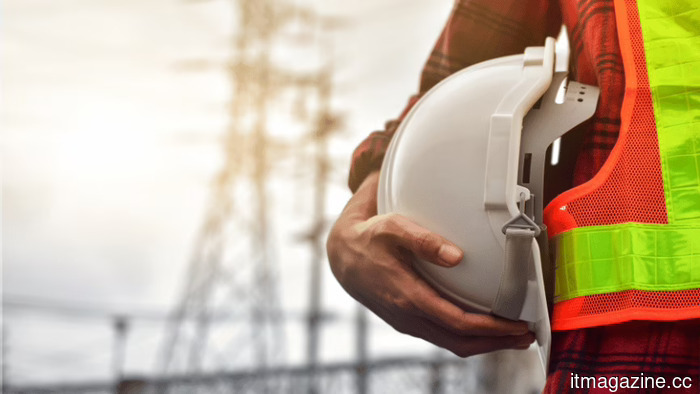 Google supports 300,000 skilled tradespeople required for the AI surge.
Google is investing $50 million to train 300,000 skilled trades workers, addressing the shortage of electricians and welders needed for constructing data centers as AI development progresses.
Google supports 300,000 skilled tradespeople required for the AI surge.
Google is investing $50 million to train 300,000 skilled trades workers, addressing the shortage of electricians and welders needed for constructing data centers as AI development progresses.
Concerns over an AI bubble amplify as SpaceX readies itself for a landmark IPO.
Software is on a downturn, China is divesting assets, and Apollo and KKR are signaling alarms. Concerns about an AI bubble are growing, coinciding with SpaceX's preparations for a record IPO.