

Canada's prohibition on social media also targets AI chatbots.
Canada has proposed a bill that would prevent individuals under the age of 16 from accessing social media, while also uniquely regulating AI chatbots in the same legislation. The Digital Safety Act, introduced on Wednesday, represents the latest effort in a global trend of governments addressing the risks posed to children by online platforms. Canada’s approach is more comprehensive compared to many others.
This is not an absolute prohibition; platforms can seek exemptions if they demonstrate adherence to robust safety standards, encouraging companies to redesign their services rather than merely preventing children from accessing them. “The safety of children cannot be an afterthought,” stated Marc Miller, the minister of Canadian identity and culture, who is facilitating the bill for Mark Carney’s government.
Targeting chatbots directly, the bill’s most innovative aspect is its classification of AI chatbots as a distinct child-safety concern. It aims to establish a digital regulatory body that would set safety standards for both social media and chatbot services. Platforms would be required to identify potential risks, incorporate age-appropriate designs, and provide tools for blocking and reporting inappropriate content, some of which, like Meta's global teen-account settings, have already been implemented. The bill specifically addresses features like engagement mechanisms, algorithmic feeds, autoplay, and endless scrolling, which the government argues exacerbate harm.
The focus on chatbots is particularly relevant in Canada, as the bill follows lawsuits by families affected by one of the nation's most severe mass shootings, accusing OpenAI of failing to alert police about threatening communications from the attacker using ChatGPT. OpenAI has not been held liable, and the allegations remain unproven.
Failure to comply with the regulations could result in significant penalties, amounting to either 3 percent of global revenue or C$10 million, whichever is greater. Additionally, platforms would need to eliminate non-consensual intimate images within 24 hours of receiving a report.
Following Australia, which was the first country to prohibit under-16s from using social media in December—deactivating around 5 million teenage accounts—Canada is explicitly attempting to go further by regulating design and chatbots in addition to access.
However, the challenge lies in enforcement. Australia’s regulatory body discovered that despite the mass deactivations, nearly 70 percent of children continued to maintain their accounts, highlighting that enacting legislation is far simpler than ensuring compliance.
Canada’s bill, C-34, still has a considerable path to navigate. Officials estimate it might take a year to pass and an additional 18 months to establish the regulatory body. Countries like France, Denmark, Poland, and Greece are also considering similar restrictions, making the developments in Canada significant to watch beyond its borders.
Other articles
 Concerns about an AI bubble grow as SpaceX gets ready for a record-setting IPO.
Software is declining, China is disposing of assets, and Apollo and KKR are signaling alarms. Concerns over an AI bubble are rising just as SpaceX gets ready for a record-breaking IPO.
Concerns about an AI bubble grow as SpaceX gets ready for a record-setting IPO.
Software is declining, China is disposing of assets, and Apollo and KKR are signaling alarms. Concerns over an AI bubble are rising just as SpaceX gets ready for a record-breaking IPO.
 Are you anticipating your Framework Laptop 13 Pro? You'll need to wait a little longer.
Framework has postponed the release of the Laptop 13 Pro by approximately a month due to problems identified with the haptic touchpad and display. Here's what your customers should be aware of.
Are you anticipating your Framework Laptop 13 Pro? You'll need to wait a little longer.
Framework has postponed the release of the Laptop 13 Pro by approximately a month due to problems identified with the haptic touchpad and display. Here's what your customers should be aware of.
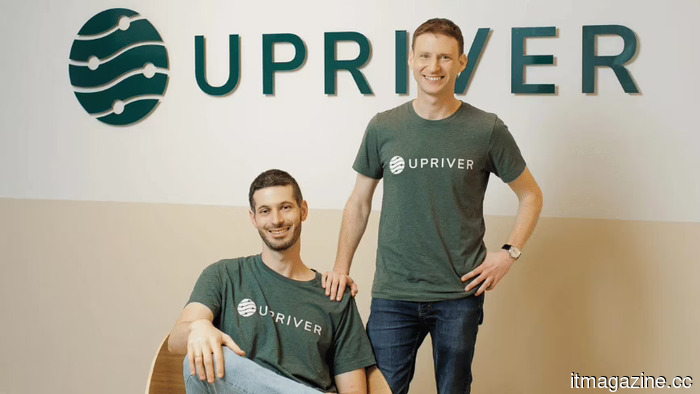 Upriver secures $14 million to address the enterprise data issue in AI.
Upriver secured $14 million in seed funding to automate the data engineering processes that AI depends on, emphasizing that clean data is the crucial factor for success or failure in enterprise AI.
Upriver secures $14 million to address the enterprise data issue in AI.
Upriver secured $14 million in seed funding to automate the data engineering processes that AI depends on, emphasizing that clean data is the crucial factor for success or failure in enterprise AI.
 TikTok is experimenting with voice calls in direct messages, as you need to communicate where you're scrolling through content.
According to screenshots posted by a user on X, TikTok is experimenting with voice calling within direct messages. This feature is said to necessitate that both users are friends and will include a "Mute calls" option in the DM settings.
TikTok is experimenting with voice calls in direct messages, as you need to communicate where you're scrolling through content.
According to screenshots posted by a user on X, TikTok is experimenting with voice calling within direct messages. This feature is said to necessitate that both users are friends and will include a "Mute calls" option in the DM settings.
 Google supports 300,000 skilled tradespeople required for the AI surge.
Google is investing $50 million to train 300,000 skilled trades workers, addressing the shortage of electricians and welders needed for constructing data centers as AI development progresses.
Google supports 300,000 skilled tradespeople required for the AI surge.
Google is investing $50 million to train 300,000 skilled trades workers, addressing the shortage of electricians and welders needed for constructing data centers as AI development progresses.
 US AI leaders are converging on London. Here's the reason.
US AI powerhouses such as Anthropic and OpenAI are competing to grow their presence in London, securing unprecedented amounts of office space, despite the pressure this growth places on local UK startups.
US AI leaders are converging on London. Here's the reason.
US AI powerhouses such as Anthropic and OpenAI are competing to grow their presence in London, securing unprecedented amounts of office space, despite the pressure this growth places on local UK startups.
Canada's prohibition on social media also targets AI chatbots.
Canada's new Digital Safety Act aims to prohibit individuals under 16 from using social media and impose regulations on AI chatbots, taking stricter measures than Australia. However, the challenge lies in enforcement.