
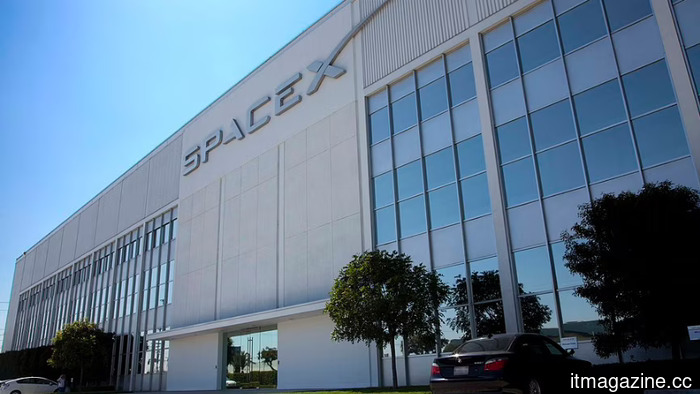
SpaceX's IPO has seen a significant oversubscription as order books finalize before the pricing scheduled for Wednesday.
SpaceX's IPO, valued at $75 billion with a share price of $135, has garnered significant oversubscription. Order books are set to close on Monday, with pricing anticipated on Wednesday and trading on Nasdaq commencing on Thursday. This offering would become the largest IPO ever, surpassing Saudi Aramco's $29.4 billion debut in 2019.
The oversubscription indicates that investors are vying for more shares than the approximately 555.6 million available, suggesting a fully diluted valuation of around $1.8 trillion. SpaceX plans to trade under the ticker SPCX on both Nasdaq and Nasdaq Texas, the new venue in Dallas.
The demand is fueled not only by the rocket sector but also by two important contracts mentioned in the S-1 filing. Google is set to pay SpaceX about $920 million monthly, or around $30 billion until 2029, for Starlink bandwidth and AI computing services. Meanwhile, Anthropic has pledged approximately $1.25 billion a month for access to AI infrastructure.
These contracts alone could generate about $26 billion annually in recurring revenue, positioning SpaceX as an infrastructure utility with secured cash flows instead of merely a launch service reliant on individual mission bookings. These agreements resulted from SpaceX's merger in February with xAI, uniting Musk's AI company and the social media platform X under one corporate umbrella.
SpaceX has indicated strong market interest, setting its share price at $135 before the roadshow commenced, a rare strategy that bypassed the typical negotiation process with institutional investors. This decision appears to have been advantageous as the set price held firm and demand surged.
The path to this point has been swift. SpaceX submitted its S-1 in April, reporting $18.7 billion in projected revenue for 2025 alongside a net loss of $4.94 billion attributed to the xAI merger. After discussions with investors, the company lowered its valuation goal from over $2 trillion to $1.8 trillion in late May, officially beginning its marketing phase on June 4.
The offering includes a 30% allocation for retail investors, significantly higher than the low single-digit percentages typical for deals of this magnitude, making the oversubscription particularly noteworthy. Retail investors have eagerly participated alongside institutional players, indicating the strong support Musk has cultivated across his businesses. A diverse investor base serves as a structural safeguard, as it lessens SpaceX's reliance on a few large funds that could demand governance changes.
However, not everyone is on board. A Danish pension fund has excluded the offering due to governance concerns, citing Musk’s substantial 79% voting power through a dual-class share structure while holding around 42% of the equity. The concentration of authority in a founder managing multiple ventures, including a rocket company, an AI lab, a satellite network, a social media platform, and an electric car manufacturer, remains a primary reason some investors have opted out.
Should it reach a $1.8 trillion valuation, SpaceX would surpass Amazon at its debut and only trail Apple, Nvidia, Microsoft, and Alphabet among publicly traded firms. If the share price remains constant on Wednesday and trading proceeds as planned on Thursday, it will signify not just the largest stock offering ever but also a judgment on the market's willingness to assign a value to a Musk-led conglomerate, which encompasses rockets, satellites, AI, and social media, at nearly a hundred times its annual revenue.
Other articles
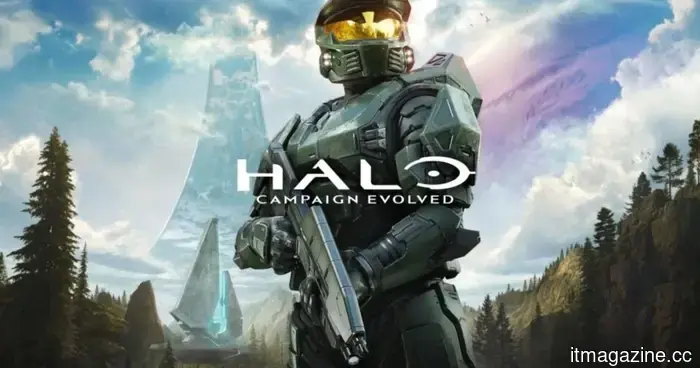 You can now place your pre-order for Halo: Campaign Evolved, and it’s set to arrive sooner than you expect.
Halo Studios has announced that Halo: Campaign Evolved, a complete remake of the original 2001 campaign, will launch on July 28. Additionally, there will be a three-mission prequel arc titled Operation: METEORITE. Pre-orders are currently available, starting at $49.99.
Judge prohibits Trump's $100,000 H-1B fee, deeming it an illegal tax.
A federal judge annulled Trump's $100,000 H-1B visa fee, declaring it an unconstitutional tax. This ruling provides relief to tech companies that depend on foreign AI expertise. An appeal is anticipated.
You can now place your pre-order for Halo: Campaign Evolved, and it’s set to arrive sooner than you expect.
Halo Studios has announced that Halo: Campaign Evolved, a complete remake of the original 2001 campaign, will launch on July 28. Additionally, there will be a three-mission prequel arc titled Operation: METEORITE. Pre-orders are currently available, starting at $49.99.
Judge prohibits Trump's $100,000 H-1B fee, deeming it an illegal tax.
A federal judge annulled Trump's $100,000 H-1B visa fee, declaring it an unconstitutional tax. This ruling provides relief to tech companies that depend on foreign AI expertise. An appeal is anticipated.
 The resurgence of Xbox exclusives begins with Gears of War and Clockwork Revolution.
Microsoft has confirmed that Gears of War: E-Day and Clockwork Revolution will be exclusive to Xbox consoles, with both titles also set to be available on PC and through Game Pass.
The resurgence of Xbox exclusives begins with Gears of War and Clockwork Revolution.
Microsoft has confirmed that Gears of War: E-Day and Clockwork Revolution will be exclusive to Xbox consoles, with both titles also set to be available on PC and through Game Pass.
 Xteink X4 review: I was skeptical about this compact e-reader, but it helped improve my bad screen habits.
The Xteink X4 is simple to share, even simpler to integrate into your daily carry, and is a delightfully appealing gadget that could capture the book lover in you without straining your budget.
Xteink X4 review: I was skeptical about this compact e-reader, but it helped improve my bad screen habits.
The Xteink X4 is simple to share, even simpler to integrate into your daily carry, and is a delightfully appealing gadget that could capture the book lover in you without straining your budget.
 The comeback of Xbox exclusives begins with Gears of War and Clockwork Revolution.
Microsoft has announced that Gears of War: E-Day and Clockwork Revolution will be exclusive to Xbox consoles, with both titles also available on PC and through Game Pass.
The comeback of Xbox exclusives begins with Gears of War and Clockwork Revolution.
Microsoft has announced that Gears of War: E-Day and Clockwork Revolution will be exclusive to Xbox consoles, with both titles also available on PC and through Game Pass.
 Apple's WWDC 2026 introduces changes to the App Store that allow independent developers to bundle subscriptions.
At WWDC 2026, Apple revealed cross-developer App Store bundles, group subscriptions, volume purchasing options, and AI-powered Personalized Collections.
Apple's WWDC 2026 introduces changes to the App Store that allow independent developers to bundle subscriptions.
At WWDC 2026, Apple revealed cross-developer App Store bundles, group subscriptions, volume purchasing options, and AI-powered Personalized Collections.
SpaceX's IPO has seen a significant oversubscription as order books finalize before the pricing scheduled for Wednesday.
SpaceX's $75 billion IPO is significantly oversubscribed at a share price of $135. The order books will close on Monday, with pricing anticipated on Wednesday, and trading set to commence Thursday on Nasdaq.